Key takeaways
- Human lysine for cats is not a do-it-yourself swap. Ask your vet first.
- Some human products add vitamins, minerals or stimulants that can harm pets.
- Human tablet sizes rarely match the amounts vets suggest for cats.
- AAFCO says human dietary supplements should not be used for drug purposes in pets.
- A plain cat product with a clear scoop size is usually easier to dose.
Many owners already have a bottle at home, so human lysine for cats seems like a quick fix. The nutrient is the same amino acid. Yet the tablet, the dose and the extras can be very different.
So this guide explains when a human product might be discussed with your vet. It also covers the label checks that matter most.
Finally, you will see safer options and a short list of questions to bring to your next visit.
Table of contents
- Is Human Lysine for Cats Safe?
- How Common Supplement Poisoning Is
- Risky Extras in Human Lysine for Cats Products
- Vitamins and Minerals Often Paired With Lysine
- Dosing Problems With Human Lysine for Cats
- 6 Label Checks Before Giving Human Lysine for Cats
- Why Pet Supplement Rules Differ
- What the Evidence on Lysine Shows
- Safer Alternatives to Human Lysine for Cats
- Signs to Watch After Any Lysine Dose
- Multi-Pet Homes and Human Lysine for Cats
- When Vets May Consider Human Lysine for Cats
- Cost vs Safety: Is Human Lysine for Cats Worth It?
- Storing and Tracking Any Lysine Product
- A Quick Summary of Human Lysine for Cats
- Questions to Ask Your Vet
- Key Terms Explained
- Frequently Asked Questions
- References
Is Human Lysine for Cats Safe?
Pure L-lysine is the same molecule in human and pet products. So questions about human lysine for cats are really questions about the rest of the label. The active nutrient itself is not the main worry.
Instead, the risk sits in everything around it. Tablet size, coatings, flavors and added ingredients all vary.
The University of Illinois College of Veterinary Medicine advises that supplements made for people should never be given to animals without vet guidance.
Why vets are careful with human lysine for cats
- Doses are sized for adult humans, not small cats.
- Some products blend in other nutrients or herbs.
- Labels may not list amounts that matter for pets.
- Splitting tablets gives uneven doses.
That is why a vet check comes first. Your vet can read the label and decide whether it is suitable at all.

How Common Supplement Poisoning Is
Human supplements are a real source of pet poisoning. The University of Illinois cites ASPCA data on this.
According to that report, human pain relievers, cold medicines, topical creams and vitamin or mineral supplements make up about 16.5% of calls to the ASPCA poison control center.
Most of those cases are accidents, not planned doses of human lysine for cats or other products. Still, the number shows how easily human products reach pets.
Keep human lysine for cats out of reach
Store human supplements in a closed cabinet. Also, pick up dropped tablets at once, especially in homes with dogs.
If a pet swallows a human product, call your vet or the ASPCA Animal Poison Control Center at (888) 426-4435.
Risky Extras in Human Lysine for Cats Products
Some human lysine products are not plain lysine, which is the first hurdle for human lysine for cats. They may be multi-ingredient formulas, so read every line.
The University of Illinois lists these extras as potential concerns for animals:
- 5-HTP
- Caffeine, including guarana and green tea
- Citrus aurantium (synephrine)
- Ephedra (ma huang)
- Fluoride
- Yohimbine
- Xylitol (birch or wood sugar)
These can affect the nervous system, heart and gut. In addition, combining them can make signs worse.
A note on xylitol
The ASPCA explains that xylitol mainly harms dogs and that cats are not reported to be affected. However, a dropped tablet can still reach the dog in a mixed home.

Vitamins and Minerals Often Paired With Lysine
Human immune blends often pair lysine with vitamins or minerals, which complicates human lysine for cats. Some of these carry known risks for pets.
| Added nutrient | Concern noted by the University of Illinois | What to do |
|---|---|---|
| Vitamin D3 | Toxic effects around 0.5 mg/kg (about 20,000 IU/kg) | Avoid blends unless your vet approves |
| Iron | Toxicity seen at 20 mg/kg | Do not give human iron blends |
| Zinc | Long-term high levels can break down red blood cells | Ask your vet before any zinc product |
| Vitamin A | Cats are more affected than dogs | Avoid cod liver oil combinations |
| Vitamin E | May affect blood clotting factors | Mention it if your cat takes other drugs |
In short, a plain lysine product is far safer than a blend. If the label lists more than lysine and a few fillers, show it to your vet.
Also, VCA advises caution when lysine is given with oral calcium supplements. So skip lysine and calcium combinations unless your vet says otherwise.
Dosing Problems With Human Lysine for Cats
Even a plain tablet causes dosing trouble, and this is where human lysine for cats often goes wrong. Human products are sized for people, so one tablet may not match what your vet suggests for a cat.
For context, a 2003 study gave cats 400 mg of L-lysine once daily. Your vet may suggest a different amount, so always follow their advice.
Why splitting tablets is tricky
- Halves and quarters are rarely equal.
- Crushed coatings can taste bitter.
- Extended-release tablets should not be crushed.
- Capsule contents may include extra powders.
By contrast, a cat powder with a scoop gives the same amount each time. That makes a trial easier to judge.
For amounts by body weight, see our lysine dosage guide.
6 Label Checks Before Giving Human Lysine for Cats
If your vet agrees to consider human lysine for cats, use these six checks together.
- Single ingredient. Look for L-lysine only, with no vitamin or herbal blend.
- Amount per tablet. Note the milligrams so your vet can work out a dose.
- No sweeteners or stimulants. Skip xylitol, caffeine and similar extras.
- Plain form. Avoid extended-release, coated or chewable candy styles.
- Liquid bases. For liquids, check for propylene glycol.
- Batch details. Keep the lot number and expiry date.
On liquids, the FDA states in 21 CFR 589.1001 that propylene glycol in or on cat food has not been shown to be safe.
Why Pet Supplement Rules Differ
Human and pet supplements follow different rules in the US, and that shapes how vets view human lysine for cats. The AVMA supports the FDA view that the 1994 human supplement law does not apply to products for animals.
Also, AAFCO says human dietary supplements should not be used for drug purposes in pets. It adds that healthy cats on a complete and balanced diet generally do not need supplements.
So a human label tells you little about safety for cats. It was written for people, with human doses and human claims.
What this means for human lysine for cats
The safest route is a product made for cats, used with vet advice. If you do use a human product, let your vet choose it and set the dose.

What the Evidence on Lysine Shows
It also helps to know what lysine can do before you try human lysine for cats. Most interest links to feline herpesvirus type 1 (FHV-1).
The Cornell Feline Health Center says up to 97% of cats are exposed to this virus. Up to 45% of carriers shed it from time to time, usually when stressed.
One small 2003 study linked daily lysine with less viral shedding after rehousing. However, a 2015 systematic review concluded that lysine is not effective for preventing or treating FHV-1.
So whether you use human lysine for cats or a pet product, keep expectations modest. Our guide to lysine benefits for cats walks through each study.
Safer Alternatives to Human Lysine for Cats
A cat-specific product removes most of the guesswork that comes with human lysine for cats. Look for a clear amount per scoop and a short ingredient list.
- Unflavored powders that mix into wet food
- Vet-dispensed lysine products
- Gels made for cats, checked with your vet
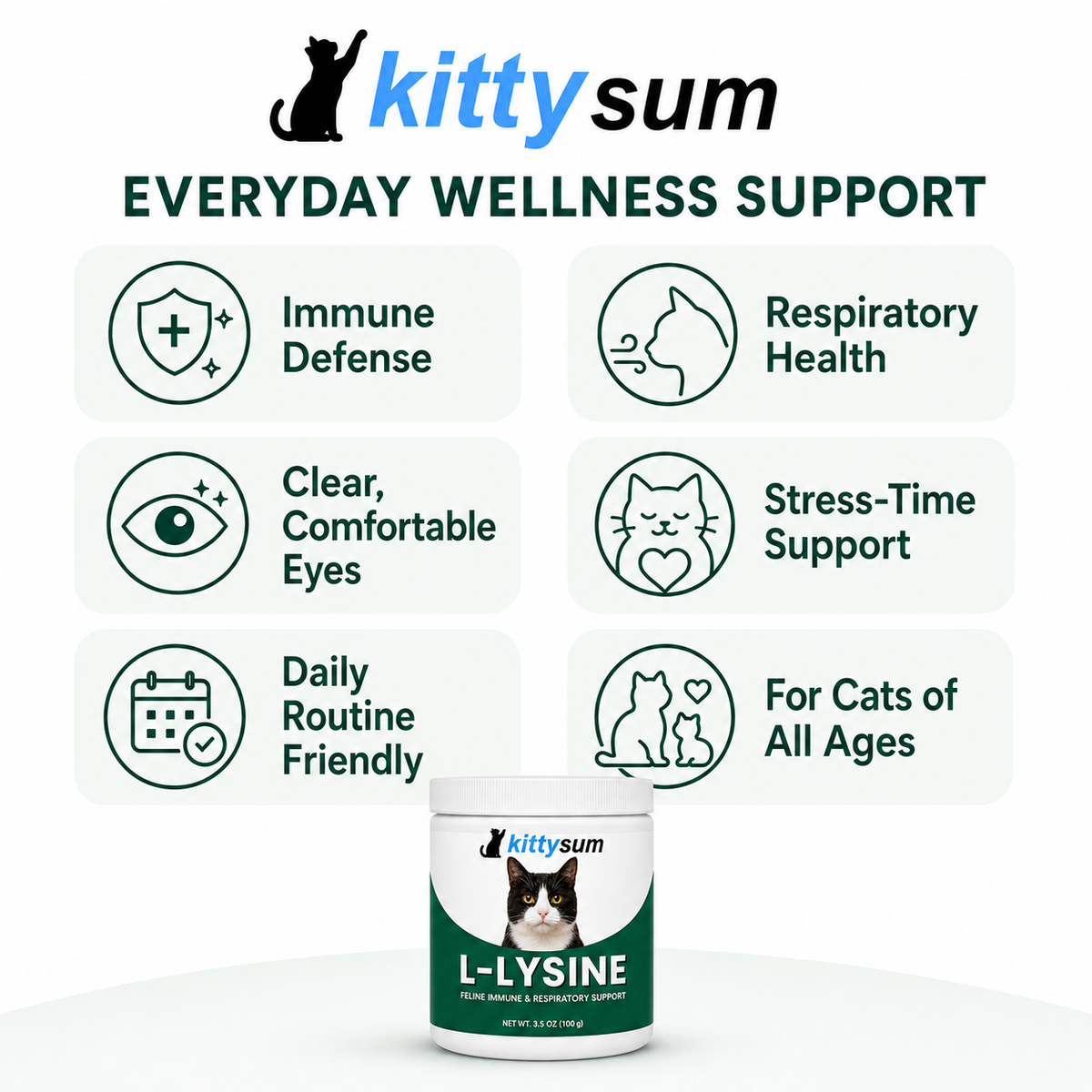
Kittysum L-Lysine powder is an unflavored powder in a 100 g tub with a measuring scoop. We describe it as daily nutrition support, used with your vet's guidance.
For a wider comparison of forms, see liquid lysine for cats and our best lysine supplement guide.

Signs to Watch After Any Lysine Dose
VCA lists diarrhea as a possible side effect of lysine, and that applies to human lysine for cats too. Sensitivities can also appear later in a course.
- Vomiting, drooling or restlessness after a dose
- Diarrhea or a change in appetite
- Worsening eye or nose signs
- Weakness or unusual behavior
With human products, also watch for signs linked to extras. Shaking, a racing heart or collapse need emergency care at once.
Our guide to lysine side effects in cats explains common signs in more detail.
Multi-Pet Homes and Human Lysine for Cats
Homes with both cats and dogs need extra care with human lysine for cats. A product that is fine for one species may not suit another.
For example, xylitol mainly harms dogs, according to the ASPCA. So a dropped human tablet is a bigger risk in a mixed home.
Simple safety habits
- Dose cats in a separate room.
- Count tablets before and after dosing.
- Close bottles at once.
- Store human products up high.
Also, keep pet and human supplements on different shelves. That small step prevents mix-ups on busy mornings.
When Vets May Consider Human Lysine for Cats
Sometimes a vet may agree to human lysine for cats. For example, a plain, single-ingredient powder may be easier to find in some areas.
In that case, the vet decides the product and the amount. Then you follow that plan exactly, rather than the human label.
Questions your vet will weigh
- Is the product plain L-lysine with no extras?
- Can the dose be measured evenly for your cat?
- Does your cat take other drugs or supplements?
- Is your cat pregnant, nursing, young or unwell?
Also, VCA advises caution with lysine in pregnant or nursing cats. So those cats need a tailored plan from the start.
Because every cat differs, a plan that works for one cat may not suit another. That is why human lysine for cats should never be a shared tip between owners.
Cost vs Safety: Is Human Lysine for Cats Worth It?
Price is a common reason owners consider human lysine for cats. A large human bottle can seem like better value.
However, value depends on usable doses. If tablets must be split, crushed or partly wasted, the savings shrink quickly.
In addition, a vet visit to check a human label costs time. Meanwhile, a plain cat product with a scoop is ready to use.
Hidden costs to consider
- Uneven doses that make a trial hard to judge
- Refused food when a crushed tablet tastes bitter
- Risk to other pets in the home
- Extra vet calls if side effects appear
Overall, the cheapest choice is the one that is safe and accepted every day. For many homes, that means a cat-specific product rather than human lysine for cats.
Storing and Tracking Any Lysine Product
VCA advises storing oral supplements in a cool, dry place in tightly sealed containers. It also says to keep them out of reach of children and pets.
- Label the bottle with your cat's name and dose.
- Keep it apart from human medicines.
- Check the expiry date each month.
- Note each dose in a simple log.
A log is especially useful in a trial of human lysine for cats. Write down the date, the amount and any signs such as sneezing, eye discharge or appetite changes.
Then bring the log to your next visit. Your vet can compare it with the start of the trial and decide whether to continue, change or stop.
A Quick Summary of Human Lysine for Cats
Here is the short version for busy owners. First, the amino acid is the same, but the product is not.
Second, human blends can contain vitamins, minerals or stimulants that pets should not get. Third, tablet sizes rarely match a cat's needs.
Finally, the evidence for lysine itself is mixed. So even a perfect product should come with modest hopes and a vet plan.
In short, treat human lysine for cats as a question for your vet, not a shortcut. That simple rule keeps your cat safe.
Questions to Ask Your Vet
Bring the human lysine for cats bottle you are considering, or a clear photo of the label. Your vet can then check every ingredient.
- Is lysine worth a trial for my cat?
- Is this human product safe, or should I buy a cat product?
- How many milligrams should my cat get each day?
- How long should we try it?
- Which signs mean I should stop?
Because stress drives many flare-ups, ask about calm routines too. Those changes cost little and help many cats.
Want a cat-specific option?
Kittysum L-Lysine Supplement for Cats is an unflavored powder with a measured scoop, made for mixing into wet food.
Key Terms Explained
- L-lysine: the form of the amino acid lysine used in supplements.
- Multi-ingredient formula: a product that blends lysine with vitamins, minerals or herbs.
- Xylitol: a sweetener the ASPCA says mainly harms dogs.
- Extended-release tablet: a tablet built to release slowly; it should not be crushed.
- DSHEA: the 1994 US human supplement law, which does not apply to animal products.
Frequently Asked Questions
Can I give my cat human lysine?
Only with your vet's approval. The University of Illinois advises against giving human supplements to animals without vet guidance, because doses and extras can be unsafe.
Is human lysine for cats the same as pet lysine?
The amino acid is the same, but the products differ. Human tablets may contain extra vitamins, herbs or sweeteners and are sized for people.
What should I avoid in human lysine products?
Avoid blends with vitamin D, iron, zinc, herbs or stimulants, and skip extended-release tablets. For liquids, check for propylene glycol.
What if my cat ate a human supplement?
Call your vet or the ASPCA Animal Poison Control Center at (888) 426-4435. Have the bottle ready so you can read the ingredients.
References
- University of Illinois College of Veterinary Medicine. Pharmacist's Corner: Human supplements and toxicity to animals. 2026.
- ASPCA. Updated safety warning on xylitol: how to protect your pets.
- AAFCO. Supplements.
- AVMA. Dietary supplement law not applicable to products for animals.
- VCA Animal Hospitals. Lysine.
- U.S. eCFR. 21 CFR 589.1001: Propylene glycol in or on cat food.
- Cornell Feline Health Center. Respiratory Infections.
- Cornell Feline Health Center. Feeding Your Cat.
- Maggs DJ, Nasisse MP, et al. Efficacy of oral supplementation with L-lysine in cats latently infected with feline herpesvirus. Am J Vet Res. 2003.
- Bol S, Bunnik EM. Lysine supplementation is not effective for the prevention or treatment of feline herpesvirus 1 infection in cats. BMC Vet Res. 2015.
This article is for general education and is not veterinary advice. These statements have not been evaluated by the Food and Drug Administration. Kittysum products are not intended to diagnose, treat, cure or prevent any disease.