Key takeaways
- Many owners find a cat food with egg a good choice, since egg protein is easy for cats to digest.
- Egg usually supports meat in the recipe; it should not be the only animal protein.
- The complete and balanced statement matters more than any single ingredient.
- Eggs contain little taurine, so the food must still meet the taurine minimum.
- Cats with egg allergies need egg-free foods; check every ingredient line.
Cat food with egg appeals to many owners, because egg sounds wholesome and protein-rich. In fact, egg is a useful ingredient, but it works best alongside meat, and the label tells you far more than the word "egg" on the front.
This guide explains why makers add egg, how egg appears on ingredient lists, what to check before you buy and how egg-based foods handle taurine. If you want to share eggs directly, see our guide on can cats have eggs.
New to cat nutrition? Start with our guide to taurine for cats.
Table of contents
Why Makers Use Egg in Cat Food
To begin with, egg is a high-quality protein. Its amino acids are easy for cats to digest and use, which is why nutritionists often describe egg as having a high biological value. Also, egg adds fat, vitamins and a flavor many cats like.
So cat food with egg can be a good option. However, cats are obligate carnivores, and Merck explains that they need nutrients found in animal tissue. Therefore, egg works best as a supporting protein beside meat, poultry or fish.
Interestingly, egg also has practical uses for makers. For example, it helps bind ingredients in some wet recipes and adds a uniform texture. Meanwhile, dried egg product stores well and blends evenly into dry kibble. So egg often shows up for both nutrition and manufacturing reasons. However, none of these uses make a food complete on their own. Instead, the full recipe, tested or formulated to meet a standard profile, is what keeps a cat healthy over months and years. In short, think of egg as one helpful part of a good recipe rather than the reason to buy it.
Also, owners sometimes search for cat food with egg because their cat loves scrambled egg at home. That preference is a fine starting point. Still, a cat that enjoys egg will usually enjoy many complete foods, so let the label guide the final choice.

How Egg Appears on a Cat Food With Egg Label
Next, look for egg in the ingredient list. Makers use several names.
- Whole egg or eggs: fresh egg, yolk and white.
- Dried egg product: egg with the water removed; a concentrated protein.
- Egg product: a general term for processed egg.
- Egg yolk: occasionally used for fat and flavor.
Ingredients appear in order of weight before cooking, so position gives a rough idea of how much egg the recipe contains. Still, a cat food with egg near the top of the list is not automatically better than one with egg lower down.
Cat Food With Egg: What to Check Before You Buy
Here is a quick checklist for any cat food with egg.
| Check | What to look for | Why it matters |
|---|---|---|
| Adequacy statement | Complete and balanced for the life stage | Covers taurine and other essentials |
| First ingredients | A named meat, poultry or fish | Meat supplies most taurine |
| Egg listing | Whole egg or dried egg product | Shows egg's role in the recipe |
| Allergens | No egg if your cat reacts to it | Avoids flare-ups |
| Maker | Qualified nutritionist on staff | Supports quality control |
In other words, the statement and the maker matter more than the egg.

The Most Important Line on Any Cat Food With Egg
Above all, find the nutritional adequacy statement. It should say the food is complete and balanced for a life stage, such as adult maintenance, growth or all life stages. This statement means the food meets the AAFCO cat food nutrient profiles, including the taurine minimum.
However, some egg-based toppers and treats say "complementary", "supplemental" or "for intermittent feeding". These are not full meals. Therefore, a cat food with egg must be labeled complete if you plan to feed it as the main diet.
Why Meat Should Still Come First
Notably, egg cannot replace meat in a cat's diet. Muscle meat, heart and organs supply nutrients cats need in quantity, especially taurine. Meanwhile, the WSAVA guide suggests choosing foods from makers with qualified nutritionists and strong quality control, rather than judging foods by one ingredient. In short, the best cat food with egg lists a named animal protein first and egg as a supporting ingredient.
Cat Food With Egg and Taurine
Importantly, eggs contain far less taurine than meat, heart or shellfish. Yet cats need taurine for heart muscle, vision and digestion, according to VCA Animal Hospitals. Moreover, low taurine causes serious disease. For example, the landmark 1987 Pion study linked heart failure in cats to low blood taurine, and the Companion Animals Extension notes retinal changes may appear 5 to 6 months into a deficiency.
Fortunately, complete commercial foods add taurine to meet the minimum. So a complete cat food with egg covers taurine through its full formula, not through the egg. Our guide to taurine foods for cats lists natural sources.
Wet vs Dry Cat Food With Egg
Similarly, egg appears in both wet and dry foods. Wet foods add water, which helps cats that drink little. Dry foods are convenient and often use dried egg product. Also, the AAFCO taurine minimum is higher for canned foods, because more taurine is lost in the gut after heat processing. Our guides to taurine in wet cat food and taurine in dry cat food explain both. Thus, a complete wet or dry cat food with egg can both work well.
Cat Food With Egg for Sensitive Stomachs
Often, owners choose egg-based recipes for cats with sensitive digestion, because egg protein is easy to digest. Still, change foods slowly over about a week, mixing old and new. Then watch stools and appetite for at least two weeks, since digestion often settles slowly. If problems continue, ask your vet about a limited-ingredient or prescription diet.
Egg Allergy in Cats
Occasionally, cats develop food allergies, and egg is one possible trigger. Signs include itchy skin, over-grooming, vomiting or diarrhea. In that case, a cat food with egg is the wrong choice. Instead, your vet may suggest an elimination diet. Also, check treats and toppers, since egg often hides in snack ingredient lists, sometimes under the name dried egg product.
Cat Food With Egg for Kittens
Likewise, kittens need a complete growth or all-life-stages food. According to VCA, kittens should eat a diet made for growth. So choose a kitten food with egg only if the statement covers growth. Our guide to can kittens eat eggs explains plain egg treats for kittens.
Senior Cats
Also, older cats may need diets adjusted for kidney, dental or digestive health. Egg-based foods can suit seniors, but follow your vet's advice on protein and phosphorus. Our guide to taurine for senior cats covers age-related needs.
Egg Toppers and Treats
Meanwhile, freeze-dried egg toppers and treats are popular. These count toward the treat allowance, so keep them under about 10 percent of daily calories. Also, plain cooked egg at home works as a topper too. Our guide to cooked eggs for cats shows safe cooking methods, and our guide to can cats eat egg yolk covers the yolk.
Homemade Cat Food With Egg
In contrast, homemade recipes have no label to check. Some vet-formulated recipes include cooked egg, but they also need meat, organs, a vitamin and mineral mix and a measured taurine source. Also, a UC Davis study found cooking lowers taurine in meat, so add taurine after cooking. Raw egg is not recommended, since the FDA and the ASPCA warn about raw animal foods for pets.
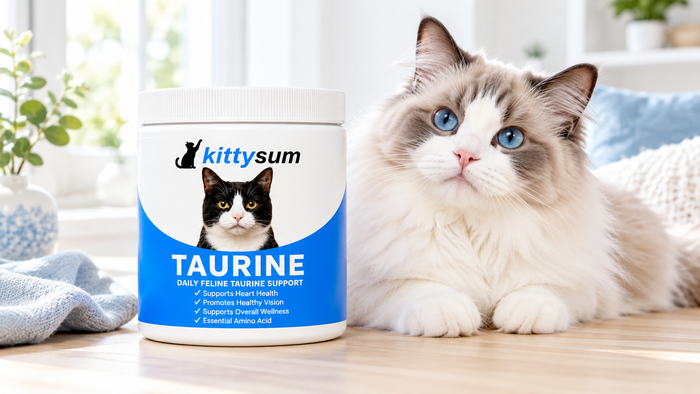
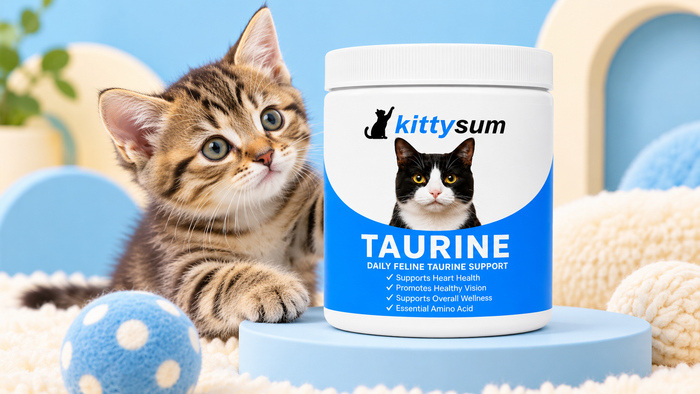
For homemade feeders, Kittysum Taurine is a daily taurine powder in a 200 g tub with a measuring scoop, blended with chicken liver for a meaty smell. You can read the label and serving guide here. Our guide to taurine for homemade cat food explains safe amounts.

Price and Value
Admittedly, foods that feature egg on the front sometimes cost more. However, the price does not tell you whether a food is complete. So compare foods by the adequacy statement, the maker and the cost per day rather than the marketing. Our guide to cheap taurine for cats explains cost-per-day math.

Switching to a Cat Food With Egg
First, change foods gradually. For example, mix about a quarter new food with three quarters old food for two days. Then move to half and half, and then to three quarters new. After about a week, feed the new food alone. Meanwhile, watch appetite, stools and energy. As a result, your cat adjusts without stomach upset, and you can judge whether the new cat food with egg truly suits it.
Multi-Cat Homes
Likewise, homes with several cats need a plan when one cat changes food. For instance, a cat with an egg allergy may steal another cat's egg-based food. So feed cats in separate rooms or use microchip feeders. Also, pick up bowls after meals. Consequently, each cat eats the right food, and allergy symptoms stay under control.
Other Ingredients Worth Checking
Next, look beyond egg. For example, check which meat, poultry or fish appears first, whether the food contains added taurine and whether the maker lists a feeding guide by weight. Also, note the calorie content per can or cup, since egg and added fats can make some recipes rich. In addition, compare the guaranteed analysis for protein and fat if your vet has given you targets. Overall, these details help you choose the right cat food with egg for your cat's age and weight.
How to Judge a New Food
Finally, give a new food time. In general, wait four to six weeks before judging coat, stools and weight. Then weigh your cat and note any changes. If your cat loses interest, develops loose stools or itches more, talk to your vet. Otherwise, a complete food your cat eats happily is usually a good long-term choice. Also, keep a short note of the brand, recipe and start date, so you and your vet can compare foods later if anything changes.
Myths About Cat Food With Egg
- "Foods based on egg have more taurine." Eggs contain little taurine; the formula adds it.
- "Listing egg first means the best food." A named meat first is usually better.
- "Every cat tolerates egg." Some cats are allergic to it.
- "A topper makes any food complete." Only a complete formula does that.
Clearing up these myths keeps choosing a cat food with egg simple.
Common Mistakes When Choosing Cat Food With Egg
- Skipping the adequacy statement. Check it on every pack.
- Feeding complementary egg pouches as meals. Choose complete foods.
- Ignoring allergy signs. Talk to your vet.
- Switching foods overnight. Change over a week.
- Making homemade egg meals without taurine. Measure it in.
Avoiding these mistakes helps you pick a cat food with egg that truly suits your cat.
Questions to Ask a Vet
- Is a food with egg a good fit for my cat?
- Could my cat be allergic to egg?
- Does my cat's current food meet its life-stage needs?
- Does my homemade recipe cover taurine?
Finally, bring the food label to the visit. For context, a 1991 Waltham study found cats need at least 39 mg of taurine per kg of body weight a day on canned food, and Merck explains the heart disease linked to low taurine. Also, Purina explains egg as a treat, and the VCA supplement guide says the FDA does not review non-drug supplements before sale.
Building homemade meals with egg?
Kittysum Taurine is a daily taurine powder blended with chicken liver in a 200 g tub with a measuring scoop, free shipping on orders over $50 and a 30-day return policy. Ask your vet to confirm the amount. Shop Kittysum Taurine →
Key Terms Explained
- Dried egg product: egg with the water removed, used as a protein ingredient in pet foods.
- Whole egg: egg including both yolk and white.
- Nutritional adequacy statement: the label line that says whether a food is complete and balanced for a life stage.
- Limited-ingredient diet: a food with few protein and carbohydrate sources, often used for sensitive cats.
- Biological value: a measure of how well the body can use a protein's amino acids.
Frequently Asked Questions
Is cat food with egg good for cats?
It can be. Egg is an easily digested protein, but choose a complete and balanced food with a named meat listed first.
Does cat food with egg have enough taurine?
A complete food meets the AAFCO taurine minimum through its full formula, not through the egg itself.
What is dried egg product in cat food?
Egg with the water removed, used as a concentrated protein ingredient.
Can cats be allergic to egg in cat food?
Yes. Itchy skin, over-grooming, vomiting or diarrhea can be signs; ask your vet about an elimination diet.
Can I make homemade cat food with egg?
Only with a vet-formulated recipe that includes meat, a vitamin and mineral mix and a measured taurine source.
References
- VCA Animal Hospitals. Taurine in Cats.
- VCA Animal Hospitals. Lysine.
- Earle KE, Smith PM. Dietary taurine content and plasma taurine in the cat. Br J Nutr. 1991.
- Pion PD, et al. Myocardial failure in cats with low plasma taurine. Science. 1987.
- Spitze AR, et al. Taurine in animal feed ingredients. 2003.
- Kanakubo K, et al. Protein and amino acids in vegetarian pet diets. 2015.
- AAFCO. Cat Food Nutrient Profiles.
- Merck Veterinary Manual. Nutritional Requirements of Small Animals.
- Merck Veterinary Manual. Dilated Cardiomyopathy.
- WSAVA. Selecting a pet food for your pet.
- Companion Animals Extension. Taurine Requirement of Cats.
- AVMA. Dietary supplement law not applicable to products for animals.
- Purina. Can Cats Eat Eggs?.
- ASPCA. People Foods to Avoid Feeding Your Pets.
- FDA. Raw Pet Food Diets Can Be Dangerous.
- VCA. Feeding Growing Kittens.
This article is for general education and is not veterinary advice. These statements have not been evaluated by the Food and Drug Administration. Kittysum products are not intended to diagnose, treat, cure or prevent any disease.