Key takeaways
- Brush cat teeth daily if you can. VCA calls daily brushing best and three times a week the minimum.
- Plaque left for more than 72 hours starts to harden into tartar, which a brush cannot remove.
- Each session takes about a minute: roughly 30 seconds per side on the outer surfaces.
- Use pet toothpaste only, never human toothpaste or baking soda.
- Most cats need a few weeks of gentle training before they accept a brush.
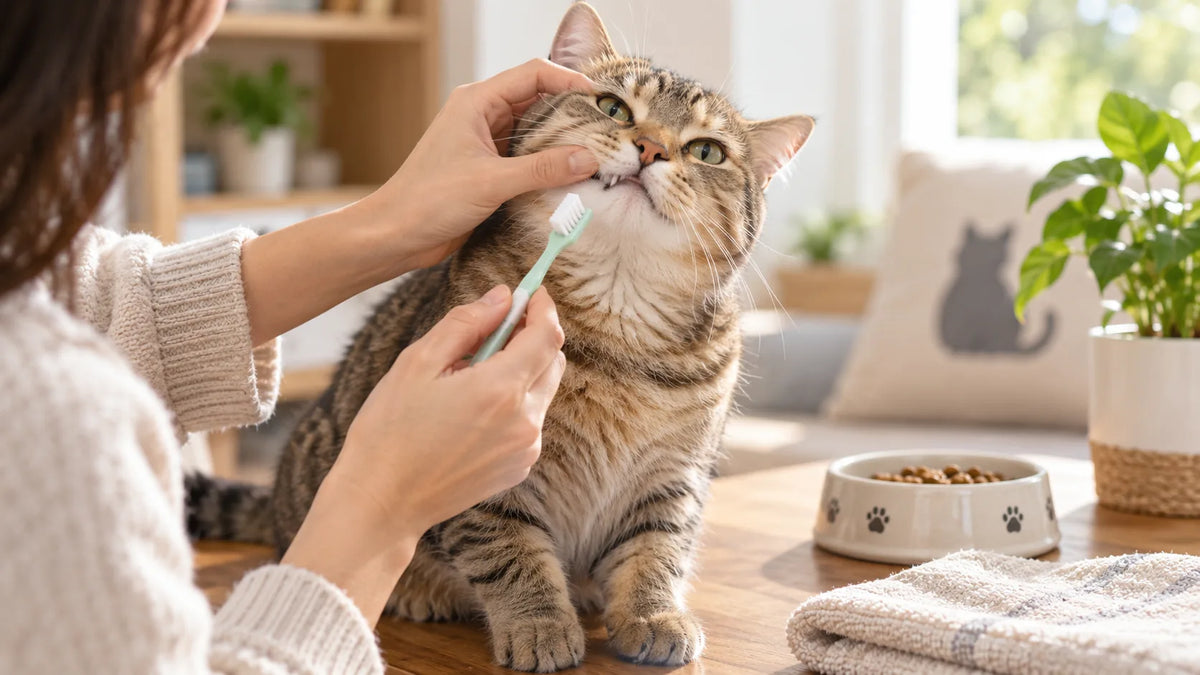
The best way to brush cat teeth is once a day for about a minute, with pet toothpaste and a soft brush. Focus on the outer surfaces of the back teeth and canines. If daily is not possible, VCA says three times a week is the minimum. Cornell notes that daily toothbrushing can prevent most forms of dental disease.
Daily brushing sounds hard. Still, once your cat gets comfortable, each session takes less than two minutes.
Below is a realistic schedule, the tools you need, and a four-week training plan. For the bigger picture, read our guide to cat dental care at home.
Table of contents
How Often Should You Brush Cat Teeth?
Aim to brush cat teeth once a day. VCA calls daily brushing the best choice and three times a week the minimum. The Merck Veterinary Manual gives the same advice: brush cat teeth every day.
AAHA goes further and says brushing needs to happen daily to be of benefit. However, the AVMA notes that brushing several times a week can also help if daily brushing is not possible.
| How often you brush cat teeth | Effect on plaque | Verdict |
|---|---|---|
| Daily | Removes plaque before it hardens | Best |
| 3–4 times a week | Slows build-up | Good minimum (VCA) |
| Every 2–3 days (gauze wipe) | Limited but useful | Backup if your cat refuses a brush |
| Once a week or less | Little lasting effect | Add other methods and vet care |
Why daily matters
Plaque forms on teeth all the time, even right after a cleaning. According to Merck, plaque that stays on the teeth for more than 72 hours begins to harden into tartar. Once that happens, only a vet cleaning can remove it.
So a short daily session beats a long session once a month. In short, consistency matters more than perfection.
Why it is worth the effort
Dental disease is common in cats. For example, Cornell reports that 50–90% of cats older than four have some form of it. In addition, a 2023 Royal Veterinary College study found periodontal disease diagnosed in 15.2% of UK cats in a single year.
That is why the AVMA calls regular brushing the single most effective thing you can do for your pet's teeth between cleanings.
How Long Should You Brush Cat Teeth?
In most cases, about one minute is enough. VCA suggests roughly 30 seconds per side of the mouth.
Spend that time on the outer surfaces and the gumline. VCA says that is where plaque and gum damage start. First, start with the large cheek teeth and the canines. The tongue usually cleans the inner surfaces, so they need less attention.
You do not need to open the mouth wide. Instead, gently pull the lips back from the side while the mouth stays closed.

Tools to Brush Cat Teeth
You only need two things to brush cat teeth: a soft brush and pet toothpaste. Here is how the main options compare, so you can choose what suits your cat.
| Tool to brush cat teeth | Best for | Tip |
|---|---|---|
| Cat toothbrush (angled handle) | Cats already used to brushing | Small head reaches the back teeth |
| Finger brush | Beginners and nervous cats | Gives you more control |
| Very soft baby toothbrush | Small mouths | Choose the softest bristles |
| Gauze around a finger | Cats that hate bristles | Wipe along the gumline |
| Cotton swab | Early training weeks | Gentle on sensitive gums |
| Pet toothpaste | Every session | Pick a flavor your cat likes |
VCA lists all of these as workable tools. VCA also advises rinsing the brush well and replacing it every three months.
Pick the right toothpaste
Most importantly, never use human toothpaste. Cornell warns that human products can be toxic to cats, and VCA says cats should not swallow its ingredients. VCA also advises against baking soda.
Instead, choose a pet toothpaste in a flavor your cat enjoys, such as poultry or fish. Look for products on the Veterinary Oral Health Council (VOHC) list of accepted products for cats.
How to Brush Cat Teeth Step by Step
Follow these steps once your cat accepts mouth handling. If you are just starting, use the four-week plan below first.
- Pick a calm time. Choose a quiet, closed room at a time your cat feels calm, such as after a meal or a nap.
- Load the brush. First, put a pea-sized dab of pet toothpaste on the brush, and let your cat lick a little first.
- Position your cat. Sit your cat on your lap or a table, facing away from you. Then hold the head gently at about a 45-degree angle, as VCA suggests.
- Lift the lip. Gently pull the lip back on one side while the mouth stays closed.
- Brush the back teeth. Use small circles along the gumline of the large cheek teeth for about 15 seconds.
- Brush the canines. Next, move to the long fangs and the small front teeth.
- Switch sides. Repeat on the other side for about 30 seconds in total.
- Reward. Finally, end with praise, a treat, or play, even if you only managed a few teeth.
VCA also suggests wearing gloves if you can, or washing your hands afterward.

A 4-Week Plan to Brush Cat Teeth
Most cats will not accept a brush on day one. That is why Cornell describes a gradual, four-week program. Similarly, VCA says to build up from a few teeth to the whole mouth over days or weeks.
- Week 1: Let your cat lick pet toothpaste from your finger once a day. Also touch the outside of the mouth for a few seconds.
- Week 2: Gently rub toothpaste along the gums with your finger or a cotton swab. VCA notes you can dip a swab in tuna water to make it appealing at first.
- Week 3: Switch to a finger brush or soft cat toothbrush on a few teeth at a time.
- Week 4: Build up to about a minute, covering the outer surfaces on both sides.
Move on only when your cat stays calm at the current step. If your cat struggles, go back a step for a few days. Kittens tend to learn fastest, but VCA says older cats can learn too.
Troubleshooting: When Your Cat Fights the Brush
Resistance is normal, so do not give up after one bad session. Here are fixes for the most common problems.
- Your cat bites the brush. Switch to gauze or a finger brush, and shorten the session to a few seconds.
- Your cat hates the taste. Instead, try another flavor of pet toothpaste.
- Your cat runs off when you get the brush out. Leave the brush near the food bowl for a few days, and reward calm sniffing.
- Your cat squirms. Wrap your cat loosely in a towel, and brush only one side today.
- You forget. Tie brushing to a daily cue, such as the evening meal.
Above all, stop before your cat gets upset, and always end on a good note.
How to check your cat's gums first
Before each session, take a quick look at the gums. Lift the lip in good light and look along the gumline.
According to Merck, healthy gums are coral pink. In contrast, gums with gingivitis turn red or purple, swell at the edge, and bleed on contact.

What if the gums bleed?
A little bleeding can mean the gums are already inflamed. VCA notes that inflamed gums often bleed when you brush. In that case, stop and book a vet check before you continue.
The Best Time to Brush Cat Teeth
There is no single best hour. Instead, pick a time when your cat is calm and you are not in a rush.
For example, many owners brush after the evening meal or after a play session. A tired, full cat tends to sit still longer.
Also, try to brush at the same time each day. Cats like routine, so a fixed slot helps your cat know what comes next, and it helps you remember.
Kittens vs adult cats
Kittens are the easiest to train, so start as soon as you bring one home. Even before the adult teeth arrive, short mouth-handling sessions build trust.
Merck notes that some cats develop juvenile gingivitis at 6 to 8 months of age. Merck also says periodontitis can appear as early as 1 year of age.
For adult and senior cats, go slower and expect the training to take longer. In addition, ask your vet to check the mouth first, because older cats are more likely to have sore teeth already.
A quick checklist before you brush cat teeth
- Pet toothpaste in a flavor your cat likes
- A soft brush, finger brush, or gauze
- A quiet room and a calm cat
- Healthy-looking pink gums, with no bleeding
- A treat or toy for afterward
When Not to Brush Cat Teeth
Brushing is not always the right move. In particular, there are times to pause and ask your vet first.
- Very red, swollen, or bleeding gums. AAHA warns that brushing teeth with inflamed gums causes pain and makes animals avoid it.
- Signs of mouth pain. VCA lists drooling, pawing at the mouth, and dropping food as clues.
- Right after dental surgery. Wait until your vet says the mouth has healed.
- Severe gum disease or stomatitis. VCA says cats with stomatitis need vet treatment along with home care.
For more on red gums, read our guide to cat gingivitis.
What If Your Cat Refuses to Let You Brush Cat Teeth?
Some cats never accept a brush, and that is common. In a 2021 survey of 407 Swedish cat owners, only about 28% brushed their cat's teeth. Also, just 15 of them brushed daily.
If brushing is not possible, combine other methods:
- Gauze wipes: Merck suggests at least wiping the teeth with gauze every 2 to 3 days.
- VOHC-accepted treats or diets: Check the current VOHC list for cats.
- Dental diets: VCA says they work best when fed at every meal. Dry food alone does not improve oral health.
- A daily food topper: A dental powder on food is an easy habit, though it does not replace brushing.
- Vet exams: The AVMA advises a dental check at least once a year.

Common Mistakes When You Brush Cat Teeth
Small errors can make cats hate brushing, so watch out for these.
- Using human toothpaste or baking soda
- Forcing the mouth wide open instead of lifting the lip
- Spending time on the inner surfaces, which the tongue mostly cleans
- Long sessions that end in a struggle
- Expecting brushing to remove tartar
- Skipping vet exams because you brush
AAHA notes that brushing only removes plaque, not tartar. AAHA also says even daily brushing does not replace anesthetized exams and X-rays.
Brushing after a professional cleaning
A cleaning gives you a fresh start, but it does not last on its own. However, VCA warns that plaque and tartar begin forming in as little as six hours after it. So restart brushing as soon as your vet allows.
Avoid anesthesia-free cleanings as a shortcut. The AVDC says cleaning below the gumline of every tooth is impossible in an awake cat.
Signs you should see a vet
Brushing also lets you spot problems early. According to the AVMA, bad breath, bleeding from the mouth, and dropping food are reasons to book a check. Also see our guide to cat bad breath.
Looking for other daily nutrition support? Browse our cat supplements collection.
Can't brush every day?
Kittysum Dental+ is a daily food topper that supports your routine on the days you skip the brush. It does not replace brushing or vet care. Learn more →
Key Terms Explained
- Plaque: a soft film of bacteria that builds up on teeth within hours.
- Tartar (calculus): plaque that has hardened and needs a professional cleaning.
- Gingivitis: red, swollen gums caused by plaque along the gumline.
- Finger brush: a soft rubber brush that fits over your fingertip.
- Enzymatic toothpaste: a pet toothpaste with enzymes that help break down plaque; never use human toothpaste.
Frequently Asked Questions
How often should I brush cat teeth?
Once a day is ideal. VCA says three times a week is the minimum. If you cannot brush cat teeth, Merck suggests at least wiping the teeth with gauze every 2 to 3 days.
How long does it take to brush cat teeth?
About a minute, or roughly 30 seconds per side. Focus on the outer surfaces of the back teeth and canines along the gumline.
Can I use human toothpaste to brush cat teeth?
No. Cornell warns that human products can be toxic to cats. Use pet toothpaste instead, and skip baking soda too.
Is it too late to brush cat teeth if my cat is older?
No. VCA says kittens learn most easily, but older cats can learn too. Ask your vet for a check first, because sore gums should get treatment before you start.
Can brushing remove tartar from my cat's teeth?
No. AAHA notes that brushing only removes plaque, not tartar. Hardened tartar needs a professional cleaning under anesthesia.
References
- Cornell Feline Health Center. Feline Dental Disease.
- Merck Veterinary Manual. Dental Disorders of Cats.
- American Veterinary Medical Association. Pet Dental Care.
- VCA Animal Hospitals. Brushing Your Cat's Teeth.
- VCA Animal Hospitals. Dental Cleaning in Cats.
- VCA Animal Hospitals. Cats, Nutrition, and Periodontal Disease.
- VCA Animal Hospitals. Dental Pain in Cats.
- VCA Animal Hospitals. Gingivitis and Stomatitis in Cats.
- AAHA. Recommending Home Dental Care Products (2019 Dental Care Guidelines).
- American Veterinary Dental College. Companion Animal Dental Scaling Without Anesthesia.
- Veterinary Oral Health Council. VOHC Accepted Products for Cats. August 2026.
- O'Neill DG et al., via Royal Veterinary College. UK's largest ever feline dental disease study. 2023.
- Oskarsson K, Axelsson Puurtinen L, Penell JC. Dental Problems and Prophylactic Care in Cats: Knowledge and Perceptions among Swedish Cat Owners. Animals. 2021;11(9):2571.
This article is for general education and is not veterinary advice. These statements have not been evaluated by the Food and Drug Administration. Kittysum products are not intended to diagnose, treat, cure or prevent any disease.