
Key takeaways
- Cat gingivitis means inflamed gums. VCA calls it the earliest and only reversible stage of periodontal disease.
- Look for a red line along the gums, bleeding, bad breath, drooling and chewing on one side.
- Untreated, it can progress to periodontitis, which causes permanent loss of the tissue that holds teeth.
- Treatment is a vet cleaning under anesthesia, then daily home care. Brushing is the most effective home step.
Cat gingivitis is inflammation of the gums, usually caused by plaque bacteria along the gumline. VCA describes it as the earliest and only reversible stage of periodontal disease. Treatment is a professional cleaning under anesthesia, followed by daily brushing at home. Caught early, the gums can return to a healthy coral pink.
That makes early detection worth the effort. Below, you will find the signs, how vets stage gum disease, and the home care that actually helps.
Table of contents
- What is cat gingivitis?
- Causes and risk factors
- 7 signs of cat gingivitis
- Juvenile gingivitis and stomatitis
- Stages of gum disease
- Gingivitis vs periodontitis vs stomatitis
- Cat gingivitis treatment
- If it goes untreated
- Treatment cost
- Home care for cat gingivitis
- Prevention checklist
- Key terms explained
- FAQ
- References
What Is Cat Gingivitis?
Plaque is a sticky film of bacteria that forms on teeth every day, even in young cats. When it sits at the gumline, the gums become inflamed. That inflammation is cat gingivitis.
The Merck Veterinary Manual explains that proper tooth cleaning can reverse gingivitis. However, if untreated, it may lead to periodontitis. That later stage causes permanent loss of tooth support.
Cornell agrees that for cats with gingivitis, the condition is usually reversible. So the goal is simple: catch it early and keep plaque off the teeth.
How common is gum disease in cats?
Gum disease is very common, especially in older cats. For example, a 2023 Royal Veterinary College study looked at 18,249 UK cats. It found periodontal disease diagnosed in 15.2% of them in a single year.
Cornell also reports that 50–90% of cats older than four have some form of dental disease. Because many cases go unnoticed, the real numbers may be higher.
What Causes Gingivitis in Cats?
In most cases, cat gingivitis starts with plaque. VCA notes that it may come from a bacterial infection by plaque bacteria, linked to poor oral hygiene.
Timing also matters. According to Merck, plaque that stays on the teeth for more than 72 hours begins to harden into tartar. Tartar gives bacteria a rough surface to cling to, and a toothbrush cannot remove it.
Risk factors for cat gingivitis
- Age: In the RVC study, cats aged 9 to 12 were 6.7 times more likely to have periodontal disease than cats under 3.
- No home care: Plaque builds up fastest when nobody brushes or wipes the teeth.
- Young adult teeth: Merck notes a juvenile form in some cats at 6 to 8 months of age.
- Other illness: Cornell notes that gingivitis can sometimes stem from a disease elsewhere in the body.
- Viruses: VCA says feline immunodeficiency virus and feline leukemia virus may play a role in stomatitis.
7 Signs of Cat Gingivitis
The signs of cat gingivitis can be subtle at first, so check for these:
- A thin red line along the gums where they meet the teeth
- Gums that look red, swollen, or purple instead of coral pink
- Bleeding when you touch the gums, during brushing, or after chewing
- Bad breath that does not go away
- Drooling or pawing at the mouth, especially while eating
- Chewing on one side, or dropping kibble
- Less interest in dry food or hard treats
Merck notes that inflamed gums change from coral pink to red or purple and bleed on contact. VCA adds that bad breath is typical.
Still, cats hide pain well. In fact, VCA notes that an affected cat may show no outward signs of pain, so regular mouth checks matter.

How to check your cat's gums at home
- Wait until your cat is calm and relaxed, such as after a meal.
- Next, gently lift the upper lip on one side with your thumb.
- Look at the gumline of the back teeth and the canines, ideally in daylight.
- Then repeat on the other side and on the lower jaw.
- Finally, reward your cat with praise or a treat.
If you see a red line, swelling, or bleeding, take a photo to show your vet. Also look for a pink spot where a tooth meets the gum. According to Cornell, that can be a sign of tooth resorption.
Juvenile Gingivitis and Stomatitis
Not every case of cat gingivitis looks the same. In particular, two forms need special mention.
Juvenile gingivitis in kittens
Some young cats develop gingivitis at 6 to 8 months of age. Merck notes that cats with this condition often have swollen gums and bad breath. Early vet care and home care usually help keep it under control.
Stomatitis: a more severe form
Feline chronic gingivostomatitis (FCGS) is widespread, very painful inflammation of the gums, cheeks, and back of the mouth. VCA notes its cause is unknown, although it may stem from an immune overreaction to plaque.
A 2016 review in Frontiers in Veterinary Science reported its prevalence at 0.7 to 12.0%. The review also calls tooth extraction the current standard of care. In one study it cited, about 67% of cats went into remission or improved a lot after extraction.
Stages of Gum Disease in Cats
Vets use the American Veterinary Dental College (AVDC) scale. Staging happens tooth by tooth under anesthesia with dental X-rays. That is why you cannot stage it at home.
| Stage | What it means | Reversible? |
|---|---|---|
| PD0 | Normal, no visible inflammation | Not needed |
| PD1 | Cat gingivitis only, no attachment loss | Yes |
| PD2 | Early periodontitis, less than 25% attachment loss | No, but vets can control it |
| PD3 | Moderate periodontitis, 25–50% attachment loss | No |
| PD4 | Advanced periodontitis, more than 50% attachment loss | No |
Source: AVDC nomenclature. AAHA uses the same stages and notes that staging is most accurate under anesthesia, after X-rays and probing.
Cat Gingivitis vs Periodontitis vs Stomatitis
Owners often mix up these three terms. Here is how they differ.
| Feature | Cat gingivitis | Periodontitis | Stomatitis |
|---|---|---|---|
| Where | Gums only | Gums, ligament and bone | Gums, cheeks, back of mouth |
| Main cause | Plaque bacteria | Untreated plaque and tartar | Unknown, likely immune |
| Reversible? | Usually yes | No, but vets can control it | Often needs extractions |
| Pain level | Mild to moderate | Moderate to severe | Severe |
| Main treatment | Cleaning plus home care | Cleaning, surgery or extraction | Extractions plus home care |
In short, gingivitis is the stage you want to catch. After it, the damage becomes permanent.
Cat Gingivitis Treatment at the Vet
VCA says the main treatment is removal of plaque and tartar under general anesthesia, followed by a consistent home care routine.
During the cleaning, VCA explains, the vet probes the gums, takes dental X-rays, and scales tartar above and below the gumline. After that, the teeth get a polish. Finally, badly diseased teeth may need extraction.
Before and after the procedure
Before the cleaning, your vet may run blood tests to check that anesthesia is safe for your cat. So ask what the tests cover, especially if your cat is a senior.
After the procedure, your cat may feel sleepy for the rest of the day. If your vet removed teeth, follow the advice on soft food and pain relief. Then book the recheck your vet recommends, because healing gums need a follow-up look.
Why anesthesia matters
The AVMA notes that the AVDC does not recommend cleanings without anesthesia. According to the AVDC, cleaning below the gumline of every tooth is impossible in an awake cat. As a result, the teeth may look clean while disease below the gums continues.
Cornell also notes that an exam under anesthesia is the only way to really see inside a cat's mouth.
What Happens If Gum Inflammation Goes Untreated?
Without treatment, plaque and tartar keep spreading below the gumline. Over time, gingivitis can turn into periodontitis, which Merck says results in permanent loss of tooth support.
At that point, care gets more involved. For instance, AAHA guidance says stage 3 disease may need periodontal surgery, and that only works if owners keep up daily home care. Stage 4 often means extraction or surgery, and AAHA calls the outlook guarded.
Pain also tends to grow as the disease advances, although many cats hide it. As a result, a cat may eat less, drool, or stop grooming well, even if it never cries out.
How Much Does Cat Gingivitis Treatment Cost?
Cost varies widely because it depends on your location, your cat's age, and how many teeth need care. Pre-anesthetic blood tests, X-rays, and any extractions all add to the bill.
For example, in a Cornell article, a vet estimated a single extraction at $25 to $100, not including anesthesia or lab tests. Because that estimate is not recent, ask your vet for a written estimate after the first exam.
Early cat gingivitis care usually costs less than treating advanced periodontitis, which can mean surgery or many extractions.

Home Care for Cat Gingivitis
Home care works best after the mouth has had a cleaning and any painful teeth have had treatment. AAHA points out that brushing already inflamed gums hurts, which teaches cats to resist.
1. Brush daily if your cat allows it
The AVMA calls regular brushing the single most effective thing you can do. AAHA adds that brushing needs to happen daily to be of benefit. Our guide on how to brush your cat's teeth includes a 4-week training plan.
2. Wipe with gauze if brushing fails
If your cat will not allow a brush, Merck suggests at least wiping the teeth with gauze every 2 to 3 days. That fits the 72-hour window before plaque starts to harden.
3. Choose VOHC-accepted products
The Veterinary Oral Health Council lists diets, treats, water additives, and powders that met its standards for reducing plaque or tartar in cats. Check the current list before you buy.

Does diet help?
Diet can help, but only some diets. VCA notes that clinical studies show dry food alone does not improve oral health. In contrast, dental kibbles are larger, so your cat must bite through them, and that scrapes off some plaque.
VCA also says a dental diet generally means daily use at every meal. So mixing it with other food reduces the benefit. Look for the VOHC seal that names plaque control.
4. Add a daily food topper
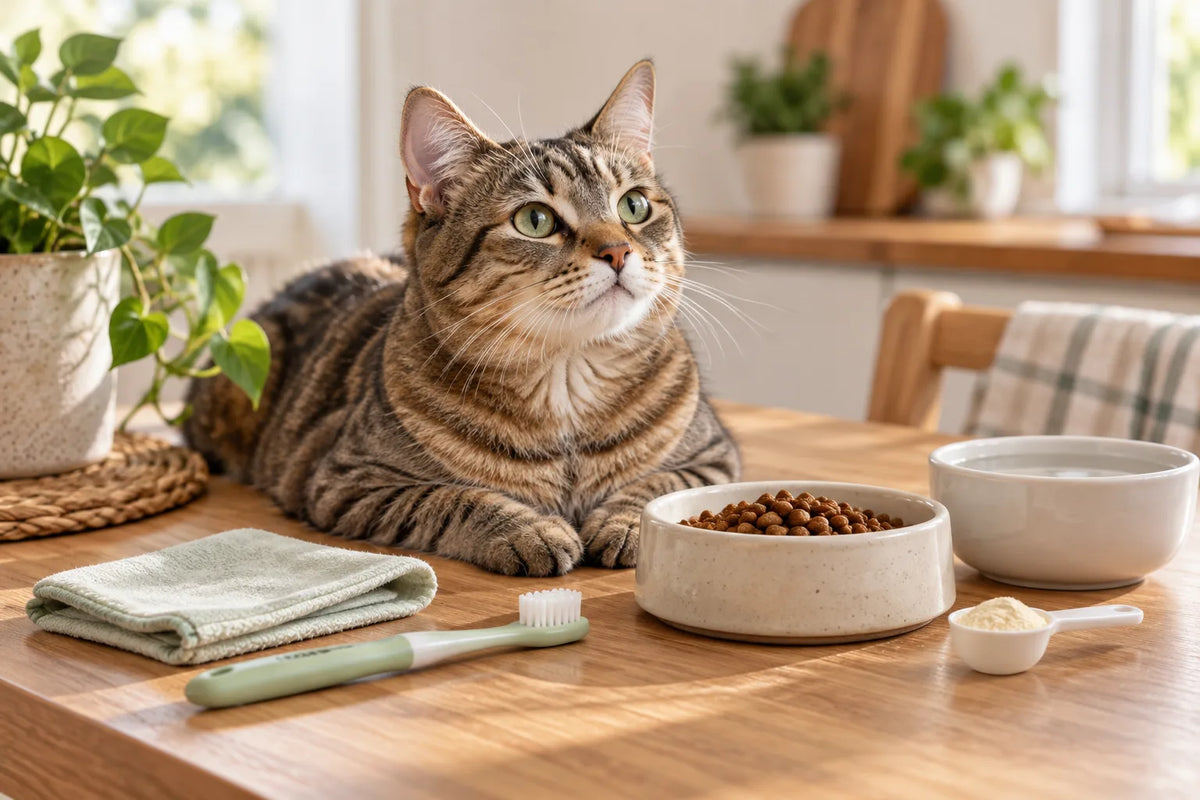
For cats that will not accept brushing, a dental powder on food is an easy daily habit. It supports a home routine. However, it does not replace brushing or vet care.
5. Restart soon after a cleaning
VCA warns that plaque and tartar begin forming in as little as six hours after a dental cleaning. So restart your routine as soon as your vet says the mouth has healed.
Never use human toothpaste on cats. Cornell warns that human products can be toxic to them.
Cat Gingivitis Prevention Checklist
Prevention is far easier than treatment, so use this checklist to keep your cat's gums healthy.
- Brush daily, or at least wipe with gauze every 2 to 3 days
- Use pet toothpaste only, never human toothpaste
- Pick VOHC-accepted treats, diets, or additives
- Check the gums once a week in good light
- Book a dental check at least once a year, as the AVMA advises
- Ask about more frequent checks once your cat gets older

Questions to ask your vet
- What stage of gum disease does my cat have?
- Does my cat need dental X-rays or extractions?
- When can I start brushing again after the cleaning?
- Which VOHC-accepted products would suit my cat?
- How often should we book dental rechecks?
Then write the answers down, because they shape your home plan for the next year.
When to see a vet quickly
Book a visit soon if your cat stops eating, drools heavily, or has bleeding from the mouth. The AVMA lists bad breath, bleeding, and dropping food as reasons for a dental check.
VCA also lists slower chewing and resistance to touching the face as signs of dental pain. For a wider view, read our cat dental care guide.
Looking for other daily nutrition support? Browse our cat supplements collection.
Can't brush every day?
Kittysum Dental+ is a powder you sprinkle on food as part of a daily mouth-care routine. It does not treat gum disease or replace vet care. See how it works →
Key Terms Explained
- Gingivitis: inflammation of the gums, often the first stage of gum disease.
- Periodontitis: a later stage in which the tissues and bone that support the teeth are damaged.
- AVDC (American Veterinary Dental College): the group that defines the standard stages of gum disease.
- Stomatitis: severe, painful inflammation of the whole mouth.
- Dental radiographs: X-rays that show tooth roots and bone below the gumline.
Frequently Asked Questions
Can cat gingivitis be cured?
Gingivitis is usually reversible with a professional cleaning and good daily home care. Once it progresses to periodontitis, the lost tissue cannot grow back. Still, your vet can help control the disease.
How do I treat cat gingivitis at home?
Home care helps after a vet cleaning: daily brushing with pet toothpaste, VOHC-accepted products, and weekly gum checks. Do not brush very inflamed gums until your vet has treated them.
What does cat gingivitis look like?
Look for a red line along the gumline, swollen or bleeding gums, and bad breath. Healthy cat gums are coral pink.
Is cat gingivitis painful?
It can be. Cats often hide mouth pain, so drooling, chewing on one side, or dropping food are important clues.
Can kittens get cat gingivitis?
Yes. Merck notes a juvenile form in some cats at 6 to 8 months of age, with swollen gums and bad breath. Start gentle mouth handling early, and ask your vet to check the gums at each visit.
References
- VCA Animal Hospitals. Gingivitis and Stomatitis in Cats.
- Merck Veterinary Manual. Dental Disorders of Cats.
- Cornell Feline Health Center. Feline Dental Disease.
- Cornell Feline Health Center. When Kitty Needs a Dentist.
- American Veterinary Dental College. AVDC Nomenclature.
- American Veterinary Dental College. Companion Animal Dental Scaling Without Anesthesia.
- AAHA. Periodontal Disease Staging (2019 Dental Care Guidelines).
- AAHA. Recommending Home Dental Care Products.
- American Veterinary Medical Association. Pet Dental Care.
- VCA Animal Hospitals. Dental Cleaning in Cats.
- VCA Animal Hospitals. Dental Pain in Cats.
- VCA Animal Hospitals. Cats, Nutrition, and Periodontal Disease.
- O'Neill DG et al., via Royal Veterinary College. UK's largest ever feline dental disease study. 2023.
- Veterinary Oral Health Council. VOHC Accepted Products for Cats. August 2026.
- Winer JN, Arzi B, Verstraete FJM. Therapeutic Management of Feline Chronic Gingivostomatitis: A Systematic Review of the Literature. Frontiers in Veterinary Science. 2016;3:54.
This article is for general education and is not veterinary advice. These statements have not been evaluated by the Food and Drug Administration. Kittysum products are not intended to diagnose, treat, cure or prevent any disease.