Key takeaways
- Taurine for vegan cats must come from a synthetic source, because plants contain none.
- A 2015 study found three of seven vegetarian canned cat foods below the AAFCO taurine minimum.
- Taurine is only one gap; vegan diets must also supply vitamin A, arachidonic acid and vitamin B12.
- Owner surveys report healthy vegan-fed cats, but they rely on owner reports rather than vet testing.
- If you feed a vegan diet, work with a veterinary nutritionist and schedule regular blood and heart checks.
Taurine for vegan cats is the first nutrient vets ask about, because plant foods contain none at all. Cats cannot make enough taurine on their own. So on a vegan diet, every milligram has to be added.
This guide explains how synthetic taurine works, what the research shows, which other nutrients matter, and the checks that help keep a vegan-fed cat safe. It also explains the risks honestly.
New to taurine? Start with our guide to taurine for cats.
Table of contents
Why Taurine for Vegan Cats Matters
Taurine is an amino acid cats must get from food. In fact, Merck notes that plant protein contains none. Also, VCA Animal Hospitals explains that cats need it for vision, heart muscle function and digestion.
Low taurine causes serious disease. For example, the landmark 1987 Pion study linked heart failure in cats to low blood taurine. Also, the Companion Animals Extension says retinal changes may appear 5 to 6 months into a deficiency. Therefore, taurine for vegan cats is not optional.

Why Plant Foods Contain No Taurine
Taurine is found in animal tissue, especially heart, dark meat and shellfish, according to a UC Davis study. By contrast, grains, legumes and vegetables contain essentially none.
People and dogs can make taurine from other amino acids. Cats, however, make very little. As a result, a plant-based diet for a cat must add taurine for vegan cats as a separate ingredient. Our guide to taurine foods for cats lists natural sources.
How Synthetic Taurine Works
Most taurine in pet food and supplements is made in a lab. Importantly, synthetic taurine is the same molecule as taurine from meat. In fact, research that proved taurine is essential for cats, such as the 1978 study, used purified taurine.
- Same molecule: the body cannot tell the difference.
- No animal source: synthetic taurine fits a vegan ingredient list.
- Measurable: makers can add an exact amount.
So the taurine itself is not the hard part. Instead, the challenge is making sure enough is added, that it survives processing, and that every other nutrient is also covered. That is the real question behind taurine for vegan cats.
What Studies Show About Taurine for Vegan Cats
Research on taurine for vegan cats gives a mixed picture. For example, a 2015 study of vegetarian pet foods found that three of seven canned cat diets fell below the AAFCO minimum for taurine. In other words, a label claim is not a guarantee.
On the other hand, a 2022 survey of 1,418 cats found that owners of vegan-fed cats reported health similar to, or better than, owners of meat-fed cats. However, that study relied on owner reports, not vet exams or blood tests. Therefore, many vets still urge caution.
- Label testing: some vegan foods fall short on taurine.
- Owner surveys: report good health, but without lab checks.
- Controlled trials: long-term vet-tested studies are still limited.
In short, the evidence supports careful monitoring rather than confidence either way. That makes testing central to taurine for vegan cats.
Other Nutrients Vegan Cats Need
However, taurine is only one gap. Cats also need several nutrients that plants do not supply in a usable form. For example:
- Vitamin A: cats cannot convert beta-carotene, so preformed vitamin A must be added.
- Arachidonic acid: a fatty acid found in animal fat.
- Vitamin B12: found naturally only in animal products.
- High protein: cats need much more protein than dogs or people.
Therefore, adding a taurine pill to a homemade vegan meal is not enough. A complete vegan cat food must supply all of these. The AAFCO cat food nutrient profiles list every requirement.

Taurine for Vegan Cats: Diet Comparison
Here is a quick comparison of common feeding choices.
| Diet | Taurine concern | Next step |
|---|---|---|
| Complete animal-based food | Low | Follow the feeding guide |
| Commercial vegan food with feeding trial | Moderate | Regular blood, heart and eye checks |
| Commercial vegan food, label claim only | Higher | Ask the maker for test data; vet monitoring |
| Homemade vegan recipe | High | Only with a veterinary nutritionist |
| Plant food with a taurine pill only | Very high | Not recommended; many nutrients missing |
In short, taurine for vegan cats depends heavily on how the food is made and tested.
Which Cats Are Most at Risk?
Some cats are more vulnerable on any restricted diet, so taurine for vegan cats matters most for them. For instance:
- Kittens: fast growth leaves little margin for error.
- Pregnant and nursing queens: they supply taurine to the litter.
- Cats with heart or eye disease: they need close monitoring.
- Male cats: some plant diets change urine chemistry, which can matter for urinary health.
For these groups, most vets advise a complete animal-based diet. Our guides to taurine for kittens and taurine for pregnant cats explain why.
Choosing a Vegan Cat Food
If you decide to feed a vegan diet, choose the food carefully. So check these points.
- Complete and balanced for cats. It must say this for your cat's life stage.
- Feeding trial. A food tested in live cats is stronger than a recipe calculation.
- Stated taurine content. Ask the maker for the amount per serving.
- Batch testing. Ask whether each batch is tested.
- Vet review. Share the label with your vet before switching.
Also, the WSAVA guide lists questions to ask any pet food maker. As a result, you can judge whether taurine for vegan cats is truly covered.
Health Checks for Vegan-Fed Cats
Ultimately, monitoring is the safety net. Therefore, plan regular checks with your vet.
- Blood taurine: after a few months on the diet, then as advised.
- Heart exam: listening, and an echocardiogram if your vet hears a concern.
- Eye exam: a look at the retina at each visit.
- Urine test: to check urinary health.
- Weight and muscle: to confirm protein intake is enough.
In short, testing turns taurine for vegan cats from a guess into a measured fact. Our guide to taurine deficiency in cats explains taurine testing.
Warning Signs to Watch For
Low taurine develops slowly, so signs can be subtle. For example, watch for these.
- Fast or labored breathing at rest
- Tiredness or hiding
- Bumping into objects or wide pupils
- Poor appetite or weight loss
Fast breathing is an emergency. Meanwhile, any vision change needs a prompt vet exam. In short, early action matters far more than any single nutrient.
Switching Diets Safely
Any diet change should be slow, whether toward or away from a vegan food. Otherwise, cats may refuse food or develop an upset stomach. So follow these steps.
- First, book a baseline vet visit with blood work.
- Next, mix a little of the new food into the old food.
- Then raise the share of the new food over 7 to 10 days.
- After that, track appetite and weight every week.
- Finally, recheck blood taurine after a few months.
As a result, you will spot problems early. Also, never let a cat go without food for more than a day during a switch, because cats that stop eating can develop fatty liver disease. In short, a slow switch keeps taurine for vegan cats on track from the first week.
Homemade Vegan Recipes and Taurine for Vegan Cats
Homemade vegan recipes carry the highest risk. After all, the cook must add taurine, vitamin A, arachidonic acid, vitamin B12 and much more in exact amounts. Moreover, small errors add up over months.
- Use a nutritionist recipe: never a recipe from a forum.
- Weigh every ingredient: cups and spoons are too rough.
- Add taurine after cooking: heat lowers it.
- Keep the recipe steady: change nothing without advice.
Our guides to taurine for homemade cat food and taurine per pound of cat food explain the mixing math. Even so, taurine for vegan cats on a homemade recipe needs more monitoring than any commercial option.
Cost and Effort to Expect
A carefully monitored vegan diet costs more than many owners expect. For example, regular blood tests, heart checks and nutritionist fees add up. Similarly, tested vegan cat foods are often priced at the premium end.
Therefore, plan the budget before switching. In other words, taurine for vegan cats is affordable to add, while the testing around it is the real cost. Above all, do not skip checks to save money, since the heart and eyes are at stake.
Adding Taurine for Vegan Cats
A measured supplement of taurine for vegan cats can add a safety margin. However, it cannot fix a diet that is missing other nutrients. So add one only with your vet's advice.
- Use synthetic taurine: if you want a strictly vegan ingredient list.
- Know the mg per serving: follow your vet's amount.
- Mix into wet food: powder blends more evenly than pills.
VCA describes taurine supplementation as relatively safe, with no reports of problems from excess dietary taurine in cats. Even so, AAFCO sets no maximum. VCA also warns that supplement quality may vary significantly among makers, and the AVMA reports that the main US dietary supplement law does not apply to animal products.
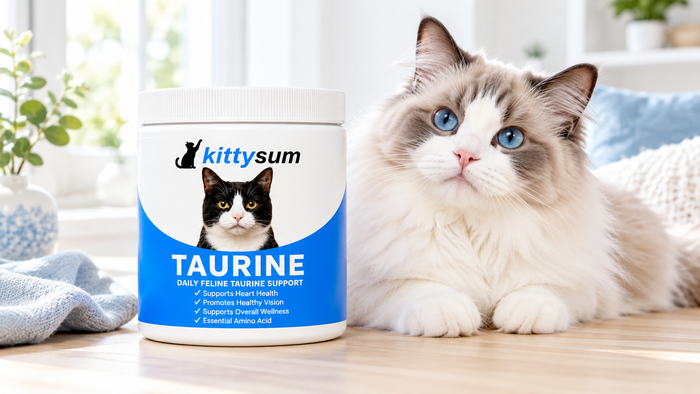
Please note: Kittysum Taurine is blended with chicken liver for a meaty smell, so it is not a vegan product. It suits owners who are open to animal ingredients. You can read the label and serving guide here. For amounts, see our guide to taurine dosage for cats.

A Middle Path Many Owners Choose
Understandably, some owners feel torn between their values and their cat's biology. Fortunately, there are options in between.
- Complete animal-based food: the most proven choice for cats.
- Sustainably sourced proteins: some brands use by-products that would otherwise be wasted.
- Insect-based cat foods: a newer protein option; check that they are complete for cats.
- Vegan food with close monitoring: only with a veterinary nutritionist.
In other words, taurine for vegan cats is one part of a bigger decision. So talk it through openly with your vet.

Common Mistakes With Taurine for Vegan Cats
- Adding a taurine pill to a vegetarian meal. Many other nutrients are still missing.
- Trusting a label without data. Ask for testing.
- Skipping blood and heart checks. Monitoring is essential.
- Switching kittens or pregnant cats. Their margin for error is small.
- Using a flavored supplement without reading it. Some contain animal ingredients.
Avoiding these mistakes keeps taurine for vegan cats as safe as possible.
Keeping records
A simple health log helps a lot. For example, note the food name, batch number, weekly weight and every test result. Then bring the log to each visit. As a result, your vet can compare results over time and see whether taurine for vegan cats stays in a safe range. Likewise, the log helps if you ever change brands, because you can compare before and after. In short, good records make taurine for vegan cats easier to manage year after year.
Questions to Ask Your Vet About Taurine for Vegan Cats
- Is this vegan food complete and tested for cats?
- How often should we test blood taurine?
- Should we check the heart and eyes?
- Would a measured taurine supplement add a useful margin?
Bring the food label to the visit, so your vet can judge taurine for vegan cats in one look. For context, a 1991 Waltham study found cats need at least 39 mg of taurine per kg of body weight a day on canned food. Also, Merck explains the heart disease linked to low taurine, and the VCA supplement guide notes that the FDA does not review non-drug supplements before sale.
Open to animal ingredients?
Kittysum Taurine is a daily taurine powder blended with chicken liver in a 200 g tub with a measuring scoop, free shipping on orders over $50 and a 30-day return policy. It is not vegan. Ask your vet to confirm the amount. Shop Kittysum Taurine →
Key Terms Explained
- Vegan cat food: cat food made without animal ingredients, with added synthetic nutrients.
- Synthetic taurine: taurine made in a lab, not taken from animal tissue.
- Obligate carnivore: an animal that must eat animal tissue, or synthetic copies of key nutrients, to stay healthy.
- Feeding trial: a test where cats eat a food for months while vets check their health.
- Complete and balanced: a food that meets a standard nutrient profile for its life stage.
Frequently Asked Questions
Can vegan cats get enough taurine?
Only if the food adds enough synthetic taurine and every other essential nutrient. Testing has found some vegetarian cat foods below the AAFCO taurine minimum.
Is synthetic taurine vegan?
Synthetic taurine is made without animal tissue and is the same molecule as taurine from meat. Check the full ingredient list of any product.
Is a vegan diet safe for cats?
Evidence is mixed. Owner surveys report good health, but vet-tested long-term studies are limited. Most vets advise caution and regular monitoring.
What else do vegan cats need besides taurine?
Preformed vitamin A, arachidonic acid, vitamin B12 and high protein, all of which plants do not supply in a usable form.
How do I know if my vegan cat is low in taurine?
Ask your vet for a blood taurine test, plus heart and eye exams. Signs such as fast breathing or vision changes need prompt care.
References
- VCA Animal Hospitals. Taurine in Cats.
- VCA Animal Hospitals. Lysine.
- Earle KE, Smith PM. Dietary taurine content and plasma taurine in the cat. Br J Nutr. 1991.
- Pion PD, et al. Myocardial failure in cats with low plasma taurine. Science. 1987.
- Spitze AR, et al. Taurine in animal feed ingredients. 2003.
- Kanakubo K, et al. Protein and amino acids in vegetarian pet diets. 2015.
- AAFCO. Cat Food Nutrient Profiles.
- Merck Veterinary Manual. Nutritional Requirements of Small Animals.
- Merck Veterinary Manual. Dilated Cardiomyopathy.
- WSAVA. Selecting a pet food for your pet.
- Companion Animals Extension. Taurine Requirement of Cats.
- AVMA. Dietary supplement law not applicable to products for animals.
- Knight A, et al. Vegan versus meat-based cat food: guardian-reported health outcomes in 1,418 cats. PLoS One. 2022.
- Knopf K, et al. Taurine: an essential nutrient for the cat. J Nutr. 1978.
This article is for general education and is not veterinary advice. These statements have not been evaluated by the Food and Drug Administration. Kittysum products are not intended to diagnose, treat, cure or prevent any disease.