
Key takeaways
- Amino acids for cats are the building blocks of protein, and cats need several of them from food.
- Cats make very little arginine or taurine, so their diet must supply both.
- One arginine-free meal caused dangerous ammonia levels in a classic study.
- Complete and balanced cat foods cover essential amino acids for most cats.
- Supplements make sense only for specific needs, ideally with your vet's input.
Amino acids for cats come mainly from animal protein. Cats need about a dozen of them in their food, including arginine and taurine, which their bodies make in only tiny amounts. A complete and balanced cat food covers these needs for most healthy cats.
That is the short version. Still, owners often meet amino acids for cats on supplement labels, so it helps to know which ones matter and why.
This guide explains the essential amino acids for cats, the two amino acids cats cannot skip and what the research says about popular supplements.
Table of contents
What Are Amino Acids for Cats
Amino acids are the small units that link together to form protein. A cat's body breaks food protein into amino acids, then rebuilds them into muscle, enzymes, hormones and more.
Some amino acids the body can make on its own. Others it cannot make, or cannot make fast enough. Those are the "essential" amino acids for cats, and they must come from food.
So when we talk about amino acids for cats, we mostly mean the essential ones. If a diet falls short on even one, problems can follow.

Why Cats Need More Amino Acids Than Many Pets
Cats are obligate carnivores. The Cornell Feline Health Center explains that they rely on nutrients found only in animal products.
Cornell also advises looking for enough animal-source ingredients to supply essential amino acids and fatty acids. In other words, meat matters.
A 2024 review in Frontiers in Veterinary Science says experts have long seen cats as needing more protein than many other animals.
A 2023 review in the Journal of Animal Science and Biotechnology adds a key detail: cats make very little arginine or taurine on their own.
The Essential Amino Acids for Cats
Lists of amino acids for cats vary a little between sources. The 2024 Frontiers review names 12 amino acids cats need in their diet.
- Arginine
- Cysteine
- Histidine
- Isoleucine
- Leucine
- Lysine
- Methionine
- Phenylalanine
- Threonine
- Tryptophan
- Tyrosine
- Valine
Taurine is often listed separately because it is not used to build protein. However, VCA Animal Hospitals still calls taurine an essential amino acid for cats.
The good news is simple. A food that meets AAFCO profiles counts as complete and balanced, according to Cornell. So it should supply all essential amino acids for cats.
Arginine: The Amino Acid Cats Cannot Skip
Among amino acids for cats, arginine stands out. It helps the body clear ammonia, a waste product of protein. Because cats make so little of it, they need a steady supply from food.
A classic 1978 study in Science showed how fast trouble can start. Young cats given a single arginine-free meal developed high ammonia and signs of toxicity within two hours.
That is unusual among animals. As a result, arginine is one of the most important amino acids for cats to get from every meal.
You do not need to buy arginine separately. Instead, choose a complete food and avoid feeding unbalanced home recipes.
Taurine and Amino Acids for Cats
Taurine supports the heart, eyes and digestion. VCA notes that cats have a limited ability to make it.
What happens without enough
A landmark 1987 study by Pion and colleagues in Science linked low plasma taurine to dilated cardiomyopathy in cats. Heart function returned to normal after taurine supplementation.
VCA adds that untreated retinal degeneration from low taurine can lead to irreversible blindness.
Why most foods have enough
VCA explains that diets formulated for cats now add enough taurine. A 2012 USDA review even found taurine was the only synthetic amino acid needed to meet AAFCO guidelines for cats.
For more, see our taurine for cats guide and taurine deficiency guide.
Lysine: What the Research Shows
Lysine is one of the amino acids for cats that owners ask about most. VCA's lysine page says owners and vets have tried it for signs of feline herpes virus.
However, the evidence is weak. A 2015 systematic review by Bol and Bunnik found a complete lack of scientific evidence and advised stopping lysine for this use.
The same review notes that one shelter study found more herpes-positive cats in the lysine group than in the control group. It also found no evidence of lysine-arginine conflict in cats.
So lysine is not a cure, and it does not replace vet care. Our L-lysine for cats guide covers the full picture honestly.

Methionine and Urine pH
Methionine is a sulfur-containing amino acid. A 2001 study in the Journal of Veterinary Medical Science found that added methionine lowered urine pH and struvite activity in healthy cats.
That is why methionine shows up in some urinary diets. Still, it is not something to add at home. In fact, DL-methionine products should not go to kittens, because they can cause toxicity and stunted growth, as PetMD reports.
If your vet suggests a urinary diet, let the diet supply the right amount.
Tyrosine, Phenylalanine and Coat Color
These two amino acids help make melanin, the pigment in dark fur. Interestingly, black cats can show the effects of a shortfall.
A WSAVA 2002 talk on red coat syndrome notes that the amounts needed for full melanin production in cats sit above standard growth recommendations.
According to WikiVet, kittens with enough phenylalanine for growth but not for pigment can develop a reddish coat. So a black cat turning rusty brown is worth mentioning to your vet.
Key Amino Acids for Cats Compared
This table pulls together the amino acids for cats that owners hear about most.
| Amino acid | Main role | Shortfall concern | Usually covered by complete food |
|---|---|---|---|
| Arginine | Clears ammonia | High ammonia within hours | Yes |
| Taurine | Heart, eyes, digestion | Heart disease, blindness | Yes, added to cat foods |
| Lysine | Protein building | Rare on complete food | Yes |
| Methionine | Protein, urine pH | Rare; excess risky in kittens | Yes |
| Tyrosine and phenylalanine | Protein, coat pigment | Reddish coat in black cats | Usually |
Home-Cooked Diets and Amino Acids for Cats
Home cooking is where gaps in amino acids for cats appear most often. A study by Wilson and colleagues in JAVMA, summarized by the British Veterinary Nursing Association, checked 114 home-made cat diet recipes.
None of them provided all essential nutrients, including recipes written by vets. So a home diet needs a board-certified vet nutritionist, not a quick online recipe.
WSAVA's pet food selection guide also tells owners to choose foods labeled as complete. That label is the simplest way to cover amino acids for cats.
If you already cook for your cat, see our taurine for homemade cat food guide for one key piece of the puzzle.
Where Cats Get Amino Acids for Cats Every Day
Cats get amino acids from the protein in their food. Meat, fish, poultry and eggs all supply it.
So the main source of amino acids for cats is simple: a good meat-based food. Cornell suggests choosing a food with enough animal-source ingredients to cover these needs.
Plant protein is a different story. Because cats rely on nutrients found in animal foods, a plant-only diet makes it much harder to meet their needs.
Also, treats and toppers add some protein. Still, they should not replace the main food, since the main food is where the balance comes from.

Reading Labels for Amino Acids for Cats
You do not need to count each amino acid. Instead, check a few simple things on the bag or can.
- Look for "complete and balanced." This means the food meets a full nutrient profile.
- Check the life stage. Kitten, adult or all life stages should match your cat.
- Read the first ingredients. A named meat near the top is a good sign.
- Find added taurine. Most cat foods list it near the end.
- Note special diets. Vet diets set their own amino acid levels, so do not add extras.
If those boxes are ticked, the food should cover amino acids for cats on its own. In that case, you can skip extra products unless your vet says otherwise.
Amino Acids for Cats at Each Life Stage
Kittens
Kittens grow fast, so they need more protein for their size. Feed a growth or all life stages food. Also, avoid adding single amino acids, since too much can harm a small body.
Adult cats
Healthy adults on a complete food are usually well covered. So the main job is to keep the diet steady and the treats small.
Senior cats
Older cats often eat less. In addition, some have kidney disease, which may call for a special diet. Ask your vet before you change protein or add amino acids for cats in their later years.
When to Talk to Your Vet
Talk to your vet if your cat eats a home-cooked or raw diet. Also call if your cat loses weight, eats poorly or has a dull coat.
A black cat with a coat turning reddish brown is worth a mention, too. Finally, ask before you start any amino acid product, so your vet can check the whole diet.
These simple steps keep amino acids for cats in balance. Most of all, they keep the plan built around your own cat.
Supplements With Amino Acids for Cats
Most healthy cats on a complete food do not need extra amino acids for cats sold as supplements. Even so, a supplement may fit a specific need your vet identifies.
Know the rules for supplements
AAFCO explains that there is no separate category for animal supplements under US federal law. The National Animal Supplement Council gives the same account.
VCA notes that the FDA does not review non-drug health supplements before sale. Therefore, choose clear labels and talk to your vet.
Follow a simple checklist
- Check the food label. Look for a complete and balanced statement.
- Review treats and toppers. Note anything that adds protein or supplements.
- Ask your vet. Share why you want a supplement.
- Target one need. Avoid stacking several products at once.
- Choose a clear label. Look for the amount per serving and serving by weight.
- Recheck. Review the plan with your vet at the next visit.
A single-ingredient option
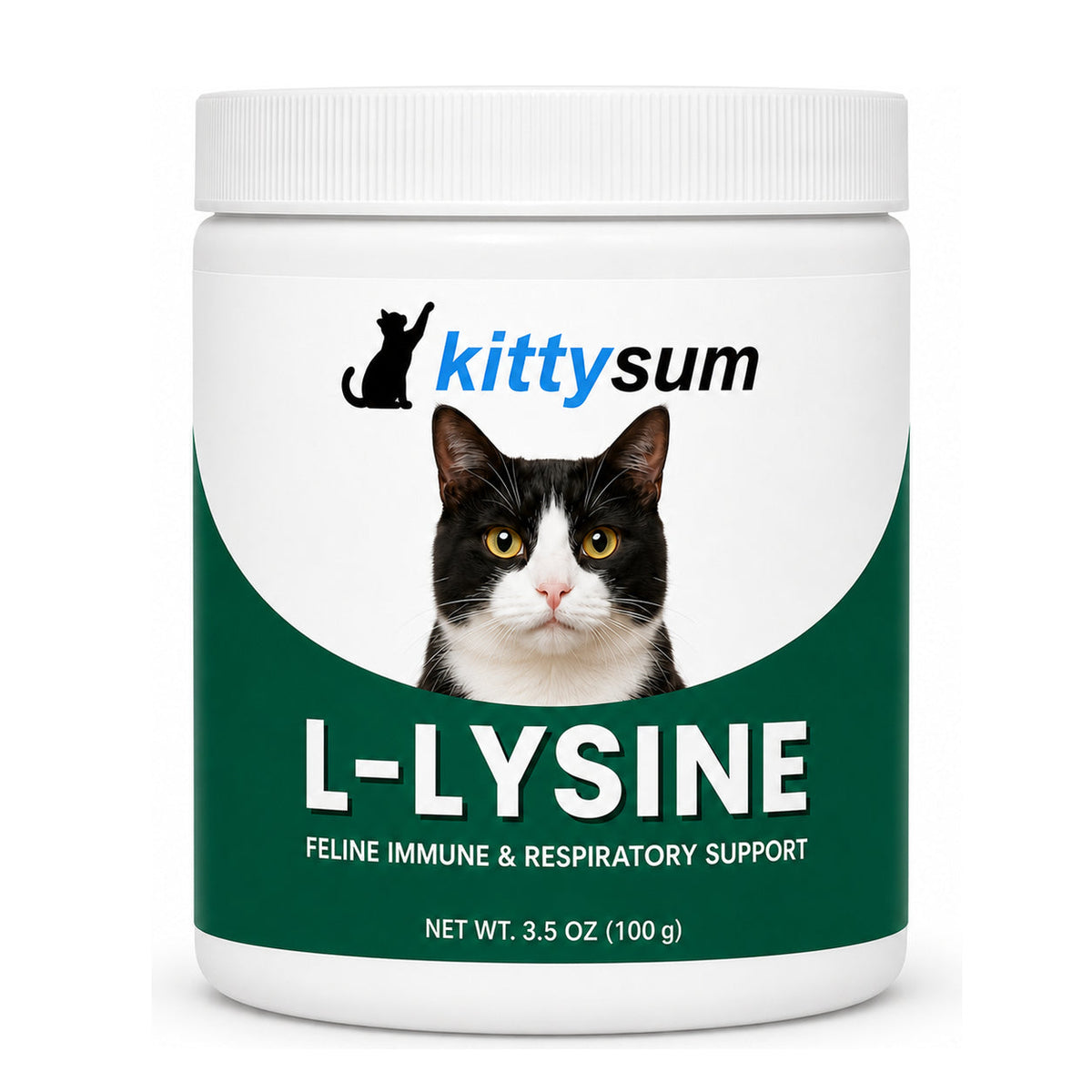
Kittysum Taurine is a daily taurine powder for cats with a measuring scoop. It is nutrition support, not a treatment. Ask your vet to confirm it fits your cat's diet. Shop Kittysum Taurine → If your vet suggests lysine, see Kittysum L-Lysine.
Myths About Amino Acids for Cats
Myth: more protein powder is always better. In truth, balance matters more than volume. A complete food already sets the right mix.
Myth: dogs and cats need the same amino acids. Not quite. For example, cats make far less arginine and taurine, so a dog food can leave a cat short.
Myth: lysine treats herpes. The best review so far found no good evidence for that use.
Myth: home recipes are always healthier. Sadly, a study of 114 recipes found none met every nutrient need. So amino acids for cats are easiest to cover with a complete food.
Common Mistakes With Amino Acids for Cats
- Feeding a dog food or vegetarian diet to a cat.
- Cooking at home without a vet nutritionist's recipe.
- Expecting lysine to cure feline herpes.
- Giving methionine products to kittens.
- Stacking several supplements without a plan.
- Ignoring a black coat that turns rusty brown.
Each of these mistakes with amino acids for cats is avoidable. Start with a complete food, then add only what your vet supports.

Key Terms
- Essential amino acid: one the body cannot make in enough amounts, so food must supply it.
- Obligate carnivore: an animal that relies on nutrients found only in animal foods.
- Hyperammonemia: high ammonia in the blood.
- Dilated cardiomyopathy: a heart disease where the heart muscle weakens and stretches.
- Complete and balanced: a food that meets a nutrient profile on its own.
Frequently Asked Questions
What amino acids do cats need
Cats need arginine, histidine, isoleucine, leucine, lysine, methionine, phenylalanine, threonine, tryptophan and valine from food, plus taurine. Some lists also add cysteine and tyrosine. A complete cat food covers them.
Do cats need amino acid supplements
Most healthy cats on a complete and balanced food do not. Supplements may help in specific cases your vet identifies, such as a home-cooked diet or a vet-advised taurine plan.
Why is taurine so important for cats
Cats make only a little taurine on their own. VCA notes that a lack of it can cause heart disease and retinal damage that can lead to blindness, which is why cat foods add it.
Does lysine help cats with herpes
The evidence is weak. A 2015 systematic review found no good scientific support and advised against lysine for feline herpes. Ask your vet before you use it.
References
- Cornell Feline Health Center. Feeding Your Cat.
- VCA Animal Hospitals. Taurine in Cats.
- Sun M, De Cuyper A, Dierenfeld ES, Janssens GPJ. Review of feline protein and amino acid needs. Front Vet Sci. 2024.
- VCA Animal Hospitals. Lysine.
- Amino acid nutrition and metabolism in domestic cats and dogs. J Anim Sci Biotechnol. 2023.
- Bol S, Bunnik EM. Lysine supplementation is not effective for the prevention or treatment of feline herpesvirus 1 infection in cats. BMC Vet Res. 2015.
- Ammonia intoxication in the near-adult cat as a result of a dietary deficiency of arginine. Science. 1978.
- Pion PD, Kittleson MD, Rogers QR, Morris JG. Myocardial failure in cats associated with low plasma taurine. Science. 1987.
- Funaba M, et al. Methionine supplementation and urine in healthy cats. J Vet Med Sci. 2001.
- AAFCO. Definition of Food and Drugs.
- WSAVA. Guidelines on Selecting Pet Foods.
- National Animal Supplement Council. Historical Summary.
- USDA National Organic Standards Board. Required Synthetic Amino Acids for Pet Foods. 2012.
- British Veterinary Nursing Association. Science in Shorts: home-made cat diets.
This article is for general education and is not veterinary advice. These statements have not been evaluated by the Food and Drug Administration. Kittysum products are not intended to diagnose, treat, cure or prevent any disease.