
Key takeaways
- Cod liver oil for cats supplies omega-3s plus vitamins A and D.
- Cats get vitamin A poisoning more easily than dogs, and the extra bone growth does not reverse.
- Too much vitamin D can raise calcium and harm the kidneys.
- A complete cat food already contains the vitamins your cat needs.
- If your vet wants more omega-3s, a fish body oil made for cats is usually the simpler choice.
Cod liver oil for cats is not a plain omega-3 oil. It also carries vitamins A and D, and cats can build up harmful amounts of both. So most cats on a complete food should not get it without a vet's plan.
That short answer surprises many owners. After all, cod liver oil has a long history as a family health tonic. However, a cat's body handles vitamins very differently from a person's body.
This guide explains what cod liver oil for cats contains, why the vitamins matter, which signs to watch for and what to ask your vet instead.
Table of contents
What Is Cod Liver Oil for Cats
Cod liver oil comes from the liver of cod fish. In contrast, regular fish oil comes from the body of oily fish such as salmon or sardines.
That difference sounds small, but it matters. The liver is where fish store fat-soluble vitamins. As a result, cod liver oil for cats delivers vitamins along with the fats.
The NIH Office of Dietary Supplements notes that cod liver oil supplements provide vitamin A and vitamin D in addition to long-chain omega-3s.
So when people ask about cod liver oil for cats, they are really asking about three nutrients at once. Each one needs its own safety check.

What Cod Liver Oil Contains
Here is the basic breakdown of cod liver oil for cats. First, it has the omega-3 fats EPA and DHA. Second, it has preformed vitamin A. Third, it has vitamin D.
The vitamin D amount alone is large. The NIH vitamin D fact sheet lists one tablespoon of cod liver oil at 1,360 IU, or 170% of the human daily value.
That figure is for an adult person. Meanwhile, an average cat weighs a small fraction of an adult human. So a "small splash" of a human product can mean a big dose for a cat.
For comparison, the same NIH source says a typical 1,000 mg fish oil capsule provides about 180 mg EPA and 120 mg DHA. Fish body oil does not add the same vitamin load.
Why cats need vitamin A from animal foods
Cats rely on vitamin A from animal tissue. The MSD Veterinary Manual explains that cats lack the gut enzyme most species use to turn beta-carotene into vitamin A.
That is why cat foods include preformed vitamin A. It also means a cat food already covers this need. Adding cod liver oil for cats stacks more of the same vitamin on top.
Vitamin A Risk of Cod Liver Oil for Cats
Vitamin A is the biggest worry with cod liver oil for cats. According to VCA Animal Hospitals, cats are more susceptible to vitamin A poisoning than dogs.
VCA also names the usual causes. Long-term poisoning tends to come from raw liver, cod liver oil or other supplements rich in vitamin A, fed over weeks to months.
The damage builds slowly. For example, extra bone can form, especially in the neck, chest and joints. A cat may move stiffly, groom less or seem sore when you touch the neck.
Most importantly, VCA states that the extra bone growth does not reverse. Stopping the source can halt further harm. Still, it cannot undo bone that has already formed.
How much vitamin A is too much
The MSD toxicology chapter gives a reference point. It lists the vitamin A need for cats as 10,000 IU per kg of diet.
The same page says amounts up to 100,000 IU per kg of diet are considered safe. It also notes vitamin A toxicosis after large amounts of cod liver oil.
Those numbers describe the whole diet, not a spoon of oil. Because labels on human oils list doses per person, you cannot easily convert them at home. That is a job for your vet.
Kittens and liver-rich diets
Growing kittens need extra care. MSD reports that vitamin A toxicity shows up more often when growing kittens eat a diet high in liver.
So if your kitten eats a home-made or liver-heavy diet, skip cod liver oil for cats entirely unless your vet says otherwise. Our omega-3 for kittens guide covers safer ways to think about fats at this age.
Vitamin D Risk of Cod Liver Oil for Cats
Vitamin D is the second concern with cod liver oil for cats. Unlike vitamin A, too much vitamin D can cause problems faster.
MSD notes that vomiting, depression, more thirst and more urination can start within 12 to 48 hours of a large vitamin D exposure. High blood calcium and kidney injury can follow.
VCA's vitamin D page adds that high doses can raise calcium and phosphorus levels, which may lead to kidney failure in cats.
This is not only a supplement problem. In fact, the FDA has warned pet owners about pet foods with toxic vitamin D levels. It lists vomiting, loss of appetite, more thirst and more urination as signs.
Because the food already supplies vitamin D, cod liver oil for cats adds to a total that was set to be complete on its own.
The Omega-3 Side of Cod Liver Oil for Cats
Now for the part owners usually want. EPA and DHA are the omega-3s vets use most. VCA's fish oil page says they act as anti-inflammatory agents.
VCA lists uses such as skin allergies, arthritis and kidney disease, always as part of a vet's plan. For a deeper look, read our omega-3 for cats guide.
However, you can get EPA and DHA without the extra vitamins. MSD names oily fish, krill oil and algae oil as the best dietary sources of EPA and DHA.
So the useful part of cod liver oil for cats is easy to find elsewhere. The risky part, the vitamin load, is what sets it apart.

Cod Liver Oil for Cats vs Other Options
This table compares common choices. It is a starting point for a talk with your vet, not a dosing chart.
| Option | Omega-3s | Added vitamins A and D | Main concern |
|---|---|---|---|
| Cod liver oil (human) | Yes | Yes, high | Vitamin A and D excess |
| Fish body oil (human) | Yes | Usually not | Dose sized for people |
| Omega-3 product made for cats | Yes | Check the label | Follow the label and your vet |
| Complete cat food alone | Varies by recipe | Already balanced | None for most healthy cats |
| Plain cooked oily fish | Yes | Small amounts | Treat limits, bones |
As you can see, the clear difference is the vitamin column. That is why vets often steer owners away from cod liver oil for cats.
Steps Before You Add Cod Liver Oil for Cats
If you still want to try cod liver oil for cats, follow a careful order. The flowchart below shows the path we suggest.
- Check the food. Look for a complete and balanced statement on the label.
- List every supplement. Include treats, toppers and any multivitamin.
- Ask your vet. Share the list and the reason you want omega-3s.
- Compare options. Ask whether a fish body oil or a cat product fits better.
- Use a cat dose only. Never pour from a human bottle by guesswork.
- Watch for signs. Track appetite, thirst, litter habits and movement.
The Cornell Feline Health Center puts it plainly: supplements can harm cats, so never give them without your vet's approval.
Warning Signs After Cod Liver Oil for Cats
Know these signs before you start anything new. Then you can act early if something changes.
Signs linked to too much vitamin D
- Vomiting or loss of appetite.
- Drinking much more water than usual.
- Larger or more frequent urine clumps.
- Low energy or hiding.
Signs linked to too much vitamin A
- Stiffness, especially in the neck.
- Less grooming or a messy coat.
- Reluctance to jump or climb.
- Pain when you touch the neck or legs.
Signs linked to fish oil itself
VCA lists mild stomach upset, a fishy odor, an oily coat and flaky skin. It also says to stop fish oil and call your vet if you see unusual bruising or bleeding, especially in cats.
If any of these signs appear, stop cod liver oil for cats and call your vet. Bring the bottle so your vet can read the label.

Safer Options Than Cod Liver Oil for Cats
Most owners want a shinier coat, easier joints or general support. Good news: you can talk with your vet about these goals without the vitamin load.
Start with the food
Cornell explains that foods meeting AAFCO profiles count as nutritionally complete and balanced. So a good food is the base of any plan.
Ask about a fish body oil
Fish body oil supplies EPA and DHA with fewer added vitamins. Our fish oil for cats guide covers how it differs and what vets watch for.
Try omega-3 foods in small amounts
Plain cooked oily fish can work as an occasional treat. See our new omega 3 foods for cats guide for safe choices and limits.
Pick a product made for cats
A cat product lists a serving by body weight. That removes the guesswork of cutting down a human dose.
Want omega-3s without guesswork
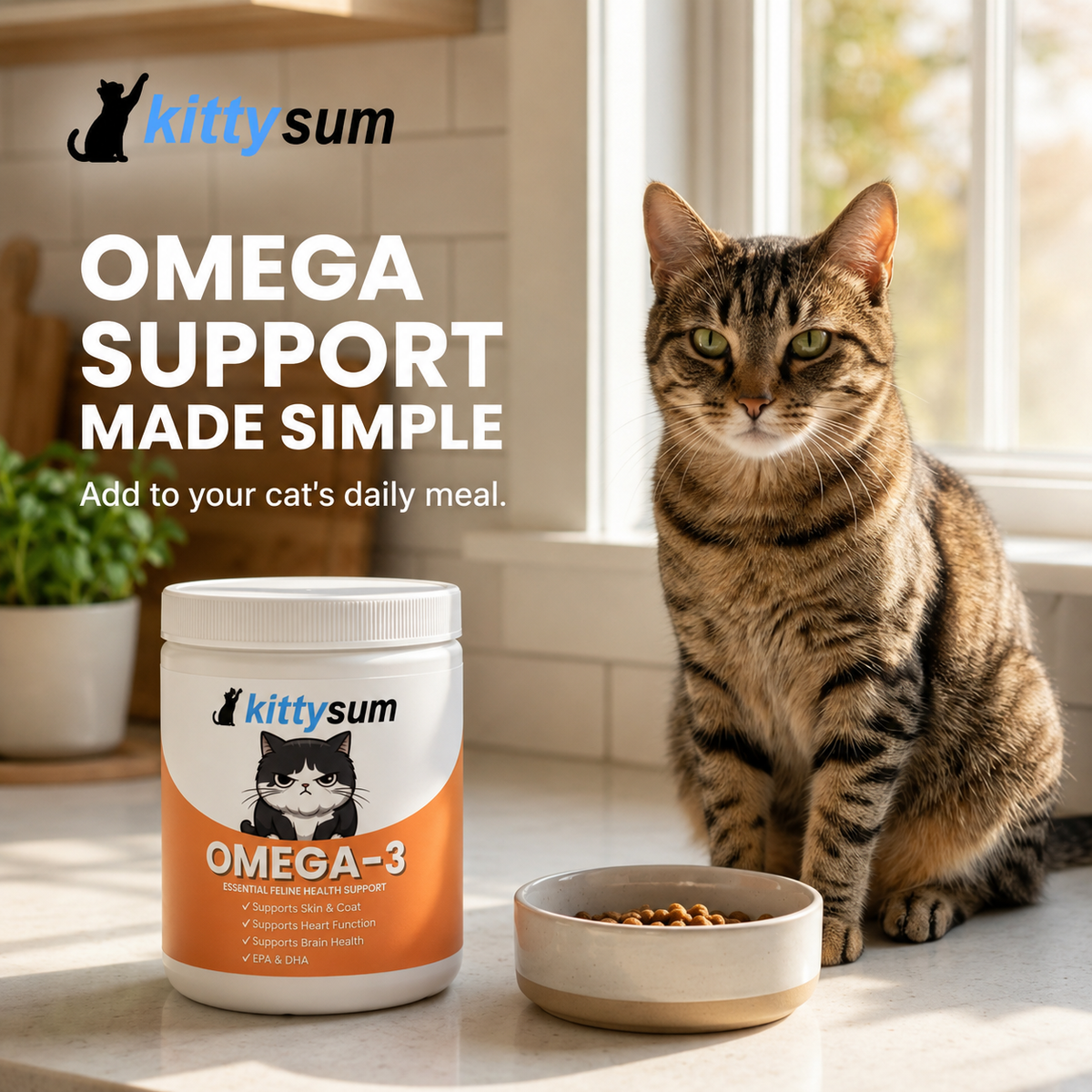
Kittysum Omega-3 is a daily omega-3 powder made for cats, with label serving directions by weight. It is nutrition support, not a treatment. Ask your vet to confirm it fits your cat's diet. Shop Kittysum Omega-3 →
Reading Labels on Cod Liver Oil for Cats
If your vet does approve cod liver oil for cats, read the label closely. Here is what to check.
- Vitamin A per serving. Look for an IU figure, then share it with your vet.
- Vitamin D per serving. Again, look for IU and show your vet.
- EPA and DHA. These numbers tell you the omega-3 dose.
- Species. A product made for cats beats one made for people.
- Source and testing. VCA advises buying fish oil from a trusted source because of heavy metal risk.
Also note that pet supplements do not get FDA review before sale. VCA points this out on its supplement pages, so your vet's advice matters even more.
Common Mistakes With Cod Liver Oil for Cats
- Using a human bottle and guessing a smaller dose.
- Adding it to a food that already lists vitamins A and D.
- Combining it with liver treats or a multivitamin.
- Giving it to a kitten on a liver-rich diet.
- Skipping a vet visit when stiffness or thirst appears.
- Assuming "natural" means "safe in any amount."
Each mistake has the same root. The vitamins in cod liver oil for cats add up quietly across the whole diet.
Why Owners Reach for Cod Liver Oil for Cats
Many people grew up with a spoon of cod liver oil at breakfast. So it feels natural to share that habit with a pet.
Also, online forums often praise cod liver oil for cats as a coat or joint booster. However, those posts rarely mention vitamin totals or a cat's food label.
In addition, some owners mix up the two oils on store shelves. For example, a bottle may say "fish oil" on the front and "cod liver" in small print. Because of this, always check the ingredient line.
Finally, cost plays a part. A big human bottle looks cheap per dose. Still, a cheap dose can become an expensive vet bill if the vitamins build up.
Questions to ask your vet about cod liver oil for cats
- Does my cat's food already cover vitamins A and D?
- Would a fish body oil give the same omega-3 benefit with less risk?
- If you approve cod liver oil for cats, what exact amount and for how long?
- Which signs should make me stop right away?
- When should we recheck, and do we need blood work?
Bring the bottle or a photo of the label to the visit. That way, your vet can read the vitamin figures instead of guessing. As a result, you leave with a plan that fits your cat, not a person.
When to Call Your Vet
Call your vet before you start cod liver oil for cats if your cat has kidney disease, a bleeding disorder or takes blood thinners. VCA advises caution with fish oil in these cases.
Call right away if your cat vomits, drinks far more than usual or seems stiff after starting a supplement. Early care gives your vet the most options.

Key Terms
- EPA and DHA: long-chain omega-3 fats found in fish and algae.
- Preformed vitamin A: vitamin A in its active form, found in animal tissue.
- Hypervitaminosis A: the medical term for vitamin A poisoning.
- IU: international units, a way to measure vitamins A and D.
- Complete and balanced: a food that meets a nutrient profile on its own.
Frequently Asked Questions
Can cats have cod liver oil
Only with your vet's approval. Cod liver oil carries vitamins A and D as well as omega-3s, and cats can build up too much vitamin A. Most vets prefer a fish body oil or a product made for cats.
How much cod liver oil can I give my cat
There is no safe home dose to guess. The right amount depends on your cat's weight, diet and other supplements, so ask your vet to check the whole diet first.
What are the signs of too much cod liver oil in cats
Long-term excess vitamin A can cause stiffness, neck pain and limited movement from extra bone growth. Excess vitamin D can cause vomiting, more thirst and more urination. Call your vet if you see these signs.
Is fish oil the same as cod liver oil for cats
No. Fish oil comes from the body of oily fish and mainly supplies omega-3s. Cod liver oil comes from the liver and adds vitamins A and D, which makes overdosing easier.
References
- NIH Office of Dietary Supplements. Omega-3 Fatty Acids: Health Professional Fact Sheet.
- NIH Office of Dietary Supplements. Vitamin D: Health Professional Fact Sheet.
- NIH Office of Dietary Supplements. Vitamin A and Carotenoids: Health Professional Fact Sheet.
- VCA Animal Hospitals. Vitamin A Poisoning in Cats.
- VCA Animal Hospitals. Vitamin D Poisoning in Cats.
- VCA Animal Hospitals. Fish Oil.
- VCA Animal Hospitals. Vitamin A.
- MSD Veterinary Manual. Nutritional Requirements of Small Animals.
- MSD Veterinary Manual. Toxicoses in Animals From Human Multivitamins and Supplements.
- U.S. Food and Drug Administration. FDA Alerts Pet Owners about Potentially Toxic Levels of Vitamin D in Several Dry Pet Foods.
- Cornell Feline Health Center. Feeding Your Cat.
- AAFCO. Definition of Food and Drugs.
This article is for general education and is not veterinary advice. These statements have not been evaluated by the Food and Drug Administration. Kittysum products are not intended to diagnose, treat, cure or prevent any disease.