Key takeaways
- DHA, a long-chain omega-3, builds up in the developing brain and retina.
- A complete kitten food labeled for growth or all life stages is the first source of omega-3 for kittens.
- Plant oils supply ALA, but cats convert little of it into EPA and DHA.
- Too much fish oil can cause weight gain and stomach upset.
- Ask your vet before adding any supplement to a growing kitten's diet.
New owners often ask about omega-3 for kittens when they compare foods. It is a fair question. Kittens grow fast, and their eyes and brains are still developing.
So this guide explains what omega-3s do and why DHA gets so much attention. It also shows how a good growth food covers most needs.
Then we look at when a supplement may help, what to avoid and what to ask your vet.
Table of contents
- What Omega-3 for Kittens Means
- Why DHA Matters for Growing Kittens
- Omega-3 for Kittens Starts With the Right Food
- Common Sources of Omega-3 for Kittens
- Do Kittens Need an Omega-3 Supplement?
- Signs a Kitten May Lack Omega-3s
- Risks of Too Much Omega-3 for Kittens
- How to Choose a Product for Omega-3 for Kittens
- Daily Feeding Tips Beyond Omega-3 for Kittens
- Omega-3 for Kittens vs Adult Cats
- Omega-3 for Kittens on Homemade Diets
- Myths About Omega-3 for Kittens
- The Queen's Diet Matters Too
- A 30-Day Check-In Plan
- Questions to Ask Your Vet
- Key Terms Explained
- Frequently Asked Questions
- References
What Omega-3 for Kittens Means
Omega-3s are a family of polyunsaturated fats. Before looking at omega-3 for kittens, it helps to know the main types. The three main ones are ALA, EPA and DHA.
According to the Ontario Veterinary College (OVC) pet nutrition team, ALA is a short-chain omega-3, while EPA and DHA are long-chain omega-3s.
Also, omega-3s work together with omega-6 fats, so omega-3 for kittens is about balance. That balance matters for normal growth and for keeping inflammation in check.
Why omega-3 for kittens differs from adults
For example, adult cats need omega-3s for skin, coat and general health. Kittens, however, are also building new nerve and eye tissue.
That is why DHA in particular comes up so often when people discuss omega-3 for kittens.

Why DHA Matters for Growing Kittens
DHA builds up in the brain and in the light-sensing cells of the retina. This is the core reason omega-3 for kittens matters. Research in young cats backs this up.
In a 1997 study, Pawlosky and colleagues fed queens different fat blends before mating and through nursing. Kittens from diets without DHA had less DHA in their retinas and brains.
Those kittens also showed slower retinal responses at 8 weeks of age, which shows why omega-3 for kittens matters. Only diets that contained DHA supported high DHA levels in these tissues.
Can kittens make their own DHA?
The same study suggested young cats have a low ability to make DHA from other fats. So the authors concluded that DHA status matters for optimal retinal function in young cats.
Similarly, a 1998 review in JAVMA by Waldron and colleagues examined the role of long-chain omega-3s in nervous system development in dogs and cats.
Omega-3 for Kittens Starts With the Right Food
The first and best source of omega-3 for kittens is a complete and balanced food made for growth.
AAFCO recognizes four life stages on pet food labels: gestation and lactation, growth, maintenance and all life stages. Kittens need a food labeled for growth or all life stages.
Also, the OVC team notes that both the NRC and AAFCO set minimum and maximum omega-3 levels by life stage. So a complete growth food is formulated with these needs in mind.
Read the nutritional adequacy statement
First, look for the line that names the life stage. Note that AAFCO says snacks, treats and supplements are exempt from this statement.
In other words, a label for omega-3 for kittens cannot tell you whether a kitten's whole diet is balanced. Only the main food can do that.

Common Sources of Omega-3 for Kittens
However, different ingredients supply different omega-3s. The table below draws on the OVC summary of common pet food sources.
| Source | Omega-3 types supplied | Notes |
|---|---|---|
| Flaxseed or flaxseed oil | ALA only | Plant source; converts poorly |
| Canola oil | ALA only | Plant source of ALA |
| Soybean oil | ALA only | Plant source of ALA |
| Fish meal or fish oil | ALA, EPA and DHA | Marine source of long-chain omega-3s |
| Algal oil | ALA, EPA and DHA | Plant-based source of EPA and DHA |
Notably, plant oils supply only ALA. The OVC team explains that ALA converts to EPA and DHA in small amounts, which are not enough for clear benefits.
So when you compare sources of omega-3 for kittens, marine and algal oils stand out because they supply EPA and DHA directly.
What about algal oil?
In addition, algal oil is a plant-based source of EPA and DHA. A 2020 study by Vuorinen and colleagues tested it in cats from before mating through gestation, nursing and growth.
Diets with up to 3.0% algal oil did not affect the health, growth or blood work of queens or kittens up to 32 weeks of age. Plasma EPA and DHA also rose with the dose.
Do Kittens Need an Omega-3 Supplement?
In most cases, no. AAFCO explains that healthy cats fed a complete and balanced diet for their life stage generally do not need supplements.
Likewise, the Cornell Feline Health Center says supplements are usually unnecessary with a balanced and complete diet. It adds that supplements should never be given without a vet's approval.
When a vet may suggest omega-3 for kittens
- A kitten on a vet-formulated homemade diet
- Dry, flaky skin or a coarse coat after a vet exam
- A specific health plan your vet has designed
Even then, your vet sets the type and amount of omega-3 for kittens. A growing body is easy to overload, so guesswork is not a good plan.
Signs a Kitten May Lack Omega-3s
True deficiency is uncommon in kittens on complete diets that supply enough omega-3 for kittens. Still, the OVC team lists signs that may appear when fatty acids run short.
- A coarse coat
- Dry, flaky skin
- Hair loss
- In severe omega-3 deficiency, retinal damage and vision loss
However, these signs have many other causes. Parasites, allergies and infections can look similar, so a vet exam comes first.
For skin and coat questions in older cats, see our guide to cat dandruff and dry skin.

Risks of Too Much Omega-3 for Kittens
More is not always better, and that applies to omega-3 for kittens too. The OVC team lists several problems linked to excess omega-3s.
- Weight gain, because omega-3 oils are fats
- Vomiting and diarrhea
- Possible heavy metal exposure from poor-quality fish oils
- Lipid peroxidation, which can resemble vitamin E deficiency
Also, a 2013 review by Lenox and Bauer listed effects on platelets, wound healing, immune function and blood sugar control among potential adverse effects.
Watch out for cod liver oil
Cod liver oil can supply vitamin A as well as omega-3s. The University of Illinois notes that cats are more affected by vitamin A toxicity than dogs.
So avoid giving human fish oils or cod liver oil to a kitten. Instead, ask your vet for a product made for cats, if one is needed at all.
How to Choose a Product for Omega-3 for Kittens
If your vet does suggest a supplement, quality matters for omega-3 for kittens. The OVC team advises choosing a reputable company that lists all ingredients and explains its quality control.
- EPA and DHA amounts stated per serving
- A clear source, such as fish or algal oil
- Directions for age and weight
- Storage directions and an expiry date
- Contact details for the maker
Also, check whether the label covers kittens at all. Some products are designed for adult cats only.
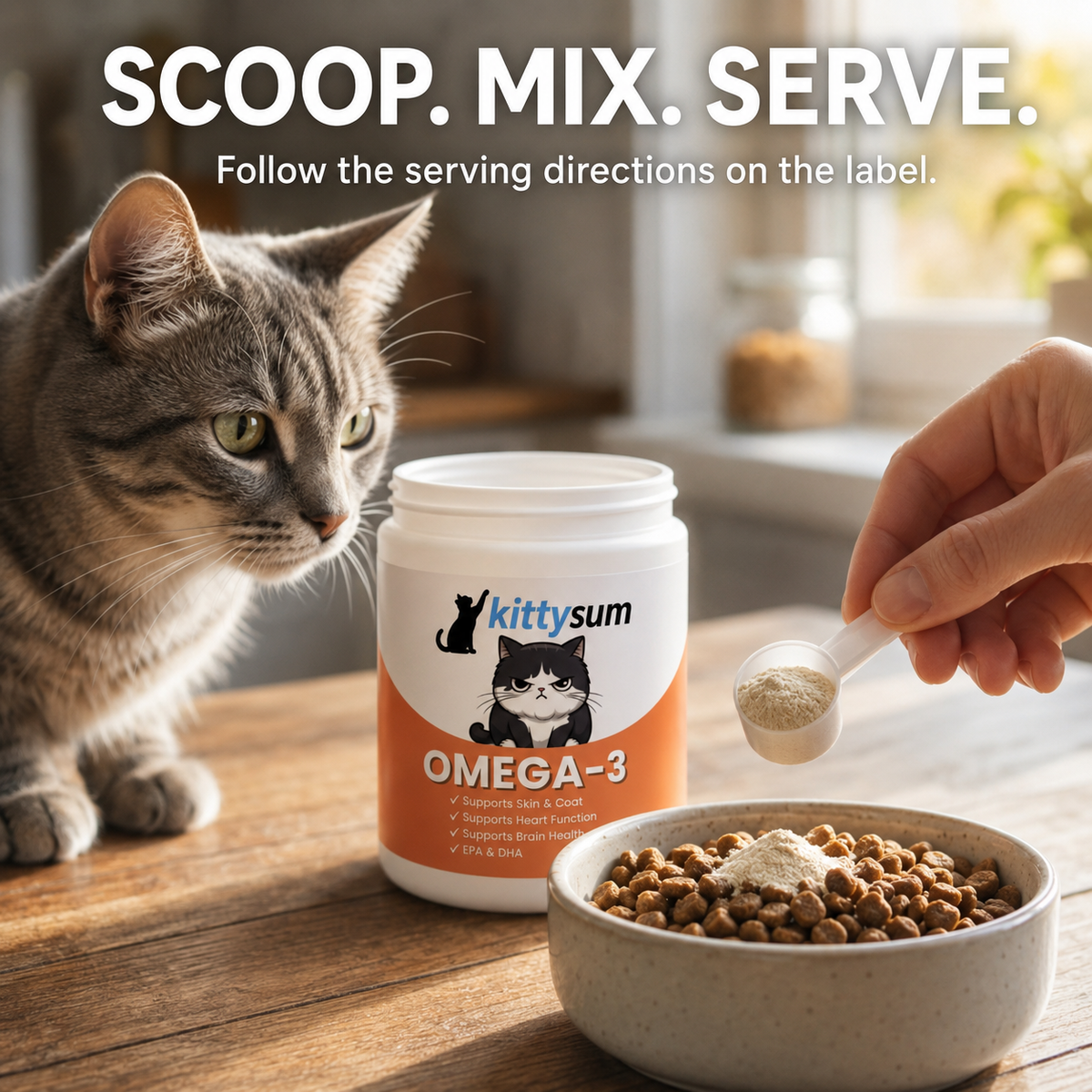
Kittysum Omega-3 powder comes in a 100 g tub with a measuring scoop. Check the label and ask your vet before using any omega-3 for kittens.

Daily Feeding Tips Beyond Omega-3 for Kittens
A steady routine supports healthy growth. These simple habits matter more than any single nutrient.
- First, feed a complete food labeled for growth or all life stages.
- Next, follow the feeding guide and adjust with your vet.
- Then, weigh your kitten regularly to track growth.
- Also, keep fresh water available at all times.
- Finally, change foods gradually, as your vet advises.
The WSAVA nutrition toolkit includes body condition score charts. Your vet may use one at each visit to check that growth is on track.
While you build these habits, start dental care early too. Our guide to brushing kitten teeth shows how.
Omega-3 for Kittens vs Adult Cats
The goals shift as cats grow. For kittens, the focus is normal development. For adults, owners often think about skin, coat and joints.
| Topic | Kittens | Adult cats |
|---|---|---|
| Main goal | Normal eye and brain development | Skin, coat and general health |
| First source | Complete growth food | Complete maintenance food |
| Supplements | Only with vet guidance | Sometimes suggested by vets |
| Key risk | Upsetting a balanced growth diet | Weight gain from extra fat |
For adult cats, see our full guide to omega-3 for cats and our guide to fish oil for cats.
Omega-3 for Kittens on Homemade Diets
Homemade diets need special care. Without expert help, they can easily miss nutrients, including omega-3 for kittens.
As AAFCO notes, the final nutrient content of a home-mixed meal depends on the ingredients the owner adds. It also depends on how carefully the owner measures.
Work with a vet nutritionist
If you want to cook for a kitten, ask your vet about a board-certified veterinary nutritionist. They can design a recipe that meets growth needs.
Then follow the recipe exactly. Small swaps, such as a different oil, can change the omega-3 profile.
For a related example, our guide to taurine for homemade cat food shows how one missing nutrient can matter.
Myths About Omega-3 for Kittens
Online advice about omega-3 for kittens can be confusing. Here are common myths and the facts behind them.
- Myth: every kitten needs fish oil. Fact: a complete growth food is designed to cover needs.
- Myth: flaxseed oil works the same as fish oil. Fact: flax supplies ALA, which converts poorly to EPA and DHA.
- Myth: more omega-3 means a smarter kitten. Fact: no study we found shows that extra beyond needs does this.
- Myth: human fish oil is fine for kittens. Fact: doses and extras, such as vitamin A, may not suit cats.
In short, focus on the base diet first when you plan omega-3 for kittens. Then let your vet guide any extras.
The Queen's Diet Matters Too
A kitten's first fats, and its first omega-3 for kittens, come from its mother's milk. So the queen's diet shapes early intake long before weaning.
In the 1997 Pawlosky study, queens ate set diets from one month before mating through pregnancy and nursing. As a result, their kittens' retinal and brain DHA reflected those diets.
Likewise, the 2020 algal oil study started feeding queens two weeks before mating. Their kittens then stayed on the same diets until 32 weeks of age.
What this means for breeders and fosters
If you care for a pregnant or nursing cat, ask your vet about a food labeled for gestation and lactation or for all life stages. That way, both mother and kittens get a balanced start.
Also, orphaned kittens need a feeding plan from your vet, since early nutrition is hard to get right.
A 30-Day Check-In Plan
If your vet adds an omega-3 product, a simple plan helps you judge it. So agree on what to watch before you start.
- Day 1: weigh your kitten and note coat condition.
- During week 1, watch stools and appetite closely.
- By week 2, check for any vomiting or loose stools.
- At day 30, weigh again and review with your vet.
Also, keep the main food the same during this time. Otherwise, you cannot tell which change made the difference.
Finally, stop and call your vet if your kitten seems unwell. Fast growth leaves little room for guesswork with omega-3 for kittens.
Questions to Ask Your Vet
Before your visit, find your kitten's food bag or a photo of the label. Your vet can then check the life stage and the ingredients.
- Is this food complete and balanced for growth?
- Does my kitten need any extra omega-3?
- Which source and amount would you suggest?
- How should I monitor weight and coat?
- When should we review the diet again?
Because kittens change quickly, plan regular check-ins about omega-3 for kittens and growth. Small adjustments early are easier than big fixes later.
Planning ahead for adult care?
Kittysum Omega-3 Supplement for Cats is an easy-mix powder with a measured scoop. Ask your vet when it fits your cat's routine.
Key Terms Explained
- ALA: alpha-linolenic acid, a short-chain omega-3 found in plant oils.
- EPA: eicosapentaenoic acid, a long-chain omega-3 found in fish and algal oils.
- DHA: docosahexaenoic acid, a long-chain omega-3 that builds up in the brain and retina.
- Growth life stage: the AAFCO life stage for foods made to support kittens.
- Lipid peroxidation: oxidative damage to fats, which can mimic vitamin E deficiency.
Frequently Asked Questions
Do kittens need omega-3?
Yes, kittens need omega-3s, especially DHA, for normal eye and brain development. A complete food labeled for growth or all life stages is designed to supply them.
Is fish oil safe for kittens?
Only with your vet's guidance. Too much can cause weight gain and stomach upset, and cod liver oil adds vitamin A, which cats are sensitive to.
What is the best source of omega-3 for kittens?
A complete growth food comes first. Fish oil and algal oil supply EPA and DHA directly, while plant oils supply mainly ALA, which cats convert poorly.
Can I give my kitten an adult cat omega-3 supplement?
Check the label and ask your vet first. Some products are made for adult cats only, and kittens need amounts set for their age and weight.
References
- Pawlosky RJ, Denkins Y, et al. Retinal and brain accretion of long-chain polyunsaturated fatty acids in developing felines. Am J Clin Nutr. 1997.
- Waldron MK, Spencer AL, et al. Role of long-chain polyunsaturated n-3 fatty acids in the development of the nervous system of dogs and cats. J Am Vet Med Assoc. 1998.
- Vuorinen A, Bailey-Hall E, et al. Safety of algal oil containing EPA and DHA in cats during gestation, lactation and growth. J Anim Physiol Anim Nutr. 2020.
- Lenox CE, Bauer JE. Potential adverse effects of omega-3 fatty acids in dogs and cats. J Vet Intern Med. 2013.
- Ontario Veterinary College Pet Nutrition. The ABCs of Omega-3s. 2024.
- AAFCO. Reading Labels.
- AAFCO. Supplements.
- Cornell Feline Health Center. Feeding Your Cat.
- WSAVA. Global Nutrition Guidelines.
- University of Illinois College of Veterinary Medicine. Human supplements and toxicity to animals.
This article is for general education and is not veterinary advice. These statements have not been evaluated by the Food and Drug Administration. Kittysum products are not intended to diagnose, treat, cure or prevent any disease.