



The Kittysum Cat Nutrition Journal is a cat nutrition blog for everyday owners. Each guide answers one question in plain words, and every key claim links to a vet school, vet manual or peer-reviewed study.
First, start with the topic that fits your cat today. Then use the related links inside each guide to go deeper.
Start Here: 3 Common Questions
Does my cat need a supplement? Usually not, if your cat eats a complete and balanced commercial food. Supplements mainly help homemade or raw diets, or when your vet suggests one.
How do I read a cat food label? Look for the words "complete and balanced" for your cat's life stage. Also, check that the food is made for cats, not dogs.
When should I call the vet? Call soon for changes in appetite, weight, breathing, teeth or skin. In addition, kittens and senior cats need faster care.
Nutrition Basics on Our Cat Nutrition Blog
Cats need some nutrients, such as taurine, from food every day. So these guides cover what a complete diet looks like and where homemade or fish-heavy meals fall short.
- Taurine for Cats: why cats need taurine and which diets fall short.
- Taurine Foods for Cats: 12 natural sources ranked.
- Can Cats Eat Tuna?: safe amounts and mercury risks.

Respiratory Health and Lysine
Sneezing and runny eyes are common in cats. However, the evidence on lysine is mixed, so these guides explain what research does and does not show.
- L-Lysine for Cats: what 7 studies show.
- Best Lysine for Cats: how to choose a format.
- Why Is My Cat Sneezing?: 9 causes and when to see a vet.

Dental Care Guides on the Cat Nutrition Blog
Dental disease is very common in adult cats. Therefore, these guides walk you through brushing, warning signs and when to book a vet visit.
- Cat Dental Care at Home: 5 easy ways to clean teeth.
- How to Brush Cat Teeth: a 4-week training plan.
- Cat Gingivitis: signs, stages and care.
- Cat Bad Breath: 7 causes and fixes.

Skin and Coat Guides on Our Cat Nutrition Blog
Flaky skin and a dull coat can have many causes. For example, diet, parasites and allergies all play a role, so these guides help you narrow it down. They also explain which signs need a vet visit, such as hair loss, sores or constant scratching, and which ones you can safely watch at home for a while.
- Omega-3 for Cats: benefits and safe dosage.
- Cat Dandruff: 8 causes and home remedies.

Why We Started This Cat Nutrition Blog
Cat owners often find mixed advice online. Some of it is outdated, and some of it sells a product first. So we started this cat nutrition blog to give clear answers backed by real sources.
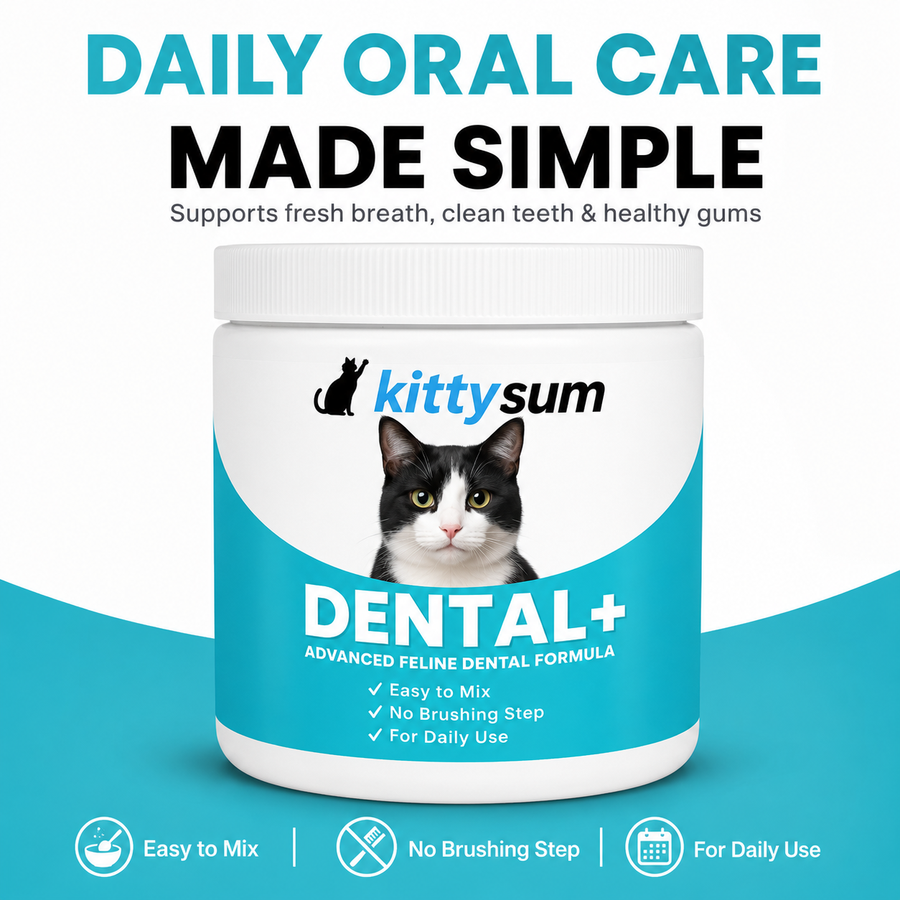
We also sell supplement powders. That is why each guide says plainly when a supplement is not needed, and when a vet visit matters more than any product.
How We Write Each Guide
- Sources first: we cite trusted sources, such as the Cornell Feline Health Center and the Merck Veterinary Manual.
- Honest limits: we say when the evidence is weak.
- Plain words: short sentences, tables and checklists.
- Regular updates: we review guides when the research changes.
How to Use These Guides
Each guide opens with key takeaways and a short answer. Next, it walks through causes, tables and step-by-step care. Finally, it ends with an FAQ and a full list of references, so you can check every source yourself.
New guides are added as owners ask new questions, so check back often. Our cat nutrition blog is for education, not diagnosis. So always talk to your vet about health changes. You can also browse all Kittysum cat supplements or read why Kittysum keeps claims simple.

