Key takeaways
- Taurine for overweight cats matters because cutting food portions can cut taurine too.
- Rather than burning fat, taurine keeps the heart and eyes covered during a diet.
- A vet-guided weight-loss food supplies full nutrients in fewer calories.
- A measured taurine powder can help when a regular food is heavily reduced, with vet advice.
- Slow, steady loss is safer for cats than fast dieting.
Taurine for overweight cats is a detail many owners miss when they start a diet. When you feed less of a regular food, you also feed less of every nutrient in it, including taurine.
This guide explains how weight loss affects taurine, which diets keep it covered, when a measured supplement helps, and how to slim a cat down safely. It also clears up the myth that taurine itself burns fat. As always, your vet should guide any weight-loss plan.
New to taurine? Start with our guide to taurine for cats.
Table of contents
Why Taurine for Overweight Cats Matters
Taurine is an amino acid cats must get from animal tissue. In fact, Merck notes that plant protein contains none. Also, VCA Animal Hospitals explains that cats need it for vision, heart muscle function and digestion.
Meanwhile, extra weight is one of the most common health problems in pet cats. According to Cornell Feline Health Center, obesity raises the risk of diabetes, arthritis and other problems. Therefore, many owners start a diet, and taurine for overweight cats becomes an important part of doing it safely.

How Cutting Food Cuts Taurine for Overweight Cats
Normally, a complete cat food adds enough taurine to meet the AAFCO cat food nutrient profiles when you feed the amount on the label. However, those label amounts assume a cat of normal weight and activity.
So when you feed much less than the label to slim a cat down, every nutrient drops at the same time. As a result, protein, vitamins and taurine for overweight cats may fall below what the cat needs. That is why vets often prefer foods made for weight loss over simply shrinking portions of a regular food.
Does Taurine Burn Fat in Cats?
No, there is no good evidence that taurine burns fat in cats. Instead, taurine for overweight cats is about keeping nutrition complete while calories go down. Weight loss itself still comes from feeding fewer calories than the cat burns.
Similarly, be wary of any product that promises fast weight loss for cats. In short, taurine protects the heart and eyes during a diet; the diet does the slimming.
Diet Options and Taurine for Overweight Cats
Generally, owners have three main options. Each one handles taurine differently.
- Vet weight-loss food: made to supply full nutrients in fewer calories, so taurine stays covered.
- Light or less-active food: lower in calories than regular food and still complete.
- Smaller portions of regular food: simple, but nutrients drop along with calories.
For example, wet foods add water and volume, which helps some cats feel full. Our guide to taurine in dry cat food explains how dry foods compare. Overall, the best choice for taurine for overweight cats is a complete food designed for weight control.
Taurine for Overweight Cats: Diet Comparison
Here is a quick guide to taurine for overweight cats across common diet approaches.
| Approach | Taurine concern | Notes |
|---|---|---|
| Vet weight-loss food | Low | Nutrients balanced for fewer calories |
| Light commercial food | Low to moderate | Check portions against the label |
| Big cut of regular food | Moderate to high | Nutrients fall with calories |
| Homemade low-calorie diet | High | Needs a vet-formulated recipe |
| Skipping meals | High | Risky for the liver as well |
In other words, how you cut calories matters as much as how many you cut.

When a Supplement Helps
Usually, a cat on a vet weight-loss food does not need extra taurine. Nevertheless, some situations make a measured supplement worth discussing with your vet.
- Large cuts of regular food: portions far below the label amount.
- Homemade low-calorie diets: recipes without a measured taurine source.
- Long diets: months of restricted feeding in very overweight cats.
- Picky eaters: cats that refuse a weight-loss food.
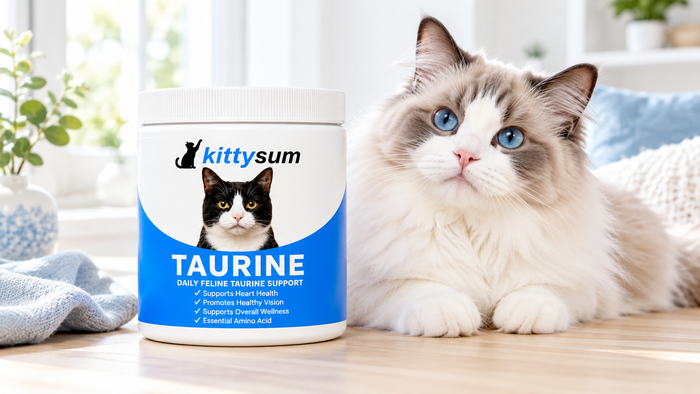
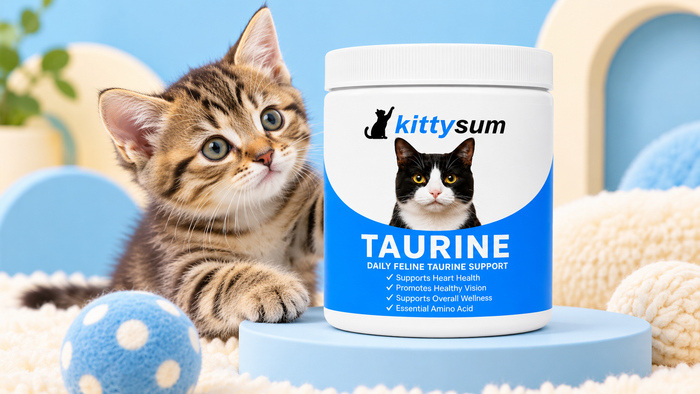
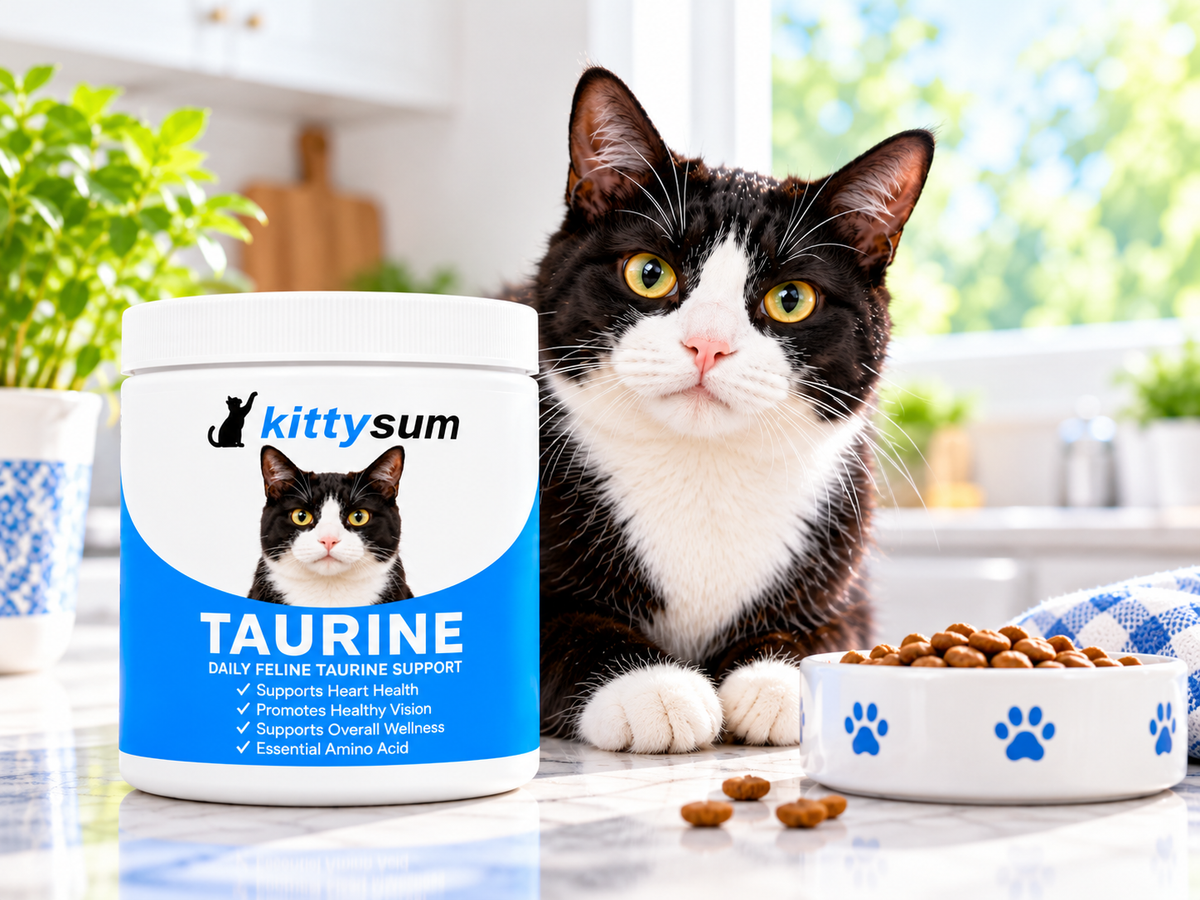
In those cases, taurine for overweight cats can fill the gap without adding meaningful calories. Kittysum Taurine is a daily taurine powder in a 200 g tub with a measuring scoop, blended with chicken liver for a meaty smell. You can read the label and serving guide here.
Dosing Taurine for Overweight Cats
Importantly, dose by the cat's ideal weight, not its current weight, unless your vet says otherwise. For context, a 1991 Waltham study found cats need at least 39 mg per kg of body weight a day on canned food to keep normal blood taurine.
VCA describes taurine as relatively safe, with no reports of problems from excess dietary taurine in cats. Because extra taurine leaves in the urine, measured doses are well tolerated. Our guides to taurine dosage for cats and taurine per pound of cat food explain the math.
A Simple Weight-Loss Plan
To start, a clear plan keeps the diet safe and steady. For example, many vets follow steps like these.
- Weigh your cat and get a body condition score from your vet.
- Set a target weight and a daily calorie goal.
- Choose a complete food that fits the calorie goal.
- Measure every meal with a kitchen scale.
- Weigh again every few weeks and adjust.
Also, the Cornell Purrfect Weight tool can help owners estimate calories. Consequently, taurine for overweight cats stays covered while weight comes off.
How Fast Should a Cat Lose Weight?
Above all, slow is safe. In fact, cats that stop eating or lose weight very quickly can develop hepatic lipidosis, a serious liver disease. Therefore, never starve a cat or skip days of food.
Instead, aim for gradual loss over months. For instance, many vets target about 1 to 2 percent of body weight per week. Meanwhile, keep feeding a complete food so taurine for overweight cats and other nutrients stay steady throughout.
Treats on a Diet
Admittedly, treats are where many diets fail. Fortunately, a few simple rules help.
- Keep treats under about 10 percent of daily calories.
- Count treats inside the daily calorie goal.
- Use part of the daily kibble as rewards.
- Offer play or brushing as non-food rewards.
Our guide to taurine treats for cats compares treat options. In short, fewer treats leave room in the calorie budget for complete food and taurine for overweight cats.
Activity and Play
Likewise, movement helps a diet work. For example, two or three short play sessions a day with a wand toy burn calories and reduce boredom eating. Additionally, puzzle feeders slow eating and make meals last longer. As a result, the cat stays busy and satisfied, and taurine for overweight cats reaches a cat that is also getting fitter.
Diets in Multi-Cat Homes
Unfortunately, one cat on a diet often eats another cat's food. Therefore, feed cats in separate rooms or use microchip feeders. Also, pick up bowls after meals instead of free-feeding. Consequently, the dieting cat gets only its measured portion, and taurine for overweight cats stays predictable. Our guide to how to add taurine to cat food shows how to mix a powder into one cat's bowl.
L-Carnitine and Taurine for Overweight Cats
Notably, many weight-loss foods add L-carnitine, a nutrient that helps the body use fat for energy. For example, PetMD describes how carnitine supports fat metabolism, and a study summary reports benefits in overweight cats on weight-loss plans.
However, carnitine and taurine do different jobs. Taurine supports the heart, eyes and digestion; carnitine supports fat use. Our guide to taurine vs L-carnitine for cats compares them side by side.

Heart and Eye Health During a Diet
Historically, low taurine was a major cause of heart disease in cats. For instance, the landmark 1987 Pion study linked heart failure to low blood taurine, and the Companion Animals Extension notes retinal changes may appear 5 to 6 months into a deficiency.
Moreover, overweight cats already carry extra strain on the body. So keeping taurine for overweight cats steady protects two organs that cannot afford a shortfall. Our guides to taurine for cat heart health and taurine for cat eye health explain more.
Tracking Progress
Next, keep simple records. For example, note weight every two to four weeks, daily food amounts and any supplement given. Also, watch energy, coat and appetite. Then share the log with your vet. In short, records show whether the diet and taurine for overweight cats are working together.
Wet vs Dry Food on a Diet
Interestingly, the form of food changes how full a cat feels. For example, wet food holds a lot of water, so a cat eats a bigger portion for the same calories. By contrast, dry food packs more calories into each bite, so small measuring errors add up quickly.
- Wet food: more volume per calorie and extra hydration.
- Dry food: convenient, but weigh it on a kitchen scale.
- Mixed feeding: wet meals plus a small dry portion in a puzzle feeder.
Either way, choose a complete food so taurine for overweight cats stays covered. Our guide to mixing taurine into food shows how a powder blends into wet meals.
Taurine for Overweight Cats That Are Older
Commonly, cats gain weight in middle age and then lose muscle in their senior years. Therefore, older cats need careful diets that trim fat while protecting muscle. Also, older cats more often have kidney, thyroid or heart problems, so a vet exam comes first.
For older cats, keep protein adequate and avoid sharp calorie cuts. Similarly, ask whether taurine for overweight cats should be part of the plan if the diet is homemade or heavily reduced. Our guide to taurine for senior cats covers age-related needs.

After Reaching the Goal Weight
Finally, the end of a diet is not the end of the plan. In fact, many cats regain weight when owners return to old portions. So switch to a complete maintenance food and feed the amount for the new, lower weight. Meanwhile, keep weighing monthly and adjust portions as needed. In addition, if your cat took a taurine supplement during the diet, ask your vet whether to continue it once portions return to the label amount. In short, taurine for overweight cats is usually covered again once a full complete diet resumes.
Myths About Taurine for Overweight Cats
- "Taurine helps cats lose weight." It supports health; calories drive weight loss.
- "Feeding half portions is enough." Nutrients drop along with calories.
- "Fast loss is better." Rapid loss can harm a cat's liver.
- "Supplements add lots of calories." A measured taurine powder adds very few.
Clearing up these myths keeps taurine for overweight cats simple and safe.
Common Mistakes With Taurine for Overweight Cats
- Cutting regular food too far. Use a weight-loss food instead.
- Dosing by current weight. Ask your vet which weight to use.
- Ignoring treats. They count toward calories.
- Dieting without a vet. A checkup rules out other causes.
- Stopping after the goal. Keep feeding a complete maintenance food.
Avoiding these mistakes keeps taurine for overweight cats covered from start to finish.
Questions to Ask a Vet About Taurine for Overweight Cats
- What is my cat's ideal weight and daily calorie goal?
- Is a weight-loss food better than smaller portions?
- Does my cat need a taurine supplement during the diet?
- How often should we weigh and recheck?
Finally, bring the food label to the visit. For context, a UC Davis study found that cooking lowers taurine in meat, and a 2015 study found three of seven vegetarian canned diets below the AAFCO minimum. In addition, Merck explains the heart disease linked to low taurine, the WSAVA guide offers diet advice, and the AVMA reports the main US dietary supplement law does not apply to animal products. Also, the VCA supplement guide says the FDA does not review non-drug supplements before sale.
Keeping taurine steady on a diet?
Kittysum Taurine is a daily taurine powder blended with chicken liver in a 200 g tub with a measuring scoop, free shipping on orders over $50 and a 30-day return policy. Ask your vet to confirm the amount. Shop Kittysum Taurine →
Key Terms Explained
- Body condition score: a 1 to 9 scale vets use to judge whether a cat is too thin, ideal or overweight.
- Calorie restriction: feeding fewer calories than a cat burns so it slowly loses weight.
- Weight-loss diet: a cat food made to supply full nutrients in fewer calories.
- Hepatic lipidosis: a serious liver disease that can follow rapid weight loss or not eating in cats.
- L-carnitine: a nutrient that helps the body use fat for energy.
Frequently Asked Questions
Does taurine help cats lose weight?
No. Taurine supports the heart, eyes and digestion, but weight loss comes from feeding fewer calories.
Do overweight cats need taurine supplements?
Not if they eat a vet weight-loss food. A supplement may help if a regular food is cut far below the label amount.
Should I dose taurine by current or ideal weight?
Usually by ideal weight, but ask your vet which to use for your cat.
How fast should an overweight cat lose weight?
Slowly, often about 1 to 2 percent of body weight per week. Never starve a cat.
Does taurine powder add calories?
A measured taurine powder adds very few calories compared with food or treats.
References
- VCA Animal Hospitals. Taurine in Cats.
- VCA Animal Hospitals. Lysine.
- Earle KE, Smith PM. Dietary taurine content and plasma taurine in the cat. Br J Nutr. 1991.
- Pion PD, et al. Myocardial failure in cats with low plasma taurine. Science. 1987.
- Spitze AR, et al. Taurine in animal feed ingredients. 2003.
- Kanakubo K, et al. Protein and amino acids in vegetarian pet diets. 2015.
- AAFCO. Cat Food Nutrient Profiles.
- Merck Veterinary Manual. Nutritional Requirements of Small Animals.
- Merck Veterinary Manual. Dilated Cardiomyopathy.
- WSAVA. Selecting a pet food for your pet.
- Companion Animals Extension. Taurine Requirement of Cats.
- AVMA. Dietary supplement law not applicable to products for animals.
- Cornell Feline Health Center. Fat Cats: Management Approaches.
- Cornell Feline Health Center. Purrfect Weight Tool.
- PetMD. Carnitine.
This article is for general education and is not veterinary advice. These statements have not been evaluated by the Food and Drug Administration. Kittysum products are not intended to diagnose, treat, cure or prevent any disease.