Key takeaways
- According to the Cornell Feline Health Center, gum disease is by far the most common cause of cat bad breath.
- A urine-like smell can point to kidney disease, while a sweet smell can point to diabetes. So both need a vet visit soon.
- A short fishy smell after a tuna meal is normal. But cat bad breath that lasts for days is not.
- A vet cleaning, then daily plaque control at home, is the most reliable fix for dental odor.
Cat bad breath is most often a sign of gum disease, not just a smelly meal. In fact, the Cornell Feline Health Center names periodontal disease as by far the most common cause. It also says that breath that smells bad all the time should get a vet check, because it can signal kidney disease, diabetes or liver disease too.
So the smell is a clue, and it is worth decoding. Next, you will find the seven most common causes, what each odor can mean, and a simple plan that works.
Table of contents
Is Cat Bad Breath Ever Normal?
A healthy cat's breath should smell faint, or a little like their food. So it should not make you pull back when your cat yawns.
Cornell notes that a strong smell after foods such as tuna or smoked oysters can be harmless. Still, that kind of odor fades within a few hours.
However, cat bad breath that is there every day, or that slowly gets worse, is a different story. It is often the first sign of a problem you cannot see yet.
In fact, dental disease is very common. For example, Cornell says 50 to 90% of cats older than four have some form of it. Also, the AVMA says most pets show early gum disease by age three.

7 Common Causes of Cat Bad Breath
Most cases start in the mouth. Still, a few causes start elsewhere in the body, so it helps to know them all.
1. Plaque, tartar and gum disease
Plaque is a sticky film of bacteria. As it grows, the bacteria release gases that smell foul, so odor builds up. VCA calls gum disease from plaque and tartar the most common cause of cat bad breath.
In addition, the Merck Veterinary Manual says plaque left for more than three days turns hard. After that, a brush cannot remove it. Learn the early signs in our guide to cat gingivitis.
2. Tooth resorption and broken teeth
Tooth resorption slowly destroys a tooth from the inside out. Also, Cornell reports that 30 to 70% of cats show some sign of it. Damaged teeth trap food and germs, so odor often follows.
3. Stomatitis
Stomatitis is severe swelling of the gums and the lining of the mouth. VCA says it is often very painful, so cats may eat less and groom less. Cornell also estimates it affects about 1 in 100 cats.
4. Trapped food, hair or string
In its list of causes, Cornell includes food, hair or string stuck between the teeth or under the gums. Once it starts to rot, the smell can be strong. Never pull on string you find under the tongue, and call your vet instead.
5. Kidney disease
Cornell links a urine-like breath smell to kidney disease. Other signs include more thirst, more urination and a poor appetite. Kidney disease is common, too. In fact, Cornell says it affects up to 40% of cats over 10, and up to 80% of cats over 15.
6. Diabetes
A sweet breath smell can point to diabetes, according to Cornell. You may also see weight loss despite a good appetite, plus more drinking and peeing. Also, Cornell adds that obese cats are up to four times more likely to develop diabetes.
7. Liver disease and oral tumors
A foul smell together with vomiting, poor appetite or yellow gums can point to the liver. Meanwhile, VCA notes that tissue death from mouth tumors can also cause odor.
What Your Cat's Bad Breath Smells Like and What It Means
The type of smell can help you and your vet narrow down the cause. Still, use this table as a guide, not a diagnosis.
| Cat bad breath smell | Possible cause | Other signs | Next step |
|---|---|---|---|
| Rotten | Gum disease | Red gums, drooling | Dental exam |
| Urine-like | Kidney disease | Thirst, no appetite | See vet soon |
| Sweet | Diabetes | Thirst, thinness | See vet soon |
| Foul + vomiting | Liver disease | Yellow gums | See vet promptly |
| Fishy, briefly | Recent food | None | Normal |
This table draws on the Cornell Feline Health Center. But smell alone cannot confirm a disease. So your vet will examine your cat and may run blood or urine tests.
How to Check Cat Bad Breath at Home
A quick mouth check takes less than a minute, so it is easy to fit in. Do it when your cat is calm, such as after a nap.
- Sniff first. Then note whether the smell is foul, sweet or urine-like.
- Lift the lip. Gently raise the upper lip at the side of the mouth.
- Look at the gum line. Healthy gums are pink, while a red line along the teeth is a warning sign.
- Look for tartar. Brown or yellow crust on the back teeth often means plaque has turned to tartar.
- Watch your cat eat. Also, chewing on one side or dropping food can mean pain.
Then write down what you saw, along with the date. Later, that note will help your vet. Also, stop at once if your cat struggles, because a painful mouth can make even a gentle cat bite.
What Happens at the Vet for Cat Bad Breath
First, your vet will do a physical exam and look in the mouth while your cat is awake. Next, they may suggest blood and urine tests, especially for older cats or for sweet or urine-like breath.
If the cause is dental, VCA says the next step is a cleaning under general anesthesia. Also, that cleaning covers the teeth above and below the gum line. Dental X-rays also show the roots and bone, where much of the damage hides.
Why the dental cleaning needs anesthesia
Cornell explains that cats rarely show mouth pain. So a full exam with your cat asleep, plus X-rays if needed, is the only way to really see what is going on.
The American Veterinary Dental College goes further. In fact, it calls non-anesthetic cleanings a waste of time and money. Meanwhile, AAHA notes that fear of anesthesia is the most common reason owners skip dental care.
So ask your vet how they screen and monitor cats under anesthesia. Also ask for a written estimate, because the cost depends on your clinic and on how many teeth need treatment.
Questions to ask your vet
- Is this smell from the mouth, or could it come from another illness?
- Does my cat need blood or urine tests first?
- Will you take dental X-rays during the cleaning?
- Which teeth might need to come out, and why?
- What home care do you suggest after the cleaning, such as brushing or VOHC products?
Also, bring your notes from the home check. Those notes help your vet see how long the cat bad breath has been there.
How to Fix Cat Bad Breath: What Actually Works
VCA puts it simply: first, remove the cause. After that, daily plaque control is the key to stopping the smell from coming back.
Professional dental cleaning
Once tartar has formed, only a vet cleaning will remove it. Also, teeth with advanced disease or resorption may need to come out. That sounds scary, but VCA notes that cats with stomatitis often do very well after tooth removal.
Daily brushing
The AVMA calls brushing the single most effective thing you can do at home. Similarly, Cornell says that daily brushing can prevent most forms of dental disease.
Use a cat toothpaste only, because human products can be toxic to cats. Also, aim the brush at the gum line on the outer surfaces. Next, for a step-by-step plan, see how often to brush your cat's teeth.

If your cat will not allow brushing
Some cats will never accept a brush, and that is okay. In that case, Merck suggests wiping the teeth with a gauze pad at least every two to three days. Merck also notes that some treats and dry foods can help remove plaque.
VOHC-accepted products
The Veterinary Oral Health Council lists cat products that met its plaque or tartar standards. For example, the current list includes diets, treats, water additives, gels, wipes and powders.
So look for the VOHC seal on the pack. In addition, VCA notes that oral care products with zinc can help limit odor.
A daily dental topper
For cats that refuse brushing, a dental powder for cats sprinkled on food can be part of a fresh-breath routine. Still, it works alongside vet care, not instead of it.

How Long Does It Take to Fix Cat Bad Breath?
The answer depends on the cause. So here is what you can realistically expect, step by step.
- Food odor: it fades within hours, so you do not need to act.
- Trapped food or string: once your vet removes it, the smell usually eases quickly.
- Tartar and gum disease: a cleaning removes the source, but plaque comes back fast. Cornell notes it can rebuild within days without brushing.
- Brushing habit: Cornell suggests a training plan of about four weeks to get a cat used to the brush.
- Kidney disease or diabetes: breath changes follow the illness, so treatment and rechecks with your vet come first.
In short, a cleaning resets the mouth, while home care keeps it fresh. After periodontitis treatment, Merck says preventive cleanings every three months to one year help avoid relapse.

Cat Bad Breath Myths vs Facts
- Myth: Cat bad breath is normal. Fact: A healthy mouth should not smell strong, so lasting odor is a sign of a problem.
- Myth: Dry food alone keeps teeth clean. Fact: According to Cornell, some vets believe dry food helps more than canned. Even so, food alone cannot replace brushing or vet cleanings.
- Myth: A water additive will fix it. Fact: Additives may help control plaque, especially VOHC-accepted ones. But they cannot remove hard tartar or treat a sick tooth.
- Myth: Mouthwash for people is fine. Fact: Human dental products can harm cats, so use only products made for cats.
- Myth: If my cat eats, the mouth must be fine. Fact: Cornell notes cats are unlikely to show pain. In fact, many keep eating with sore teeth.
Cat Bad Breath in Kittens and Senior Cats
Kittens
Kittens can have mild breath odor while their adult teeth come in. That usually passes once teething ends. However, Merck notes that gum disease can appear as early as one year of age. So strong odor in a young cat deserves a vet check.
Senior cats
Older cats face a double risk, for two reasons. First, dental disease builds up over the years. Second, kidney disease, diabetes and other illnesses become more common with age.
For this reason, new cat bad breath in a senior should always lead to a full exam, not just a dental one. Many vets also suggest yearly blood tests for older cats.
Weekly Checklist to Prevent Cat Bad Breath
- Brush daily if your cat allows it. Otherwise, the AVMA says brushing several times a week can still help.
- Do a quick sniff and lip check once a week.
- Choose treats or diets with the VOHC seal, such as dental kibble.
- Keep string, ribbon and hair ties out of reach, especially if your cat chews.
- Watch water intake and litter box clumps, because changes can point to kidney disease or diabetes.
- Book a dental exam at least once a year. In fact, VCA recommends exams twice a year to help prevent halitosis.

Finally, for a full routine, read our cat dental care at home guide.
When Cat Bad Breath Needs a Vet Right Away
Book a visit soon if you notice any of these signs. Also, go the same day if your cat stops eating.
- Odor that lasts more than a few days, even after meals end
- Red or bleeding gums, or loose or broken teeth
- Drooling, pawing at the mouth or dropping food
- Sweet or urine-like breath with more thirst
- Vomiting, weight loss or yellow gums
Want help with cat bad breath between vet visits?
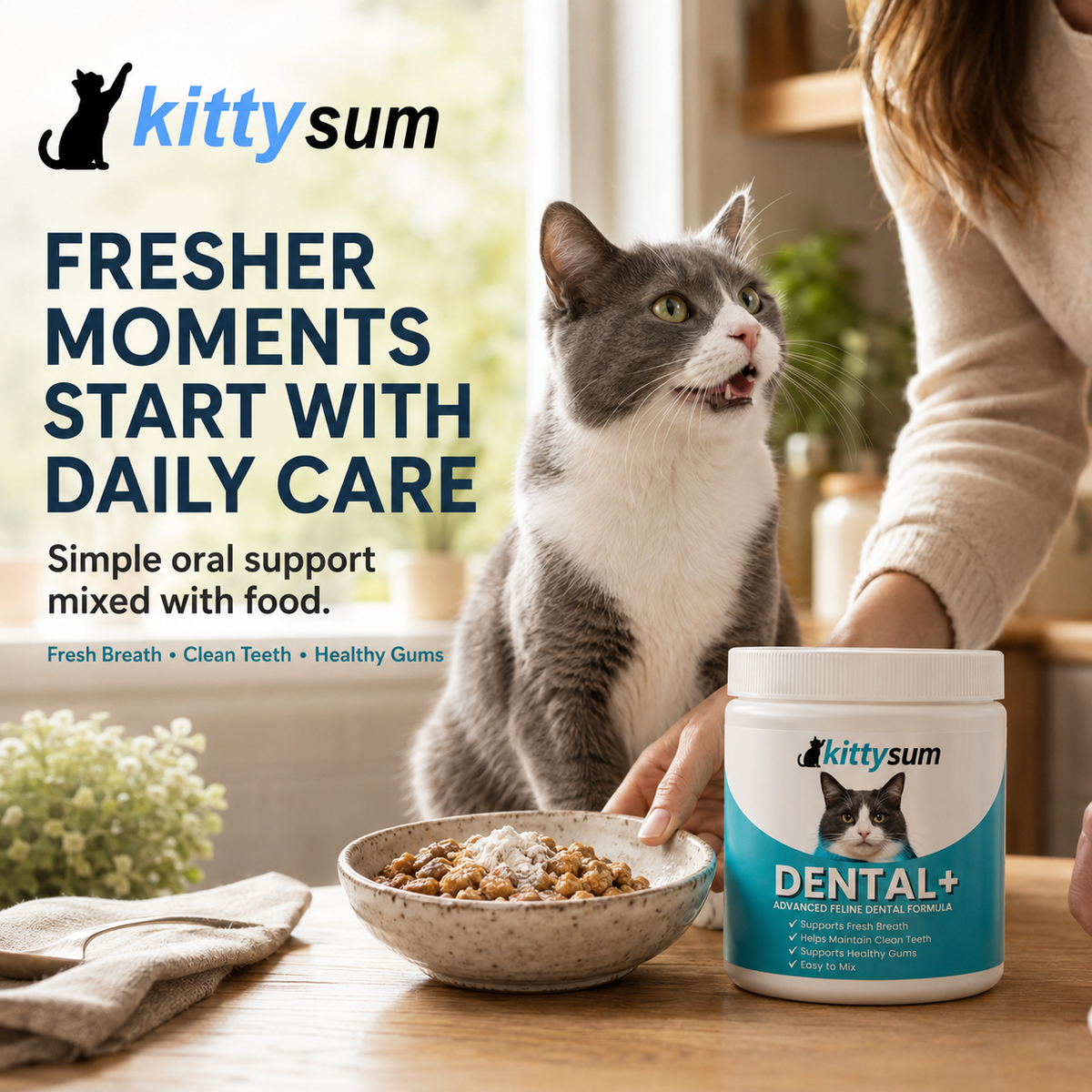
Kittysum Dental+ is a daily food topper, especially for cats that won't tolerate brushing. See the formula →
Key Terms Explained
- Halitosis: the medical name for bad breath.
- Plaque: a film of bacteria on the teeth that causes much of the smell.
- Periodontal disease: infection of the gums and tooth support tissues.
- Uremic breath: a urine-like breath smell that can occur with kidney disease.
- Ketones: chemicals that can give breath a sweet smell in cats with uncontrolled diabetes.
Frequently Asked Questions
Why does my cat's breath smell so bad all of a sudden?
Sudden odor often comes from a dental problem, such as a broken tooth or trapped food. However, a new sweet or urine-like smell can point to diabetes or kidney disease, so book a vet visit.
Is cat bad breath a sign of kidney disease?
Yes, it can. Cornell links urine-like breath to kidney disease, especially with more thirst and urination. So a blood and urine test is a smart next step.
What is the best home remedy for cat bad breath?
Start with a vet exam to find the cause. After that, daily brushing with cat toothpaste and VOHC-accepted treats or additives help control plaque. Also, never use human toothpaste or mouthwash.
Why does my cat's breath smell like fish?
A short fishy smell after a fish meal is normal. But a fishy or rotten smell that lasts often comes from gum disease.
Can cat bad breath go away on its own?
Food odor fades within hours, but dental odor usually does not, because hard tartar needs a vet cleaning. Once the mouth is clean, daily care keeps the smell away.
References
- Cornell Feline Health Center. Bad Breath: A Sign of Illness.
- Cornell Feline Health Center. Feline Dental Disease.
- Cornell Feline Health Center. When Kitty Needs a Dentist.
- Cornell Feline Health Center. Chronic Kidney Disease.
- Cornell Feline Health Center. Feline Diabetes.
- Hunter T, Bellows J. Halitosis in Cats. VCA Animal Hospitals.
- VCA Animal Hospitals. Gingivitis and Stomatitis in Cats.
- Merck Veterinary Manual. Dental Disorders of Cats.
- American Veterinary Medical Association. Pet Dental Care.
- American Animal Hospital Association. 2019 AAHA Dental Care Guidelines for Dogs and Cats.
- American Veterinary Dental College. When to Refer to a Board Certified Veterinary Dentist.
- Veterinary Oral Health Council. VOHC Accepted Products for Cats. August 2026.
This article is for general education and is not veterinary advice. These statements have not been evaluated by the Food and Drug Administration. Kittysum products are not intended to diagnose, treat, cure or prevent any disease.