Key takeaways
- Taurine for feral cats comes from prey or from the food that feeders provide.
- A complete and balanced commercial cat food covers taurine for most colonies.
- Dog food, bread, milk and fish scraps alone are not safe main diets for cats.
- Colony cats rarely need supplements; rescued or sick cats may, under vet care.
- Regular feeding times, fresh water and TNR support colony health overall.
Taurine for feral cats is something most colony feeders never think about, yet it shapes what belongs in the bowl. Cats that hunt get taurine from prey. Cats that depend on people get it only from the food they are given.
This guide explains where community cats get taurine, which foods cover it, what never to feed, and when a rescued cat might need extra. It is written for feeders, TNR volunteers and anyone helping outdoor cats.
New to taurine? Start with our guide to taurine for cats.
Table of contents
Why Taurine for Feral Cats Matters
Taurine is an amino acid cats must get from animal tissue. In fact, Merck notes that plant protein contains none. Also, VCA Animal Hospitals explains that cats need it for vision, heart muscle function and digestion.
Importantly, low taurine causes serious disease. For example, the landmark 1987 Pion study linked heart failure in cats to low blood taurine, and the Companion Animals Extension says retinal changes may appear 5 to 6 months into a deficiency. For a cat living outdoors, poor vision or a weak heart can be fatal. Therefore, taurine for feral cats matters just as much as it does for pets.

Prey, Hunting and Taurine for Feral Cats
Originally, cats evolved eating small prey. In fact, a whole mouse or bird provides muscle, organs and other tissues that contain taurine. As a result, a cat that hunts well gets taurine naturally.
However, many community cats hunt only a little and rely mostly on feeders. Moreover, hunting success varies with season, age and health. So feeders cannot count on prey alone. In short, taurine for feral cats in most colonies depends on what people put out.
The Best Colony Food for Taurine for Feral Cats
Fortunately, a commercial cat food labeled complete and balanced is the simplest and safest choice. The AAFCO cat food nutrient profiles set a taurine minimum, and complete foods add taurine to meet it.
- Dry food: practical outdoors, lasts longer and covers taurine when complete.
- Wet food: adds water and is easy to eat; serve in small portions so it does not spoil.
- Mixed feeding: dry as the base, wet as a treat or for sick cats.
Also, Alley Cat Allies offers practical guidance on food and water for community cats. In short, a complete cat food covers taurine for feral cats without any extra cost or effort.
Taurine for Feral Cats: Food Comparison
Here is a quick guide to taurine for feral cats across common colony foods.
| Food | Taurine concern | Notes |
|---|---|---|
| Complete dry cat food | Low | Best everyday base for colonies |
| Complete wet cat food | Low | Serve fresh; remove leftovers |
| Dog food | High | Not made for a cat's taurine needs |
| Fish scraps only | Moderate to high | Incomplete; risk of other deficiencies |
| Bread, milk, rice | High | No taurine; milk can upset stomachs |
In other words, the label matters more than the price per bag.

What Never to Feed Community Cats
Unfortunately, well-meaning feeders sometimes offer foods that leave cats short. Above all, avoid these as main diets.
- Dog food: it is not made for cats and can be low in taurine for them.
- Bread, rice or pasta: plant foods contain no taurine.
- Milk: many adult cats cannot digest lactose well.
- Onion, garlic or seasoned leftovers: unsafe for pets, according to the ASPCA.
- Cooked bones: they splinter.
Our guide to taurine foods for cats lists safe natural sources. In short, keeping these foods out protects taurine for feral cats.
Feeding on a Budget
Admittedly, colony feeding can be expensive. Fortunately, covering taurine for feral cats does not require premium food; it requires complete food.
- First, buy large bags of a complete dry cat food.
- Next, feed measured amounts at set times to reduce waste.
- Then ask local shelters or TNR groups about food donations.
- Finally, share costs with other feeders in your area.
As a result, every dollar goes into food that actually covers the cats' needs. Our guide to cheap taurine for cats explains cost-per-day math.
A Simple Feeding Routine
Additionally, routine helps both cats and neighbors. For example, try this plan to keep taurine for feral cats on track.
- Feed at the same time each day: cats learn to come and eat.
- Remove leftovers after about 30 minutes: this deters wildlife and pests.
- Use a sheltered spot: keep food dry and out of the sun.
- Keep the area clean: good relations with neighbors protect the colony.
Consequently, every cat gets a fair share, and taurine for feral cats stays steady from day to day. A predictable routine also makes it easier to spot a cat that stops coming to eat.
Water Matters Too
Similarly, outdoor cats often struggle to find clean water, especially in winter and summer, and thirst can lower appetite and intake of taurine for feral cats. Therefore, provide fresh water daily.
- Use wide, heavy bowls that do not tip.
- Place water away from food to reduce contamination.
- During freezing weather, use deep bowls or heated bowls where safe.
- On hot days, refresh water twice a day.
In short, hydration supports overall health, and wet food adds water too.
Seasons and Taurine for Feral Cats
Notably, seasons change how much outdoor cats eat. For example, cats burn more energy staying warm in winter, so they often need larger portions. Meanwhile, summer heat can spoil wet food quickly and reduce appetite.
- Winter: feed a little more complete dry food and protect it from freezing rain.
- Summer: feed early or late in the day and serve wet food in small amounts.
- Spring: watch for pregnant and nursing cats, who need extra food.
- Autumn: plan shelters and stock up on food before cold weather.
As a result, cats eat enough year-round, which keeps taurine for feral cats steady through every season. Likewise, adjusting portions prevents waste in warmer months.
Shelters and Feeding Stations
Meanwhile, a simple feeding station keeps food dry and clean. For instance, a covered plastic tub with an entry hole works well. Also, place stations away from roads and busy paths. Consequently, food stays fresh, cats feel safe while eating, and taurine for feral cats reaches the animals that need it rather than wildlife. Our guide to taurine in dry cat food explains why complete dry food is a practical outdoor choice.
Working With Other Feeders
In addition, many colonies have more than one feeder. Therefore, coordinate so cats are not overfed one day and missed the next. For example, share a simple schedule and agree on one complete food brand. In short, teamwork keeps taurine for feral cats consistent, while costs stay shared and manageable.
Feral Kittens and Taurine
Naturally, kittens born outdoors get taurine from their mother's milk, so the mother's diet matters. Meanwhile, orphaned kittens need a kitten milk replacer, never cow's milk. Once weaned, they need a complete kitten food.
- Nursing mothers: offer extra complete food, ideally a kitten food.
- Orphans: use a kitten milk replacer and contact a rescue group.
- Weaned kittens: feed a complete growth food.
Our guides to taurine for kittens and taurine for pregnant cats explain these stages in detail.
Rescued and Sick Cats: When a Supplement Helps
Generally, colony cats on complete food rarely need supplements. However, some situations change that. For example, a rescued cat that was fed poorly for months, or a cat with a heart or eye concern, may need a measured taurine source under vet care.
- Get a vet exam. Many rescues need checks anyway.
- Review the past diet. Note any long-term dog food or table scraps.
- Test if needed. Your vet may check the heart or blood taurine.
- Start a complete food. This covers taurine going forward.
- Add a supplement only if advised. Use the amount your vet sets.
VCA describes taurine supplementation as relatively safe, with no reports of problems from excess dietary taurine in cats. Even so, AAFCO sets no maximum. VCA also warns that supplement quality may vary significantly among makers, and the AVMA reports that the main US dietary supplement law does not apply to animal products.
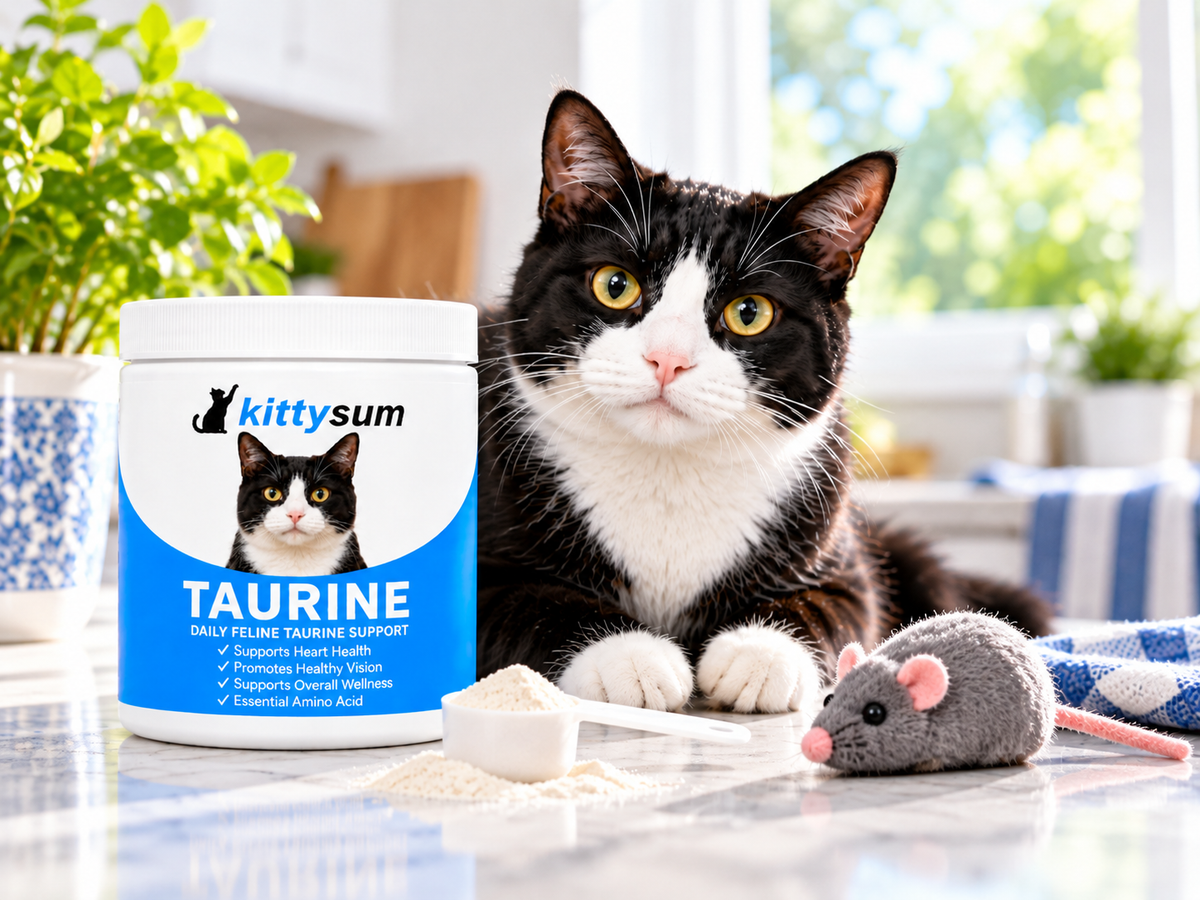
For rescued cats recovering indoors, Kittysum Taurine is a daily taurine powder in a 200 g tub with a measuring scoop, blended with chicken liver for a meaty smell. You can read the label and serving guide here. For amounts, see our guide to taurine dosage for cats.

Bringing a Feral Cat Indoors
Some community cats, especially young ones, adapt to indoor life. When that happens, the diet usually changes too. Therefore, switch gradually to a complete indoor food over about a week, mixing old and new food. Meanwhile, book a vet exam to check weight, teeth, heart and eyes. In short, taurine for feral cats becomes taurine for a pet: a complete food covers it, and a supplement is needed only if your vet advises one.
TNR, Health and Taurine for Feral Cats
Furthermore, trap-neuter-return programs improve colony health over time. In addition, the vet visit during TNR is a chance to spot problems early.
- Sterilization: fewer litters mean less strain on nursing mothers.
- Vaccination: often given during the TNR visit.
- Quick checks: vets may note eye or heart concerns.
Our guide to taurine deficiency in cats explains the signs vets look for. In short, TNR and good food work together for colony health.
Warning Signs in Community Cats
Outdoor cats hide illness well. Nevertheless, feeders often notice changes first. Watch for these.
- Fast or labored breathing at rest
- Bumping into objects or wide pupils in daylight
- Weight loss or not coming to eat
- Weakness or hiding
So if you notice these, contact a local rescue group or vet about humane trapping and an exam. Above all, early help gives the cat the best chance.

Myths About Taurine for Feral Cats
- "Outdoor cats can hunt for everything they need." Not reliably; most colony cats depend on feeders.
- "Any pet food is fine." Dog food is not made for a cat's taurine needs.
- "Milk is a treat." Many adult cats cannot digest it well.
- "Colonies need supplements." A complete cat food usually covers taurine.
Clearing up these myths keeps taurine for feral cats simple and affordable. Moreover, it helps new feeders start with the right habits, which protects the whole colony over time.
Common Mistakes With Taurine for Feral Cats
- Feeding dog food to save money. It is not made for cats.
- Relying on bread or scraps. They contain little or no taurine.
- Leaving wet food out all day. It spoils and attracts pests.
- Adding supplements to the whole colony. Complete food is usually enough.
- Ignoring sick cats. Contact a rescue group for help.
Avoiding these mistakes keeps taurine for feral cats covered at no extra cost.
Questions to Ask a Vet About Taurine for Feral Cats
- Is this food complete enough for a colony?
- Does this rescued cat need a heart or eye check?
- Should this cat get a taurine supplement while recovering?
- How should I feed nursing mothers and kittens?
Finally, bring the food label to the visit, so the vet can judge taurine for feral cats in one look. For context, a 1991 Waltham study found cats need at least 39 mg per kg of body weight a day on canned food. Also, a UC Davis study found that cooking lowers taurine in meat, and a 2015 study found three of seven vegetarian canned diets below the AAFCO minimum.
In addition, Merck explains the heart disease linked to low taurine. Finally, see the WSAVA guide for diet advice, and note that the VCA supplement guide says the FDA does not review non-drug supplements before sale.
Helping a rescued cat recover?
Kittysum Taurine is a daily taurine powder blended with chicken liver in a 200 g tub with a measuring scoop, free shipping on orders over $50 and a 30-day return policy. Ask your vet to confirm the amount. Shop Kittysum Taurine →
Key Terms Explained
- Feral cat: a cat that lives outdoors and is not socialized to people.
- Community cat: an outdoor cat, feral or stray, often cared for by local feeders.
- Colony: a group of community cats living in one area.
- TNR: trap-neuter-return, a program that sterilizes and returns community cats.
- Complete and balanced: a food that meets a standard nutrient profile for its life stage.
Frequently Asked Questions
How do feral cats get taurine?
From prey such as mice and birds, and from the food feeders provide. A complete commercial cat food covers it for most colonies.
Can I feed dog food to feral cats?
Not as a main diet. Dog food is not made to meet a cat's taurine and other needs.
Do feral cats need taurine supplements?
Usually not, if they eat a complete cat food. Rescued or sick cats may need one under vet care.
Is dry food enough for a feral colony?
A complete and balanced dry cat food covers taurine and is practical outdoors. Provide fresh water daily.
What should I feed orphaned feral kittens?
A kitten milk replacer, never cow's milk, then a complete kitten food after weaning. Contact a rescue group for help.
References
- VCA Animal Hospitals. Taurine in Cats.
- VCA Animal Hospitals. Lysine.
- Earle KE, Smith PM. Dietary taurine content and plasma taurine in the cat. Br J Nutr. 1991.
- Pion PD, et al. Myocardial failure in cats with low plasma taurine. Science. 1987.
- Spitze AR, et al. Taurine in animal feed ingredients. 2003.
- Kanakubo K, et al. Protein and amino acids in vegetarian pet diets. 2015.
- AAFCO. Cat Food Nutrient Profiles.
- Merck Veterinary Manual. Nutritional Requirements of Small Animals.
- Merck Veterinary Manual. Dilated Cardiomyopathy.
- WSAVA. Selecting a pet food for your pet.
- Companion Animals Extension. Taurine Requirement of Cats.
- AVMA. Dietary supplement law not applicable to products for animals.
- Alley Cat Allies. Food and Water for Community Cats.
- ASPCA. People Foods to Avoid Feeding Your Pets.
This article is for general education and is not veterinary advice. These statements have not been evaluated by the Food and Drug Administration. Kittysum products are not intended to diagnose, treat, cure or prevent any disease.