
Key takeaways
- Taurine for rescue cats matters because many arrive with an unknown or poor diet history.
- A complete and balanced cat food covers taurine for most rescue cats going forward.
- Stress can cut appetite in the first weeks, so track how much your cat actually eats.
- A first vet visit can check weight, heart and eyes and review past diet.
- A measured supplement helps only when the vet sees a reason, such as a long poor diet.
Taurine for rescue cats is worth a thought in the first weeks after adoption, because many cats arrive with no clear diet history. Some ate well at a shelter, while others lived on scraps, dog food or very little at all.
This guide explains why diet history matters, how to switch foods gently, what a first vet visit should check and when a measured supplement makes sense. It is written for new adopters, fosters and rescue volunteers.
New to taurine? Start with our guide to taurine for cats.
Table of contents
- Why it matters
- Unknown diet history
- Shelter food
- Starting points
- First vet visit
- Switching foods
- Stress and appetite
- Underweight cats
- Overweight rescues
- Rescue kittens
- Senior rescues
- Other pets
- When to supplement
- Warning signs
- Fosters and volunteers
- Indoor life
- Cost
- Myths
- Mistakes
- Questions for a vet
- FAQ
- References
Why Taurine for Rescue Cats Matters
To begin with, taurine is an amino acid cats must get from animal tissue. In fact, Merck notes that plant protein contains none. Also, VCA Animal Hospitals explains that cats need it for vision, heart muscle function and digestion.
Moreover, low taurine causes serious disease. For example, the landmark 1987 Pion study linked heart failure in cats to low blood taurine, and the Companion Animals Extension says retinal changes may appear 5 to 6 months into a deficiency. Therefore, taurine for rescue cats deserves attention when nobody knows what a cat ate before.

Unknown Diet History and Taurine for Rescue Cats
Often, adopters know little about a cat's past. For instance, a stray may have lived on bread, milk or dog food from kind neighbors. Meanwhile, a cat surrendered by an owner may have eaten a homemade or vegetarian diet. As a result, some rescue cats arrive with months of low taurine intake.
- Strays: often ate scraps or whatever people offered.
- Owner surrenders: diets vary; ask the shelter for any notes.
- Hoarding cases: food may have been scarce or poor.
- Long shelter stays: usually complete food, though appetite may have been low.
In short, taurine for rescue cats starts with asking what the cat ate before, even if the answer is "we don't know".
What Shelters Usually Feed
Fortunately, most shelters and rescues feed complete commercial cat food. So cats that stayed a few weeks often have their nutrition back on track. Still, stressed cats may eat little in a kennel. Therefore, to keep taurine for rescue cats steady, ask the shelter which food the cat ate, how well it ate and whether it lost weight. Also, take a small bag of that food home for the first week.
Taurine for Rescue Cats: Common Starting Points
Here is a quick guide to taurine for rescue cats based on where they came from.
| Background | Taurine concern | First step |
|---|---|---|
| Weeks in a shelter on complete food | Low | Keep the same food at first |
| Stray fed scraps or dog food | Moderate to high | Vet exam and complete food |
| Owner surrender, homemade or vegan diet | Moderate to high | Ask about the recipe; vet review |
| Hoarding or neglect case | High | Vet exam; slow refeeding plan |
| Unknown history | Unknown | Vet exam and complete food |
In other words, the past diet shapes how careful the first weeks should be. Our guide to taurine for feral cats covers community cats that stay outdoors.

The First Vet Visit
Above all, book a vet visit soon after adoption, because it is the best moment to review taurine for rescue cats. Many shelters include one, and it is a good time to review diet.
- Weigh the cat and score body condition.
- Listen to the heart for murmurs or rhythm changes.
- Check the eyes, including the retina if your vet sees a reason.
- Review the diet history you collected from the shelter.
- Plan follow-up for vaccines, parasites and weight.
Then, if your vet hears a murmur or sees eye changes, they may suggest more tests. Consequently, the visit tells you whether taurine for rescue cats is simply routine nutrition or something to address directly. Our guide to taurine deficiency in cats explains what vets look for.
Switching Foods Gently With Taurine for Rescue Cats in Mind
Next, change foods slowly. A sudden switch can upset the stomach and make a stressed cat refuse to eat.
For example, mix about a quarter new food with the shelter food for two days, then half and half, then three quarters. Also, choose a complete and balanced food that meets the AAFCO cat food nutrient profiles. As a result, taurine for rescue cats stays covered throughout the switch.
Stress, Appetite and Taurine for Rescue Cats
Notably, many rescue cats eat little in the first days. A new home, new smells and new people are stressful. So give the cat a quiet room with food, water, a litter box and a hiding spot. Also, ASPCA offers tips for helping cats settle into new homes.
- Feed small, fresh meals several times a day.
- Warm wet food slightly to boost smell.
- Sit quietly nearby rather than watching closely.
- Call your vet if the cat eats nothing for more than a day or two.
Importantly, cats that stop eating can develop serious liver problems. Therefore, do not wait long if appetite stays low. In short, taurine for rescue cats only works if the cat eats.
Taurine for Rescue Cats That Are Underweight
Similarly, thin cats need careful refeeding. For instance, your vet may suggest a calorie-dense recovery or kitten food in small, frequent meals. Also, weigh the cat weekly and track progress. Since a cat that eats more complete food also takes in more taurine, steady weight gain usually means taurine for rescue cats is improving too.
Overweight Rescue Cats
By contrast, some surrendered cats arrive overweight. In that case, avoid sudden diets, because fast weight loss is risky for cats. Instead, ask your vet for a target weight and a gradual plan. Our guide to taurine for overweight cats explains how to diet safely without cutting taurine too far.
Rescue Kittens
Of course, rescue kittens need a complete growth food. According to VCA, kittens should eat a diet made for growth. Meanwhile, orphaned kittens need a kitten milk replacer, never cow's milk, and Maddie's Fund offers guidance on common feeding problems. Our guide to taurine for kittens explains growth needs.
Taurine for Rescue Cats in Their Senior Years
Likewise, older rescue cats are wonderful companions, yet they often come with health questions. For example, kidney, thyroid and dental problems are common. So your vet may suggest bloodwork and a diet suited to those conditions. Our guide to taurine for senior cats covers age-related needs, so taurine for rescue cats stays covered in the later years too.
Introducing Other Pets
Also, a new cat may share a home with other cats or a dog. Therefore, feed the rescue cat separately at first, so it eats without pressure. In addition, keep dog food out of reach, since it is not made for a cat's taurine needs. Consequently, the new cat eats its own complete food, and taurine for rescue cats is not left to chance.
When a Taurine Supplement Helps
In most cases, a rescue cat on a complete diet does not need extra taurine. However, a measured supplement may help in specific situations, with vet advice.
- A long history of poor diet, such as dog food or vegetarian food.
- Heart or eye findings at the first vet visit.
- Homemade diets without a measured taurine source.
- Very low appetite during recovery.
VCA describes taurine as relatively safe, with no reports of problems from excess dietary taurine in cats. Even so, VCA warns that supplement quality may vary among makers, and the AVMA reports that the main US dietary supplement law does not apply to animal products.
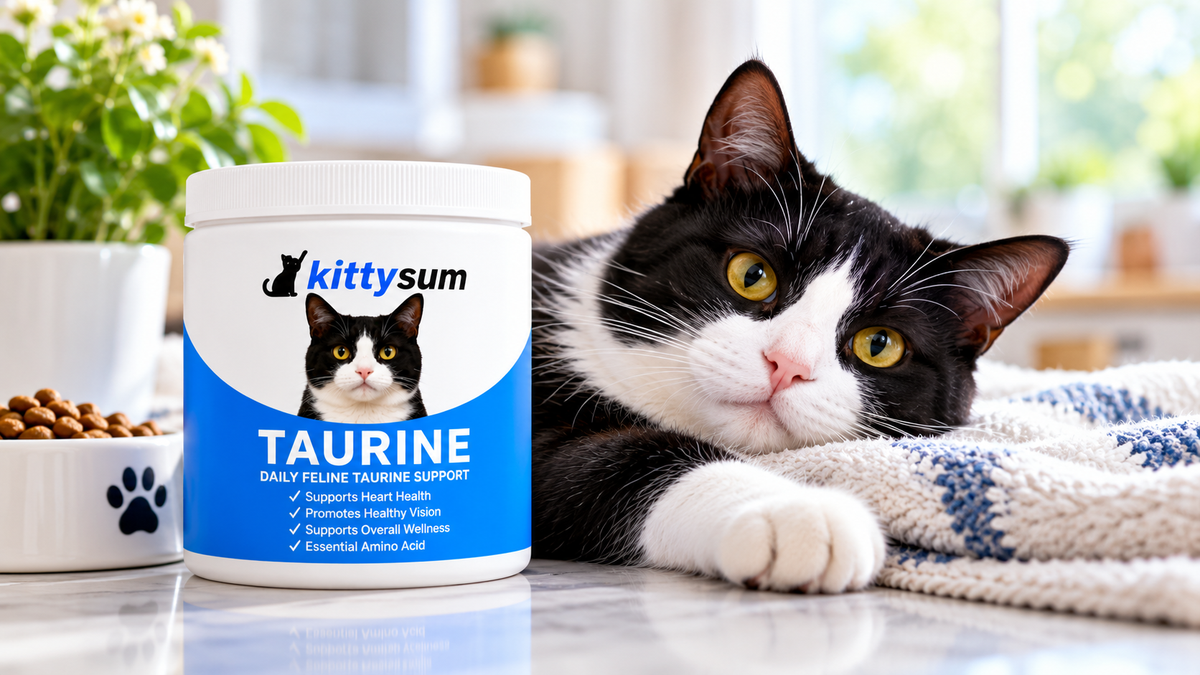
Kittysum Taurine is a daily taurine powder in a 200 g tub with a measuring scoop, blended with chicken liver for a meaty smell that can tempt a nervous eater. You can read the label and serving guide here. For amounts, see taurine dosage for cats, and for timing, see the best time to give taurine.

Warning Signs in a New Rescue Cat
Even so, cats hide illness well, and a new cat's normal behavior is unknown. So watch for these signs and call your vet promptly.
- Fast or labored breathing at rest
- Bumping into furniture or wide pupils in daylight
- Not eating for more than a day or two
- Weight loss, hiding or weakness
Our guide to taurine for cats with DCM explains the heart disease linked to low taurine.

Tips for Fosters and Volunteers
Meanwhile, foster homes and rescue volunteers can make adoption easier. For example, write down the food the cat eats, how much and any supplement given. Then pass the note to the adopter, since it records taurine for rescue cats and every other detail of the diet. Also, send a small bag of the current food home with the cat. As a result, the adopter continues the same diet, and taurine for rescue cats stays steady through the move.
Indoor Life and Taurine for Rescue Cats
Often, a rescue cat that once roamed outdoors becomes an indoor pet. Consequently, it can no longer hunt, so every bit of taurine now comes from the bowl. Also, indoor life brings less exercise, so watch weight over the first months. In addition, offer play, climbing spaces and window views to reduce boredom eating. Our guide to taurine for indoor cats explains portions and enrichment. In short, taurine for rescue cats living indoors depends entirely on the complete food you choose.
The Cost of a Healthy Start
Admittedly, adoption brings many costs at once. Fortunately, covering taurine for rescue cats does not require premium food, only complete food. So spend first on the vet visit and a good complete diet. Then, if your vet recommends extra taurine, a measured powder adds only a small daily cost. Our guide to cheap taurine for cats explains cost-per-day math. Overall, taurine for rescue cats is one of the least expensive parts of a healthy start.
Myths About Taurine for Rescue Cats
- "Every rescue cat needs a supplement." A complete food usually covers taurine.
- "Milk is a kind welcome treat." Many adult cats cannot digest lactose well.
- "A cat that skips meals will eat when hungry." Cats that stop eating can become seriously ill.
- "Dog food is fine for a while." It is not made for a cat's taurine needs.
Clearing up these myths keeps taurine for rescue cats simple and safe.
Common Mistakes With Taurine for Rescue Cats
- Switching foods on day one. Change gradually.
- Skipping the first vet visit. It reviews diet, heart and eyes.
- Ignoring low appetite. Call your vet after a day or two.
- Feeding scraps or dog food. Use a complete cat food.
- Guessing supplement amounts. Ask your vet.
Avoiding these mistakes keeps taurine for rescue cats covered from the first week.
Questions to Ask a Vet About Taurine for Rescue Cats
- Does my cat's past diet raise any concerns?
- Are the heart and eyes normal?
- Which complete food suits my cat's age and weight?
- Does my cat need a taurine supplement while recovering?
Finally, bring any shelter notes to the visit. For context, a 1991 Waltham study found cats need at least 39 mg per kg of body weight a day on canned food to keep normal blood taurine. Also, a UC Davis study found cooking lowers taurine, and a 2015 study found three of seven vegetarian canned diets below the AAFCO minimum. In addition, Merck explains the heart disease linked to low taurine, the WSAVA guide offers diet advice, and the VCA supplement guide says the FDA does not review non-drug supplements before sale.
Helping a rescue cat settle in?
Kittysum Taurine is a daily taurine powder blended with chicken liver in a 200 g tub with a measuring scoop, free shipping on orders over $50 and a 30-day return policy. Ask your vet to confirm the amount. Shop Kittysum Taurine →
Key Terms Explained
- Rescue cat: a cat adopted from a shelter, rescue group or the street, often with an unknown history.
- Diet history: what a cat ate before adoption, including how long and how much.
- Transition: a gradual change from one food to another over several days.
- Complete and balanced: a food that meets a standard nutrient profile for a life stage.
- Decompression: the settling-in period when a newly adopted cat adjusts to a new home.
Frequently Asked Questions
Do rescue cats need taurine supplements?
Usually not, once they eat a complete cat food. A vet may suggest one after a long poor diet or heart or eye findings.
What should I feed a newly adopted rescue cat?
Start with the shelter's food, then switch gradually over about a week to a complete and balanced food.
How do I know if my rescue cat had a poor diet?
Ask the shelter for notes, and book a vet visit to check weight, heart and eyes.
My rescue cat is not eating. What should I do?
Offer small, warm meals in a quiet room, and call your vet if your cat eats nothing for more than a day or two.
Can I give milk to a rescue cat?
It is best avoided, since many adult cats cannot digest lactose well. Fresh water and complete food are better.
References
- VCA Animal Hospitals. Taurine in Cats.
- VCA Animal Hospitals. Lysine.
- Earle KE, Smith PM. Dietary taurine content and plasma taurine in the cat. Br J Nutr. 1991.
- Pion PD, et al. Myocardial failure in cats with low plasma taurine. Science. 1987.
- Spitze AR, et al. Taurine in animal feed ingredients. 2003.
- Kanakubo K, et al. Protein and amino acids in vegetarian pet diets. 2015.
- AAFCO. Cat Food Nutrient Profiles.
- Merck Veterinary Manual. Nutritional Requirements of Small Animals.
- Merck Veterinary Manual. Dilated Cardiomyopathy.
- WSAVA. Selecting a pet food for your pet.
- Companion Animals Extension. Taurine Requirement of Cats.
- AVMA. Dietary supplement law not applicable to products for animals.
- ASPCA Pro. Helping Cats Transition into New Homes.
- Maddie's Fund. Orphaned Kittens: Common Feeding Issues.
This article is for general education and is not veterinary advice. These statements have not been evaluated by the Food and Drug Administration. Kittysum products are not intended to diagnose, treat, cure or prevent any disease.