Key takeaways
- Taurine for kittens supports normal growth, vision and heart function.
- A kitten food labeled complete and balanced for growth already includes taurine.
- Orphan kittens need a kitten milk replacer, never cow's milk.
- Homemade, raw and vegetarian diets are the main reasons kittens fall short.
- Ask your vet before adding any supplement to a kitten's food.
Taurine for kittens matters from the very first meal, because kittens cannot make enough of it on their own. Growing bodies need a steady supply for the eyes, heart and normal development.
The good news is simple. Most kittens on a complete growth food get enough. This guide explains why taurine matters, how milk and kitten food cover it, which diets fall short and when a supplement makes sense.
New to taurine? Start with our guide to taurine for cats.
Table of contents
Why Taurine for Kittens Matters
Taurine is an amino acid cats must get from animal tissue. In fact, Merck notes that plant protein contains none. Also, VCA Animal Hospitals explains that cats need it for vision, heart muscle function and digestion.
Kittens grow fast. For example, many kittens double their birth weight in the first week or two. So every nutrient matters, and taurine for kittens is part of that early foundation.
What low taurine can do
Low taurine can harm the heart and eyes in cats of any age. The landmark 1987 Pion study linked heart failure in cats to low blood taurine. Also, the Companion Animals Extension says retinal changes may appear 5 to 6 months into a deficiency. In growing kittens, research has also linked low taurine to poor growth.

Mother Cats and Taurine for Kittens
Taurine for kittens starts before birth. Research on dietary taurine and feline reproduction found that queens fed too little taurine had more reproductive problems, and their kittens grew poorly.
So a pregnant or nursing queen needs a complete food made for growth or for all life stages. Many vets advise feeding a kitten food during pregnancy and nursing. As a result, the mother passes taurine to her kittens through her milk. Ask your vet which food suits your queen.
- During pregnancy: feed a complete growth or all-life-stages food.
- While nursing: offer food freely, since needs rise a lot.
- Homemade diets: avoid them unless a veterinary nutritionist builds the recipe.
Milk, Orphan Kittens and Taurine for Kittens
Nursing kittens get taurine from their mother's milk. However, orphan kittens need a substitute. For this reason, use a commercial kitten milk replacer, which is made for kittens and lists taurine among its nutrients.
Never feed cow's milk or goat's milk as a main food. Above all, these milks are not made for kittens and can cause diarrhea. The Maddie's Fund guide to orphan kitten feeding covers formula, warmth and common feeding problems.
- First, buy a kitten milk replacer, not a puppy or human formula.
- Next, mix it exactly as the label says.
- Then warm it to body temperature and feed with the kitten on its belly.
- Also, weigh the kitten daily to check growth.
- Finally, call your vet if the kitten stops gaining weight.
In short, a proper formula covers taurine for kittens without any added supplement.
Weaning Kittens Onto Solid Food
Weaning usually starts at about 4 weeks of age. During this time, kittens move from milk to soft solid food. So the first solid food should be a complete kitten food.
- Start with a gruel: mix wet kitten food with a little milk replacer.
- Thicken it slowly: use less liquid each few days.
- Offer small meals often: kittens have tiny stomachs.
- Keep water out: a shallow bowl works best.
As a result, taurine for kittens stays steady through the switch from milk to food. Meanwhile, the kitten learns to eat on its own.

Kitten Food and Taurine for Kittens
A food labeled complete and balanced for growth, or for all life stages, is made to meet a kitten's needs. For example, the AAFCO cat food nutrient profiles set a taurine minimum for growth and reproduction. Commercial kitten foods add taurine to meet it.
Also, VCA's guide to feeding growing kittens recommends a food made for growth until about 12 months. So for most owners, taurine for kittens is covered simply by choosing the right food.
How to read a kitten food label
- Look for "complete and balanced" on the label.
- Check that it says "growth" or "all life stages."
- Read the feeding guide by age and weight.
- Note whether it is wet or dry, since water content differs.
The WSAVA guide gives more questions to ask about any pet food maker.
Taurine for Kittens: Diet Comparison
Here is a quick guide to common kitten diets.
| Diet | Taurine concern | Next step |
|---|---|---|
| Mother's milk | Low if the queen eats well | Feed the queen a complete growth food |
| Kitten milk replacer | Low | Mix exactly as the label says |
| Complete kitten food | Low | Follow the feeding guide |
| Homemade or raw | Higher | Use a vet-nutritionist recipe with a set taurine source |
| Vegetarian or vegan | High | Ask your vet to switch to a complete kitten food |
In short, taurine for kittens depends almost entirely on the diet.
Homemade and Raw Diets: Taurine for Kittens
Homemade and raw diets carry the most risk for kittens. Growing kittens need many nutrients in the right balance, not just taurine. Therefore, most vets advise against homemade diets for kittens unless a veterinary nutritionist builds the recipe.
Cooking also matters. A UC Davis study found that cooking, especially boiling, lowers taurine in meat. In addition, raw diets carry germ risks, and the AVMA discourages feeding raw animal protein to pets.
- First, ask your vet for a referral to a veterinary nutritionist.
- Next, follow the recipe's named taurine source and amount.
- Then add taurine after cooking, once the food cools.
- Also, weigh your kitten each week.
- Finally, bring the recipe to every checkup.
Our guides to taurine for homemade cat food and taurine for raw fed cats explain the mixing steps.
Vegetarian Diets and Taurine for Kittens
Plant foods contain no taurine. In fact, a 2015 study found three of seven vegetarian canned diets below the AAFCO minimum for taurine. For a growing kitten, that gap is a serious risk.
So taurine for kittens is one more reason to choose a complete animal-based kitten food. If you have ethical concerns, talk with your vet about the safest option for your kitten.
Adding a Supplement: Taurine for Kittens
VCA says a healthy cat eating a complete food for its life stage does not require supplementation. That applies to kittens too. Therefore, a kitten on a complete growth food rarely needs extra taurine.
However, your vet may suggest a supplement in some cases. For example, a kitten on a vet-built homemade recipe, or a kitten with a heart or eye concern, may need a measured source.
- Check the food. First, confirm it is complete for growth.
- Ask your vet. Next, get a daily amount that suits your kitten's weight.
- Weigh the kitten. Then use the current weight, since it changes weekly.
- Choose a clear label. Also, look for mg of taurine per serving.
- Measure carefully. Use a set scoop, never a kitchen spoon.
- Track growth. Finally, log weight and appetite each week.
VCA describes taurine supplementation as relatively safe, with no reports of problems from excess dietary taurine in cats. Even so, AAFCO sets no maximum, so use the label or your vet's amount. VCA also warns that supplement quality may vary significantly among makers, and the AVMA reports that the main US dietary supplement law does not apply to animal products.
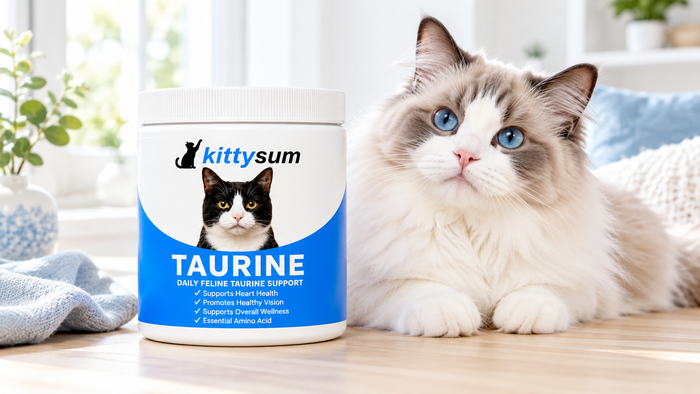
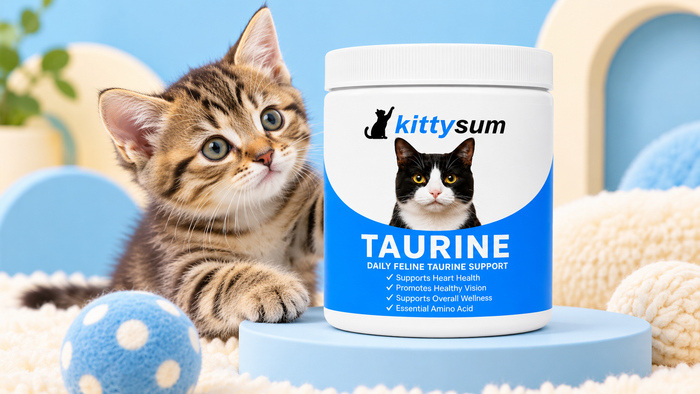
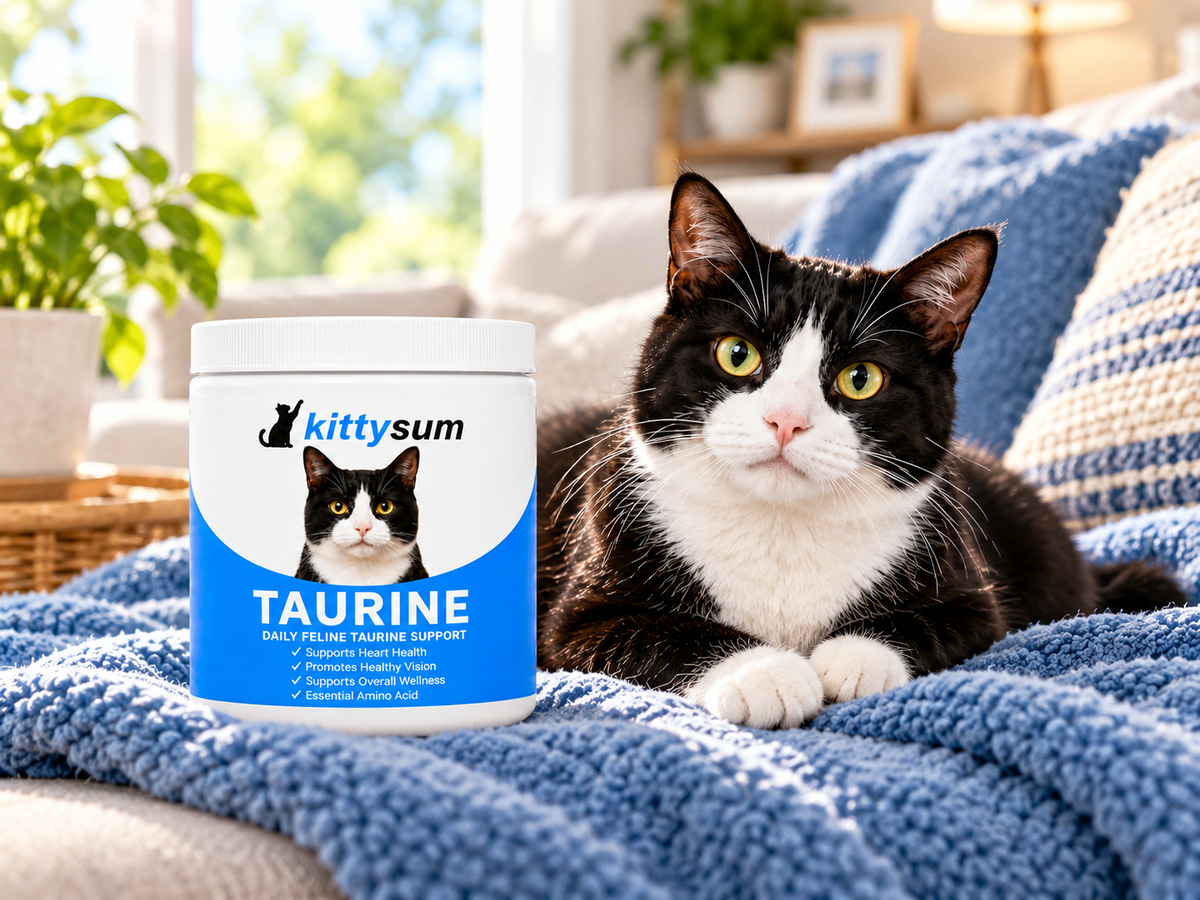
Kittysum Taurine is a daily taurine powder in a 200 g tub with a measuring scoop, blended with chicken liver and made to mix into soft wet food. You can read the label and serving guide here. For amounts, see our guide to taurine dosage for cats.

An Easy Daily Routine: Taurine for Kittens
Kittens thrive on routine. So a simple plan helps.
- Morning: serve a measured meal of complete kitten food.
- Midday and evening: offer two or three more small meals.
- Each week: weigh your kitten and note the result.
- Each month: adjust portions to the feeding guide as weight rises.
As a result, you will spot slow growth early. Also, the log helps your vet confirm that taurine for kittens is covered. If your vet set a supplement amount, mix it into the first meal of the day.
Treats and Table Scraps for Kittens
Treats are fun, but they can crowd out complete food. Most vets suggest keeping treats under about 10 percent of daily calories. Otherwise, a kitten may fill up on snacks and eat less of its growth food.
- Pick cat treats: choose ones made for cats, in small pieces.
- Skip people food: onions, garlic, chocolate and grapes are unsafe for pets, according to the ASPCA.
- Use food as play: a few pieces of the kitten's own kibble make a good reward.
As a result, the main meals keep doing the work. In short, taurine for kittens comes from complete food first, and treats come second.
Feeding Kittens in Multi-Cat Homes
In a home with older cats, kittens often eat from the adult bowl. Adult food is complete for adults, yet it is not made for growth. Meanwhile, older cats may eat the kitten food, which is richer in calories.
So feed each cat in its own spot. For example, a kitten can eat in a room or crate with a small door. Also, meal feeding works better than leaving food out all day. As a result, each cat gets the right food, and taurine for kittens stays on track while adults keep a healthy weight.
Signs a Kitten Needs a Vet Visit
Some signs need prompt attention. For example, watch for these.
- Fast or labored breathing at rest
- Poor weight gain or weight loss
- Bumping into objects or dilated pupils
- Weakness, crying or refusing food
These signs have many causes, so never guess. Instead, call your vet and mention the diet and any supplements. In short, early action matters far more than any single nutrient. Our guide to taurine deficiency in cats explains how vets test for low taurine.
Kitten Checkups and Taurine for Kittens
Kitten visits are a good time to review the diet. So bring a short list.
- The exact name of every food and treat
- Any formula or supplement, with labels
- A log of weekly weights
- Any changes in breathing, vision or energy
As a result, your vet can judge growth and diet in one visit. Likewise, the list helps if you see a new vet. Above all, regular checkups keep taurine for kittens on your vet's radar during the fastest growth stage.
From Kitten to Adult: Taurine for Kittens Long Term
Most kittens switch to an adult food at about 12 months. Large breeds may switch later. In either case, the adult food should also be complete and balanced, so taurine stays covered.
Switch slowly over about a week. For example, mix a little adult food into the kitten food and raise the share each day. As a result, the move from taurine for kittens to adult needs is smooth. Our guide to taurine foods for cats lists natural sources for every age.

Common Mistakes With Taurine for Kittens
- Feeding cow's milk. Use a kitten milk replacer instead.
- Using adult food too early. Kittens need a growth food.
- Cooking at home without a recipe. Growing kittens need a complete plan.
- Adding supplements without the vet. Doses depend on weight.
- Skipping weigh-ins. Weight is the best early warning.
Avoiding these mistakes keeps taurine for kittens simple.
Questions to Ask Your Vet About Taurine for Kittens
- Is my kitten's food complete for growth?
- Is my kitten gaining weight at a healthy rate?
- Does my kitten need any supplement, and how much?
- When should we switch to adult food?
For context, a 1991 Waltham study found adult cats need at least 39 mg per kg of body weight a day on canned food. Also, the 1978 study first showed that taurine is essential for cats, and Merck explains the heart disease linked to low taurine. Finally, the VCA supplement guide notes that the FDA does not review non-drug supplements before sale.
Feeding a kitten a vet-built home diet?
Kittysum Taurine is a daily taurine powder blended with chicken liver in a 200 g tub with a measuring scoop, free shipping on orders over $50 and a 30-day return policy. Ask your vet to confirm the amount. Shop Kittysum Taurine →
Key Terms Explained
- Kitten: a young cat, usually under 12 months old.
- Queen: a female cat that is pregnant or nursing.
- Milk replacer: a formula made for kittens that cannot nurse.
- Growth food: a kitten food that is complete and balanced for growth.
- Weaning: the move from milk to solid food, usually from about 4 weeks of age.
Frequently Asked Questions
Do kittens need taurine?
Yes. Kittens need taurine for growth, vision and heart function, and they cannot make enough on their own. A complete kitten food covers it.
Should I add taurine to kitten food?
Usually not. A food labeled complete and balanced for growth already includes taurine. Ask your vet before adding a supplement.
Does kitten milk replacer contain taurine?
Commercial kitten milk replacers are made for kittens and list taurine among their nutrients. Check the label and mix it exactly as directed.
Can kittens eat a homemade or raw diet?
Most vets advise against it unless a veterinary nutritionist builds the recipe, because kittens need many nutrients in the right balance.
How much taurine does a kitten need?
Needs depend on weight and diet. Follow the food's feeding guide, and ask your vet for an amount if a supplement is needed.
References
- VCA Animal Hospitals. Taurine in Cats.
- VCA Animal Hospitals. Lysine.
- Earle KE, Smith PM. Dietary taurine content and plasma taurine in the cat. Br J Nutr. 1991.
- Pion PD, et al. Myocardial failure in cats with low plasma taurine. Science. 1987.
- Spitze AR, et al. Taurine in animal feed ingredients. 2003.
- Kanakubo K, et al. Protein and amino acids in vegetarian pet diets. 2015.
- AAFCO. Cat Food Nutrient Profiles.
- Merck Veterinary Manual. Nutritional Requirements of Small Animals.
- Merck Veterinary Manual. Dilated Cardiomyopathy.
- WSAVA. Selecting a pet food for your pet.
- Companion Animals Extension. Taurine Requirement of Cats.
- AVMA. Dietary supplement law not applicable to products for animals.
- Sturman JA, Messing JM. Dietary taurine and feline reproduction and development. J Nutr. 1991.
- VCA Animal Hospitals. Feeding Growing Kittens.
- Maddie's Fund. Orphaned Kittens: Common Feeding Issues and Solutions.
- AVMA. Raw or undercooked animal-source protein in cat and dog diets.
This article is for general education and is not veterinary advice. These statements have not been evaluated by the Food and Drug Administration. Kittysum products are not intended to diagnose, treat, cure or prevent any disease.