
Key takeaways
- Chicken flavored taurine for cats uses a meaty base so the powder smells like food, not a supplement.
- A familiar taste helps fussy cats accept a new powder in their bowl.
- Check the label for mg of taurine per scoop, the full ingredient list and a serving guide by weight.
- Liver is rich in vitamin A, so a supplement should use it in small amounts only.
- Most cats on a complete food need no extra taurine; ask your vet first.
Chicken flavored taurine for cats solves the most common supplement problem: a cat that walks away from the bowl. Cats judge food mainly by smell. So a powder with a meaty chicken base blends into dinner far more easily than a plain one.
This guide explains why flavor matters, what to look for on the label, how much liver is sensible, and how to serve a flavored powder so your cat eats every bite.
New to taurine? Start with our guide to taurine for cats.
Table of contents
Does Your Cat Need Chicken Flavored Taurine for Cats?
Taurine is an amino acid cats must get from animal tissue. In fact, Merck notes that plant protein contains none. Also, VCA Animal Hospitals explains that cats need it for vision, heart muscle function and digestion.
VCA says a healthy cat eating a complete food for its life stage does not require supplementation. So start there. However, some cats may benefit from a measured source, and for them chicken flavored taurine for cats can make the routine easier.
- Homemade or raw diets
- A vet-advised supplement after a heart or eye exam
- Very small meals of a complete food

Why Flavor Matters for Chicken Flavored Taurine for Cats
Cats rely heavily on smell to decide whether to eat. In fact, a cat with a blocked nose often stops eating. Therefore, a supplement that smells strange can put a cat off a whole meal.
Cats also learn food dislikes quickly. For example, one bad experience with a bitter bowl can make a cat wary for weeks. By contrast, a powder that smells like chicken fits into what the cat already expects from dinner. That is the main reason owners choose chicken flavored taurine for cats.
What a flavored powder changes
- Smell: the bowl still smells like meat.
- Acceptance: fewer refusals in the first week.
- Routine: easier daily dosing, because meals are not wasted.
Why Chicken Works Well as a Flavor Base
Chicken is one of the most common proteins in cat food. As a result, most cats already know and accept its smell. Chicken liver in particular has a strong, rich aroma that many cats love.
Liver also contains some natural taurine, although heart and dark meat are richer sources, according to a UC Davis study of taurine in feed ingredients. So in chicken flavored taurine for cats, the liver mainly adds taste, while the measured taurine does the nutritional work. Our guide to taurine foods for cats lists the richest natural sources.

Liver, Vitamin A and Chicken Flavored Taurine for Cats
Liver is very rich in vitamin A. Cats need vitamin A, but too much over months can harm bones and joints. In fact, VCA warns that vitamin A toxicity in cats is often linked to diets high in liver.
A supplement serving holds only a small amount of liver. Even so, this matters if your cat already eats a lot of liver at home. So keep these points in mind.
- Follow the serving size: do not double scoops for taste.
- Count liver treats: limit liver-based snacks if you also use a liver-flavored powder.
- Tell your vet: mention every liver source in a homemade recipe.
In short, chicken flavored taurine for cats is safe to use as directed, but it is not a reason to add extra liver elsewhere.
Chicken Flavored Taurine for Cats vs Unflavored Powder
Here is a quick comparison of the two main options.
| Feature | Chicken flavored | Unflavored |
|---|---|---|
| Smell in the bowl | Meaty, familiar | Neutral or slightly sour |
| Picky cat acceptance | Usually easier | Varies |
| Best carrier | Any wet food | Strong-smelling wet food |
| Ingredient list | Taurine plus a flavor base | Taurine only |
| Watch out for | Liver from other sources | Taste refusals |
Both work when measured well. However, chicken flavored taurine for cats is usually the easier choice for fussy eaters.
Label Checks Before Buying Chicken Flavored Taurine for Cats
A flavored powder should still be clear about what it contains. So check these points before you buy.
- Taurine in mg per scoop. You need this number to follow your vet's amount.
- Full ingredient list. Every added ingredient should be named.
- Named flavor source. Look for a real food such as chicken liver, not a vague "natural flavor."
- Serving guide by weight. Daily amounts should depend on your cat's size.
- A measuring scoop. Small, steady portions are far easier than kitchen spoons.
- Company contact details. A real maker you can ask questions.
VCA also warns that supplement quality may vary significantly among makers. Likewise, the AVMA reports that the main US dietary supplement law does not apply to animal products. Our guide to the best taurine supplement for cats covers more label checks.
How to Serve Chicken Flavored Taurine for Cats
Even a tasty powder works best with a gentle routine. So follow these steps whenever you serve chicken flavored taurine for cats.
- Use wet food: pâté holds powder evenly, while kibble lets it fall to the bottom.
- Mix fully: stir until no powder sits on top.
- Serve a small portion first: offer the mixed spoonful, then the rest of the meal.
- Warm slightly: body-warm food smells stronger.
- Keep the timing steady: same bowl, place and time each day.
As a result, most cats finish the mixed portion without hesitation. Our guide to how to add taurine to cat food shows more mixing methods.
A First-Week Plan for Chicken Flavored Taurine for Cats
A slow start prevents refusals, even with a flavored powder. For example, try this plan.
- Days 1 to 2: a pinch in one spoonful of wet food.
- Next two days: about a quarter of the target amount.
- Days 5 to 6: about half of the target amount.
- From the end of the week: the full amount, if your cat eats well.
If your cat refuses the bowl, go back one step for two days. Meanwhile, keep a short log. Our guide to taurine dosage for cats explains how to set the target with your vet.

Which Cats Benefit Most From Chicken Flavored Taurine for Cats?
A flavored powder helps most when taste is the main barrier. For instance:
- Fussy eaters: cats that refuse anything new in the bowl.
- Seniors: older cats often lose some sense of smell, so a stronger aroma helps.
- Home-fed cats: cats on a vet-built homemade recipe with a set taurine amount.
- Multi-cat homes: one cat on a supplement can get its own tasty spoonful.
Our guides to taurine for picky cats and taurine for senior cats cover these groups in depth.
Powders, Chews and Liquids Compared
Chicken flavored taurine for cats comes in more than one form. Each has trade-offs.
- Flavored powder: easy to measure and to build up slowly.
- Chews or treats: some cats love them; however, doses per chew are fixed.
- Liquids: blend into food, though taste and dosing vary by brand.
For most owners, a powder with a scoop gives the most control. Our guides to taurine treats for cats and liquid taurine for cats compare the other forms.
Storing a Flavored Taurine Powder
A meaty powder needs simple care to stay fresh. So follow these habits.
- First, close the lid tightly after every use.
- Next, keep the tub in a cool, dry cupboard away from sunlight.
- Then use a dry scoop, since moisture can cause clumping.
- Finally, check the best-before date on the label.
As a result, the aroma stays strong, and chicken flavored taurine for cats keeps its appeal to the last scoop.
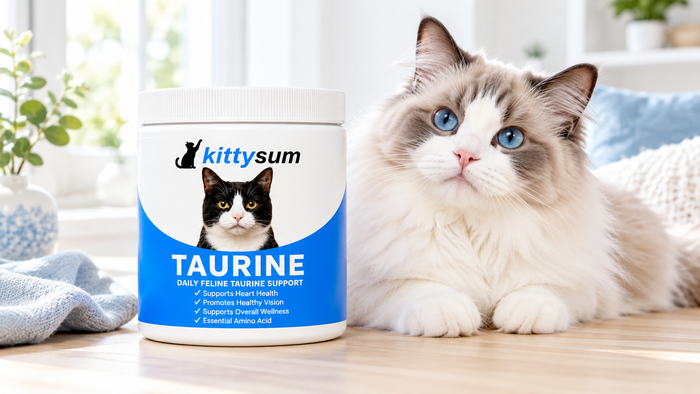
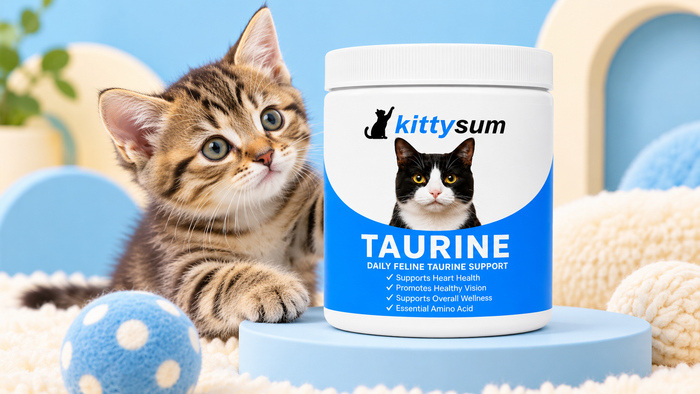
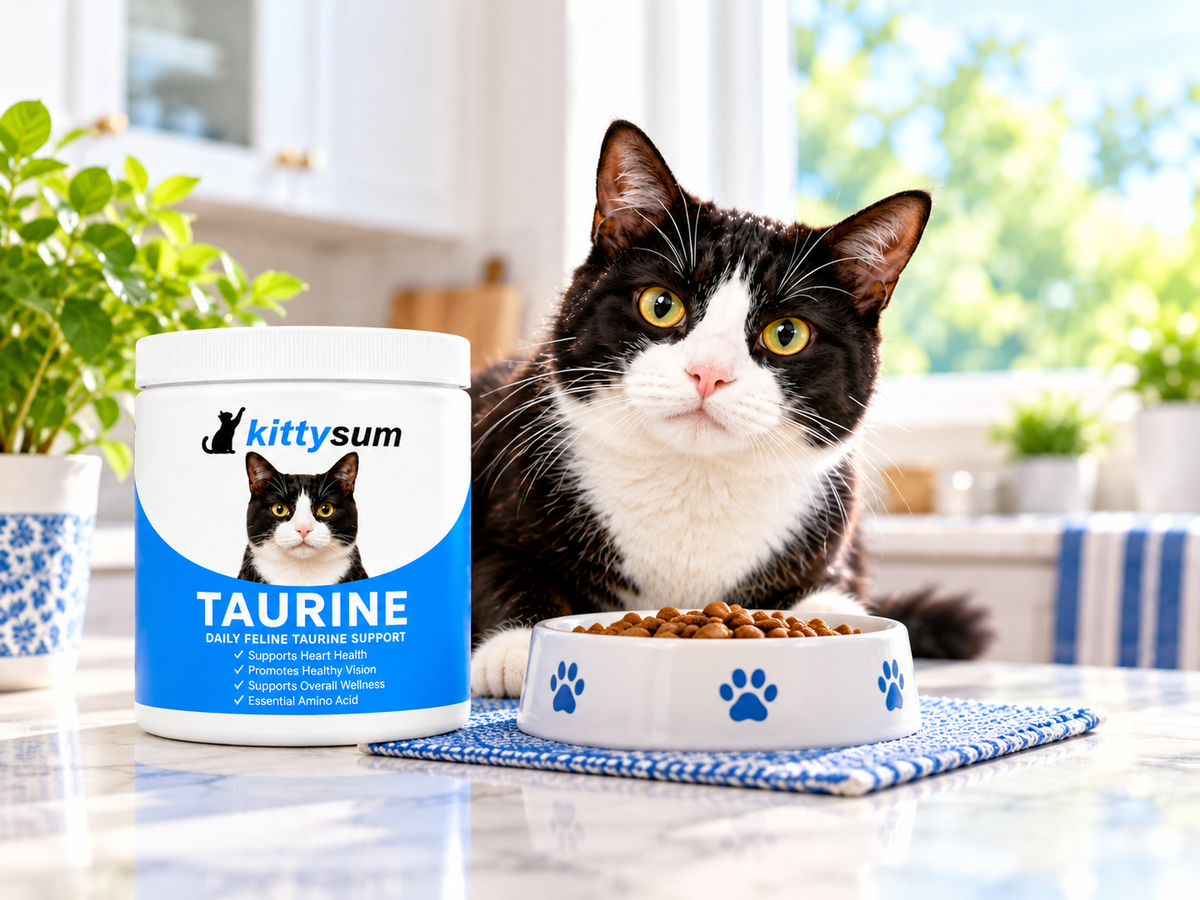
Kittysum Taurine is a daily taurine powder blended with chicken liver for a meaty smell, in a 200 g tub with a measuring scoop. You can read the label and serving guide here.
Cost per Day of Chicken Flavored Taurine for Cats
Tub prices vary, so the price on the shelf can mislead. Instead, compare the cost of one day's serving. For example, use this simple method.
- First, find the total grams in the tub.
- Next, find the grams in one daily serving for your cat's weight.
- Then divide the tub size by the daily serving to get the number of days.
- Finally, divide the price by the number of days.
As a result, you can compare a flavored tub with an unflavored one fairly. Also, check shipping, since a larger order may qualify for free delivery. In practice, chicken flavored taurine for cats often costs about the same per day as a plain powder, because the flavor base is a small part of each scoop.
Homemade Recipes and Chicken Flavored Taurine for Cats
Owners who cook for their cats often ask whether a flavored powder fits a recipe. Usually it does. However, a few rules apply.
- Follow the recipe's taurine amount: a veterinary nutritionist sets it in mg.
- Add it after cooking: heat and water lower taurine, according to the UC Davis study above.
- Count the liver: recipes already list liver, so tell your nutritionist about the flavor base.
- Keep the recipe steady: change one ingredient at a time.
In other words, chicken flavored taurine for cats can replace a plain powder in a homemade plan, as long as your vet agrees. Our guide to taurine for homemade cat food explains the mixing steps.
Common Mistakes With Chicken Flavored Taurine for Cats
- Doubling scoops for taste. Follow the serving size instead.
- Adding lots of liver treats. Vitamin A builds up over time.
- Sprinkling on dry kibble. The powder sinks to the bottom.
- Skipping the vet. Most cats on a complete food need no extra taurine.
- Switching foods and supplement on the same day. Change one thing at a time.
Avoiding these mistakes keeps chicken flavored taurine for cats simple and safe.
Allergies and food sensitivities
A small number of cats react to chicken. For instance, a cat with a known chicken allergy may itch, vomit or have loose stools after eating it. Therefore, check with your vet before choosing chicken flavored taurine for cats if your cat follows an elimination diet. Meanwhile, an unflavored powder mixed into the prescribed food is a safer option for these cats. Above all, keep the vet's diet plan unchanged until the trial ends.

Warning Signs After Any New Supplement
Watch your cat for a few days after any change. For example, look for these signs.
- Vomiting or diarrhea
- Eating much less than usual
- Hiding or unusual tiredness
- Fast or labored breathing at rest
Stop the new product and call your vet if you notice any of them. Fast breathing is an emergency. In short, a vet visit matters far more than any flavor.
Questions to Ask Your Vet About Chicken Flavored Taurine for Cats
- Does my cat's diet already cover taurine?
- Is a supplement needed, and how many mg a day?
- How much liver is safe in my cat's total diet?
- Which carrier food suits my cat's health?
Bring the label of your chicken flavored taurine for cats to the visit, so your vet can check it in one look. For context, a 1991 Waltham study found cats need at least 39 mg per kg of body weight a day on canned food. Also, a 2015 study found three of seven vegetarian canned diets below the AAFCO minimum.
In addition, the landmark 1987 Pion study linked heart failure in cats to low blood taurine, and Merck explains the heart disease involved. The Companion Animals Extension says retinal changes may appear 5 to 6 months into a deficiency. Finally, see the WSAVA guide for diet advice, and note that the VCA supplement guide says the FDA does not review non-drug supplements before sale.
Want a taurine powder cats actually eat?
Kittysum Taurine is a daily taurine powder blended with chicken liver in a 200 g tub with a measuring scoop, free shipping on orders over $50 and a 30-day return policy. Ask your vet to confirm the amount. Shop Kittysum Taurine →
Key Terms Explained
- Palatability: how appealing a food tastes and smells to a cat.
- Flavor base: the ingredient that gives a supplement its taste, such as chicken liver.
- Unflavored: a powder with no added taste ingredient.
- Vitamin A: a vitamin found in liver that cats need, but too much over time is harmful.
- Complete and balanced: a food that meets a standard nutrient profile for its life stage.
Frequently Asked Questions
Is chicken flavored taurine better for cats?
The taurine is the same. A chicken base mainly helps fussy cats accept the powder, which makes daily dosing easier.
Is chicken liver in a supplement safe for cats?
In the small amounts of a supplement serving, yes. Liver is rich in vitamin A, so avoid adding lots of liver treats on top.
Can I mix flavored taurine into dry food?
Powder tends to fall to the bottom of kibble. Mix it into a spoonful of wet food or a lickable treat instead.
How do I start a picky cat on a flavored powder?
Start with a pinch in a small portion of warm wet food, serve it first and build up over about a week.
Does my cat need taurine if it eats commercial food?
Most cats on a complete and balanced food get enough. Supplements matter mainly for homemade, raw or vegetarian diets.
References
- VCA Animal Hospitals. Taurine in Cats.
- VCA Animal Hospitals. Lysine.
- Earle KE, Smith PM. Dietary taurine content and plasma taurine in the cat. Br J Nutr. 1991.
- Pion PD, et al. Myocardial failure in cats with low plasma taurine. Science. 1987.
- Spitze AR, et al. Taurine in animal feed ingredients. 2003.
- Kanakubo K, et al. Protein and amino acids in vegetarian pet diets. 2015.
- AAFCO. Cat Food Nutrient Profiles.
- Merck Veterinary Manual. Nutritional Requirements of Small Animals.
- Merck Veterinary Manual. Dilated Cardiomyopathy.
- WSAVA. Selecting a pet food for your pet.
- Companion Animals Extension. Taurine Requirement of Cats.
- AVMA. Dietary supplement law not applicable to products for animals.
- VCA Animal Hospitals. Vitamin A Toxicosis in Cats.
This article is for general education and is not veterinary advice. These statements have not been evaluated by the Food and Drug Administration. Kittysum products are not intended to diagnose, treat, cure or prevent any disease.