

Key takeaways
- Taurine for Bengal cats matters as much as for any cat; the breed has no special higher requirement.
- Bengals are often fed raw or homemade diets, which can fall short without a measured taurine source.
- A complete and balanced commercial food covers taurine for most Bengals.
- Taurine does not prevent inherited heart or eye diseases, so screening still matters.
- A measured supplement helps with homemade or raw diets, under vet guidance.
Taurine for Bengal cats comes up often among owners of this energetic breed, partly because many Bengals are fed raw or homemade diets. Those diets can be excellent, yet they can also miss taurine if the recipe is not measured.
This guide explains what Bengals need, where diets go wrong, how taurine relates to heart and eye problems in the breed, and when a measured supplement makes sense. It is written for Bengal owners and breeders who want practical, honest steps.
New to taurine? Start with our guide to taurine for cats.
Table of contents
- Why it matters
- Breed needs
- Raw feeding
- Homemade diets
- Diet comparison
- Commercial food
- Heart health
- Eye health
- Activity and weight
- Bengal kittens
- Picky Bengals
- When to supplement
- Dosing
- Warning signs
- Breeder diets
- Hydration
- Multi-cat homes
- Older Bengals
- Cost
- Myths
- Mistakes
- Questions for a vet
- FAQ
- References
Why Taurine for Bengal Cats Matters
To begin with, taurine is an amino acid cats must get from animal tissue. In fact, Merck notes that plant protein contains none. Also, VCA Animal Hospitals explains that cats need it for vision, heart muscle function and digestion.
Moreover, low taurine causes serious disease. For example, the landmark 1987 Pion study linked heart failure in cats to low blood taurine, and the Companion Animals Extension says retinal changes may appear 5 to 6 months into a deficiency. Therefore, taurine for Bengal cats is worth getting right, especially in homes that make their own food.

Do Bengals Need More Taurine?
In short, no published guideline sets a higher taurine requirement for Bengals. The AAFCO cat food nutrient profiles apply to all cats, whatever the breed. However, Bengals are often very active and muscular, so they may eat more food overall. Consequently, taurine for Bengal cats is covered by the same complete diets as other cats, simply in larger portions when needed.
Still, a few breed habits make the topic more relevant. For example, Bengals are often bought from breeders who feed raw, and owners may keep that diet without the original recipe. Also, some Bengals become selective eaters, and others gulp food quickly in multi-cat homes. Meanwhile, the breed's interest in water and play can hide a drop in appetite. Each of these habits can lower how much complete food a cat actually eats. Therefore, the practical question is not whether Bengals need more taurine, but whether each Bengal eats enough of a complete diet every day. In short, consistent portions of a complete food are the foundation, and the rest of this guide builds on that.
Raw Feeding and Taurine for Bengal Cats
Notably, many Bengal breeders and owners feed raw diets. Raw muscle meat and heart contain taurine, yet recipes vary widely. For example, a raw mix made mostly of lean breast meat can carry far less taurine than one with heart and dark meat.
- Ground and stored meat: taurine can drop during grinding and long freezer storage.
- Unbalanced recipes: missing organs or minerals cause other gaps too.
- Food safety: both the FDA and the AVMA warn about germs in raw pet food.
Our guide to taurine for raw fed cats explains these points in depth. In short, taurine for Bengal cats on raw diets depends on a measured recipe.
Homemade Cooked Diets
Similarly, cooked homemade diets can fall short. In fact, a UC Davis study found that cooking lowers taurine in meat, with boiling causing the largest losses. So cooked recipes need a measured taurine source added after cooking.
Our guide to taurine for homemade cat food explains safe amounts.
Taurine for Bengal Cats: Diet Comparison
Here is a quick guide to taurine for Bengal cats across common feeding styles.
| Diet | Taurine concern | Notes |
|---|---|---|
| Complete commercial wet or dry | Low | Meets the AAFCO minimum |
| Complete commercial raw | Low to moderate | Check the statement; handle safely |
| Homemade raw | Moderate to high | Needs heart, dark meat and a measured source |
| Homemade cooked | High | Cooking lowers taurine |
| Meat only, no recipe | High | Missing taurine, minerals and vitamins |
In other words, the recipe matters more than the feeding style.

Commercial Food for Bengals
Above all, a commercial food labeled complete and balanced is the simplest choice. Also, high-protein wet foods suit many active Bengals. Moreover, the WSAVA guide suggests choosing makers with qualified nutritionists and strong quality control. Our guides to taurine in wet cat food and taurine in dry cat food explain how labels work. Thus, taurine for Bengal cats is covered without extra steps for most owners.
Heart Health and Taurine for Bengal Cats
Importantly, two different heart diseases matter here. First, low taurine can cause dilated cardiomyopathy, which is often reversible when taurine is restored. Second, hypertrophic cardiomyopathy, or HCM, is the most common heart disease in cats, according to Cornell Feline Health Center, and it has been reported in Bengals.
However, HCM is not caused by low taurine, and taurine does not treat it. Therefore, many Bengal breeders screen breeding cats with heart scans. In short, taurine for Bengal cats protects against one heart problem, while screening helps with the other. Our guides to taurine for cats with DCM and taurine for cat heart health explain the difference.
Eye Health in Bengals
Similarly, eye problems can have two causes. Low taurine damages the retina, as Merck explains. Meanwhile, Bengals can also inherit a retinal disease, and UC Davis offers a genetic test for the Bengal form of progressive retinal atrophy.
So taurine for Bengal cats prevents diet-related retinal damage but cannot prevent an inherited condition. Therefore, ask your breeder about genetic testing. Our guide to taurine for cat eye health covers the diet side.
Activity, Weight and Taurine for Bengal Cats
Notably, Bengals are known for high energy. As a result, many need more calories than a typical house cat, while others become overweight indoors without enough play.
- Weigh your Bengal monthly and adjust portions.
- Offer daily play with wand toys, climbing and puzzle feeders.
- Feed measured meals rather than leaving food out all day.
Our guides to taurine for indoor cats and taurine for overweight cats explain portion control. Overall, taurine for Bengal cats stays covered when portions match activity.
Taurine for Bengal Cats as Kittens
Of course, Bengal kittens grow quickly. So they need a complete growth or all-life-stages food, not adult maintenance food. According to VCA, kittens should eat a diet made for growth. Also, raw or homemade diets for kittens need extra care, because mistakes affect development. Our guide to taurine for kittens explains growth needs.
Picky Bengals
Sometimes Bengals raised on raw food refuse commercial diets. Therefore, change slowly over two weeks, warm wet food slightly and try different textures. Also, a meaty-smelling topper can help. Our guide to taurine for picky cats offers more tips. Consequently, your Bengal eats enough complete food to keep taurine for Bengal cats on track.
When a Taurine Supplement Helps
In most cases, a Bengal on a complete commercial diet does not need extra taurine. However, a measured supplement can help in specific cases, with vet advice.
- Homemade raw or cooked diets without a measured taurine source.
- Diet transitions when a cat eats little complete food.
- Vet findings such as heart or eye concerns.
VCA describes taurine as relatively safe, with no reports of problems from excess dietary taurine in cats. Even so, VCA warns that supplement quality may vary among makers, and the AVMA reports that the main US dietary supplement law does not apply to animal products.
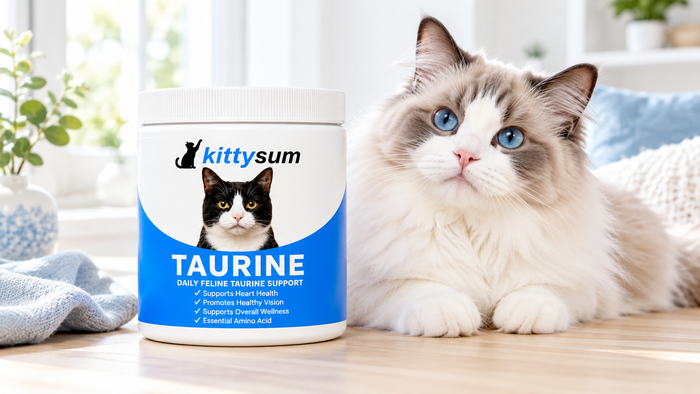
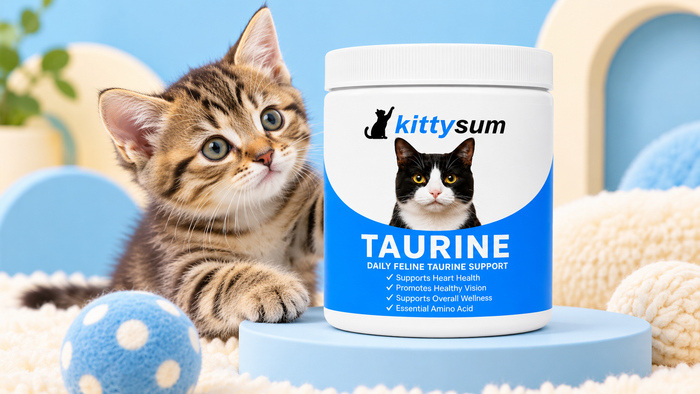
Kittysum Taurine is a daily taurine powder in a 200 g tub with a measuring scoop, blended with chicken liver for a meaty smell many cats accept. You can read the label and serving guide here.

Dosing Taurine for Bengal Cats
For context, a 1991 Waltham study found cats need at least 39 mg per kg of body weight a day on canned food to keep normal blood taurine. Still, your vet should set the amount for your Bengal, especially for homemade diets. Our guides to taurine dosage for cats and how to add taurine to cat food explain the details.
Warning Signs in Bengals
Even so, active cats can hide illness. So watch for these changes and call your vet promptly.
- Fast or labored breathing at rest
- Less play or tiring quickly
- Bumping into objects or wide pupils in daylight
- Weight loss or poor appetite
Our guide to taurine deficiency in cats explains these signs.

Continuing a Breeder's Diet
Often, a new Bengal arrives with a feeding plan from the breeder. So ask for the exact recipe or brand, including any supplements. Then keep the same diet for the first few weeks, because a move is stressful enough. Afterward, if you want to change foods, switch gradually over about a week. Also, ask whether the breeder adds taurine to a raw or homemade mix, and how much. As a result, taurine for Bengal cats stays steady through the move, and you know exactly what to continue.
Hydration for Bengals
Interestingly, many Bengals love water and play with it. Even so, play is not the same as drinking. Therefore, offer a fountain, wide bowls and wet food. In addition, place water away from food, since many cats prefer it that way. Overall, good hydration supports the kidneys and urinary tract, while taurine for Bengal cats supports the heart and eyes.
Multi-Cat Bengal Homes
Likewise, homes with several Bengals or mixed breeds need a feeding plan. For example, a fast eater may steal from a slower cat. So feed cats in separate spots or use microchip feeders. Also, if only one cat needs a supplement, mix it into that cat's portion. Consequently, every cat gets its own food, and taurine for Bengal cats reaches the right cat in the right amount.
Older Bengals
Later in life, Bengals slow down like any cat. Meanwhile, older cats more often develop kidney, thyroid or dental problems. Therefore, book regular senior checkups and ask whether your Bengal's diet still fits. In particular, appetite changes can lower intake. Our guide to taurine for senior cats explains age-related needs, so taurine for Bengal cats stays covered in the senior years.
The Cost of Feeding a Bengal Well
Admittedly, premium raw and wet foods can be expensive for a large, active cat. However, complete dry or wet foods at moderate prices cover taurine just as well when the label is complete. Also, homemade feeders often find a measured powder cheaper per day than adding extra heart meat. Our guide to cheap taurine for cats explains cost-per-day math. In short, taurine for Bengal cats does not require the most expensive food.
Myths About Taurine for Bengal Cats
- "Bengals need a special high-taurine diet." No guideline says so; complete foods cover them.
- "Raw diets always have enough taurine." Recipes vary; measure it.
- "Taurine prevents HCM." HCM is not caused by low taurine.
- "Taurine prevents inherited eye disease." It only prevents diet-related damage.
Clearing up these myths keeps taurine for Bengal cats realistic.
Common Mistakes With Taurine for Bengal Cats
- Feeding muscle meat without a recipe. Use a balanced, measured recipe.
- Boiling meat and discarding the water. That removes taurine.
- Skipping heart screening in breeding cats. Taurine does not prevent HCM.
- Underfeeding very active cats. Match portions to activity.
- Guessing supplement amounts. Ask your vet.
Avoiding these mistakes keeps taurine for Bengal cats covered every day.
Questions to Ask a Vet
- Is my Bengal's diet complete for its life stage?
- Does my homemade or raw recipe need a taurine source?
- Should my Bengal have a heart scan?
- Is genetic testing for eye disease worthwhile?
Finally, bring your recipe or food label to the visit. For context, a 2015 study found three of seven vegetarian canned diets below the AAFCO minimum, and Merck explains the heart disease linked to low taurine. In addition, the VCA supplement guide says the FDA does not review non-drug supplements before sale.
Feeding your Bengal a homemade or raw diet?
Kittysum Taurine is a daily taurine powder blended with chicken liver in a 200 g tub with a measuring scoop, free shipping on orders over $50 and a 30-day return policy. Ask your vet to confirm the amount. Shop Kittysum Taurine →
Key Terms Explained
- Bengal cat: an active, athletic domestic cat breed with a spotted or marbled coat.
- HCM: hypertrophic cardiomyopathy, a heart disease where the muscle wall thickens; not caused by low taurine.
- PRA-b: an inherited form of progressive retinal atrophy described in Bengal cats.
- Echocardiogram: an ultrasound scan of the heart.
- Complete and balanced: a food that meets a standard nutrient profile for a life stage.
Frequently Asked Questions
Do Bengal cats need more taurine than other cats?
No guideline sets a higher requirement for Bengals. Active Bengals may eat more food, which brings more taurine with it.
Do raw-fed Bengals need a taurine supplement?
Often, unless the recipe is complete and measured. Grinding, storage and lean cuts can lower taurine.
Does taurine prevent HCM in Bengal cats?
No. HCM is not caused by low taurine, so screening with heart scans still matters.
Can taurine prevent eye disease in Bengals?
It prevents diet-related retinal damage, but not the inherited retinal disease seen in the breed.
What is the best food for taurine for Bengal cats?
A complete and balanced commercial food, wet or dry, or a vet-formulated homemade recipe with a measured taurine source.
References
- VCA Animal Hospitals. Taurine in Cats.
- VCA Animal Hospitals. Lysine.
- Earle KE, Smith PM. Dietary taurine content and plasma taurine in the cat. Br J Nutr. 1991.
- Pion PD, et al. Myocardial failure in cats with low plasma taurine. Science. 1987.
- Spitze AR, et al. Taurine in animal feed ingredients. 2003.
- Kanakubo K, et al. Protein and amino acids in vegetarian pet diets. 2015.
- AAFCO. Cat Food Nutrient Profiles.
- Merck Veterinary Manual. Nutritional Requirements of Small Animals.
- Merck Veterinary Manual. Dilated Cardiomyopathy.
- WSAVA. Selecting a pet food for your pet.
- Companion Animals Extension. Taurine Requirement of Cats.
- AVMA. Dietary supplement law not applicable to products for animals.
- UC Davis Veterinary Genetics Laboratory. Progressive Retinal Atrophy (Bengal).
- Cornell Feline Health Center. Feline Cardiomyopathy.
- FDA. Raw Pet Food Diets Can Be Dangerous.
This article is for general education and is not veterinary advice. These statements have not been evaluated by the Food and Drug Administration. Kittysum products are not intended to diagnose, treat, cure or prevent any disease.